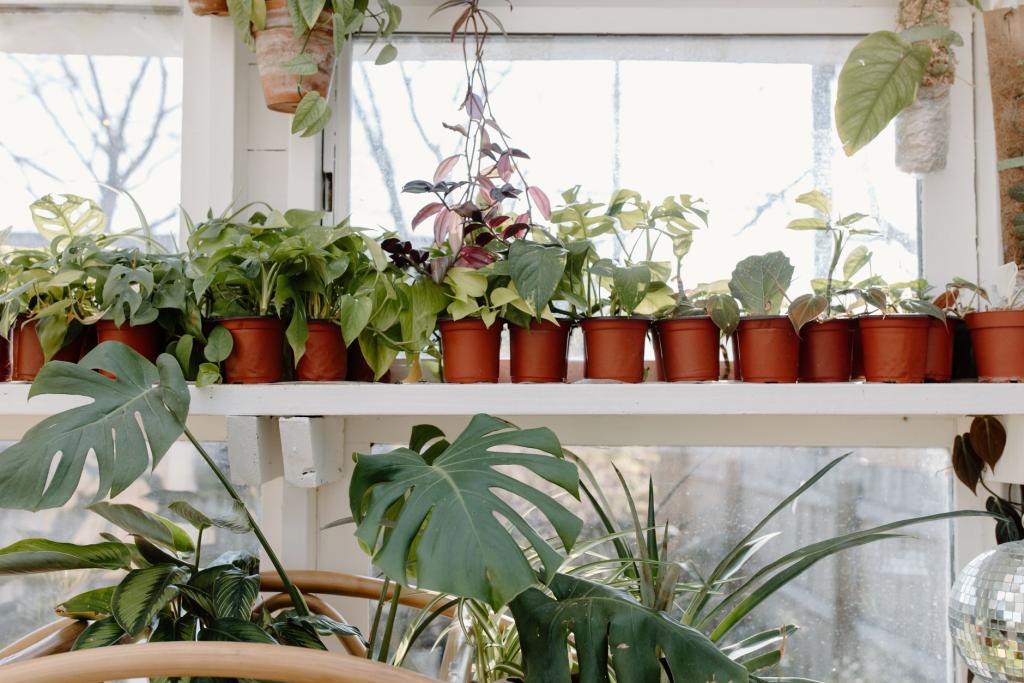
Your monstera has been sitting in the corner looking cute for months, doing absolutely nothing — or so you thought. New research suggests that the leafy roommates in your apartment might actually be pulling real pollutants out of the air, and the effect is bigger than most scientists expected.
Let's be clear up front: no, your philodendron is not a replacement for an air purifier, and the old viral claim that a couple of plants can detox an entire home was always overhyped. But a serious new study on common houseplants has found that they genuinely scrub a specific, harmful pollutant from indoor air — one that a lot of us are breathing right now.
What the science actually found
Researchers at the University of Birmingham, working with the Royal Horticultural Society, put three extremely ordinary houseplants — the peace lily, the corn plant (Dracaena fragrans), and the fern arum (Zamioculcas zamiifolia) — into sealed test chambers filled with roughly the level of nitrogen dioxide you would expect in an office next to a busy road. Over the course of just one hour, all three species removed about half of the nitrogen dioxide in the chamber, as reported by ScienceAlert.
“The plants we chose were all very different from each other, yet they all showed strikingly similar abilities to remove NO2 from the atmosphere,” said chemist Christian Pfrang, one of the researchers involved. When the team extrapolated the results to real rooms, the numbers stayed encouraging: in a small, poorly ventilated space of about 15 cubic meters — think a bedroom or a home office — five houseplants cut nitrogen dioxide levels by around 20 percent. In a much larger space of 100 cubic meters, the effect shrank to about 3.5 percent, though adding more plants scaled the benefit back up. In short: houseplants improve air quality in a real, measurable way — at least when it comes to NO2.
Here's the part that surprised the researchers most: the cleanup happened in both light and dark conditions, and with both wet and dry soil. That is very different from how plants take up carbon dioxide, which depends heavily on environmental conditions. It suggests the plants are removing nitrogen dioxide through a completely different mechanism — and according to the researchers, the precise process remains a mystery, though it likely involves a biological interaction with the soil the plants grow in, since none of the plants released the pollutant back into the air.
Why nitrogen dioxide is worth caring about
Nitrogen dioxide, or NO2, is not some niche chemistry-class gas. It pours out of car exhaust, gas stoves, furnaces, and basically anything that burns fuel, and it has been linked to respiratory disease including asthma. If you live in a city apartment on a busy street, cook on a gas range, or work from a home office with the windows shut all winter, NO2 is probably in your air right now.
That context is what makes this research genuinely exciting rather than just plant-fluencer bait. Potted plants are cheap, require no electricity, and — as the study notes — are already sitting in millions of homes. The study's authors position them as a practical piece of indoor environmental infrastructure, especially relevant in dense urban areas where outdoor air quality is often compromised and residents have little control over it.
The catch: five plants won't replace ventilation
Before you turn your studio apartment into a jungle, keep the caveats in mind. The headline 20 percent reduction applies to a small, poorly ventilated space with five plants in it — your results will vary with room size, airflow, and how many plants you actually keep alive. In a big open-plan living room, a few pots in the corner are doing a measurable but modest amount of work. Scale matters, and so does ventilation: no one in this field is suggesting you skip the range hood over your gas stove because you bought a snake plant.
It is also worth noting that this study tested one pollutant, not the whole alphabet soup of indoor air contaminants. Volatile organic compounds, fine particulate matter, and other pollutants each behave differently, and plants are not a universal filter. The honest version of this story is that houseplants are one small, affordable layer of defense — real, but limited.
The bigger picture: indoor greening is having a research moment
The Birmingham study is not happening in isolation. A major international review led by the University of Surrey's Global Centre for Clean Air Research pulled together 35 experts across the UK, Europe, the US, Australia, India, and Brazil to examine how indoor plants and greening systems affect buildings. Published in the journal Building and Environment, it compared 26 different indoor greening systems — from potted plants to living walls and hydroponic towers — and found that larger systems can make rooms feel up to two degrees cooler and more comfortable, even when the actual temperature doesn't change. More evidence that houseplants improve air quality and comfort at the same time.
The same review flagged early evidence that indoor greenery may enrich the indoor microbiome, introducing beneficial environmental microbes that could support immune health and potentially reduce allergies — a fascinating second front of research that goes well beyond the “plants clean air” framing. The project, funded with £600,000 from UK Research and Innovation, is now working toward practical guidelines for how to design indoor greening that actually delivers on these benefits, rather than just looking good on Instagram. And if you want to take the same thinking outside, sustainable gardening practices apply it to your yard.
How to actually do this in your space
If you want to put this research to work, keep it simple and evidence-based. First, cluster your effort where it counts: a handful of plants in a small, stuffy bedroom or study does more than the same number scattered across a huge open floor. The tested trio — peace lily, corn plant, and ZZ plant — are all nearly un-killable beginner plants, which is a nice coincidence. Peace lilies like indirect light and will dramatically droop when thirsty, making them excellent teachers for new plant parents; corn plants and ZZ plants tolerate low light and neglect with impressive stubbornness. For the full starter routine, the ultimate houseplant care guide for beginners covers light, water, and soil.
Second, keep them genuinely alive and growing, because a thriving plant is doing the work. Bright indirect light, a well-draining soil mix, and consistent (not excessive) watering cover most of it. If you grow monsteras, philodendrons, or anthuriums, separate research suggests their aerial roots are surprisingly good at nutrient uptake too — so misting those dangly roots with a little water and plant food can genuinely help the plant thrive. And third, treat plants as a complement, not a cure: crack a window, run the exhaust fan while cooking, and let the greenery be the easy, affordable bonus layer it is.
The era of houseplants as pure decor is quietly ending. Between the air-quality findings, the temperature research, and the microbiome work, scientists are starting to treat indoor greening as infrastructure — living systems that make the buildings we spend 90 percent of our lives inside measurably healthier. Your monstera was never just vibing. It was working.
Comments 0
No comments yet. Be the first to share your thoughts!
Leave a comment
Share your thoughts. Your email will not be published.