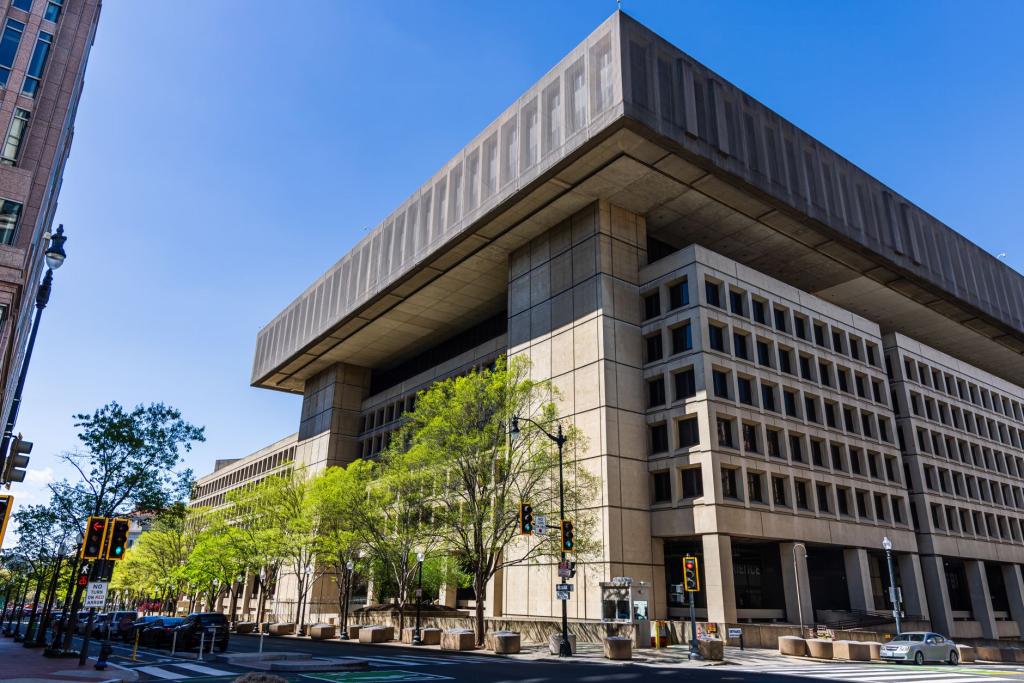
The Federal Bureau of Investigation stopped answering Canada's calls this month, and the reason was a style guide. The New York Times reported Friday that FBI Director Kash Patel temporarily suspended some cooperation with the Royal Canadian Mounted Police after Canada's public broadcaster instructed its journalists not to describe the September 11 attacks as terrorism without attribution. The freeze in FBI Canada cooperation did not end every channel of contact between the two agencies, according to the Times, which cited officials familiar with the matter. Still, for several weeks one of North America's closest law enforcement partnerships went quiet over a memo about word choice.
The dispute started in late August, when a CBC memo leaked to the Canadian press. The memo reminded journalists of the broadcaster's longstanding policy that the words "terrorist" and "terrorism" should carry attribution to experts or public officials rather than appearing as the network's labels. CBC defended the guidance, telling the press it reflected the practice of many of the world's leading news organizations. The explanation did not calm the reaction south of the border.
Patel wrote on X on August 28 that any Canadian agency failing to publicly reject the guidance would no longer have a friend in the FBI, calling the policy "a distortion of history" and an insult to the victims. Twenty-four Canadians were among the nearly three thousand people killed in the attacks, as TheWrap reported.
FBI officials canceled scheduled meetings with their RCMP counterparts and indicated they would be out of contact for a stretch, according to multiple officials cited by the Times and TheWrap. The exact length of the freeze is unclear, but cooperation resumed around the time of the quarter-century anniversary of the attacks, after the CBC reversed course. The reaction struck observers as extraordinary for what it targeted: CBC is editorially independent from the Canadian government, so the RCMP, which had no hand in writing the memo, absorbed the punishment for a newsroom's editorial call. RCMP Commissioner Mark Duheme responded to the Times report by saying, "We value our relationship with our US counterparts, as we work closely to respond to threats to national security and maintain situational awareness of emerging risks."
CBC changed its guidance later that same day. The broadcaster's head of public affairs, Chuck Thompson, told TheWrap that journalists could now describe the attacks as terrorism without attribution, and he added that neither the American government nor the FBI had contacted the network about the policy. The change came from inside the network. The world only learned about the FBI's quiet freeze weeks later, when the Times published its report and traced the canceled meetings back to the memo fight.
A freeze inside a bigger chill
The episode did not happen in a vacuum. The United States and Canada have been grinding through a tariff war for roughly a year and a half, with President Donald Trump and Canadian Prime Minister Mark Carney locked in a dispute that has already spilled into factory floors and grocery aisles. GenZNewZ covered one front of that fight when Trump-era tariffs hit Canadian motorcycles, beer, and cheese, and the tension has kept rising since. Against that backdrop, American allies have been quietly worrying for months that Washington might scale back intelligence or law enforcement sharing with Ottawa, the Times noted. Patel's move made those fears concrete, at least temporarily. Other American agencies kept their own intelligence-sharing channels with Canada open throughout the freeze, the Times reported, which made the FBI's move look like a targeted punishment rather than a policy shift.
When a style guide becomes a diplomatic incident
Newsrooms have spent decades refining policies about loaded language, and most of those policies live and die in internal Slack channels. This one crossed a border because the trust between the two capitals was already paper-thin. The memo landed in a relationship where every exchange is now read through the lens of the trade fight, so a journalist's adjective became a national security event. Canada's bid for a closer relationship with Europe, which Ottawa has been pursuing as ties with Washington fray, shows how seriously the rupture is being taken on the Canadian side. The episode also put editors in an awkward spotlight: a guidance document written for a newsroom wound up being treated as a statement of national values, and punished as one.
The story ended the way these episodes usually do, with everybody backing down a step. CBC updated its language guidance, the FBI reopened its channels, and the anniversary passed with the FBI Canada cooperation freeze fully thawed. But it leaves a marker for every editor and every intelligence chief paying attention. When governments are already at odds, even a memo about adjectives can freeze the machinery, and it took a newsroom changing two words in its rulebook to unfreeze it. For readers still processing what the attacks mean a quarter century later, the record of what actually happened that day remains the starting point.
Read the original reporting: TheWrap on the FBI's paused cooperation with Canada, and the full account of the dispute.
Comments 0
No comments yet. Be the first to share your thoughts!
Leave a comment
Share your thoughts. Your email will not be published.