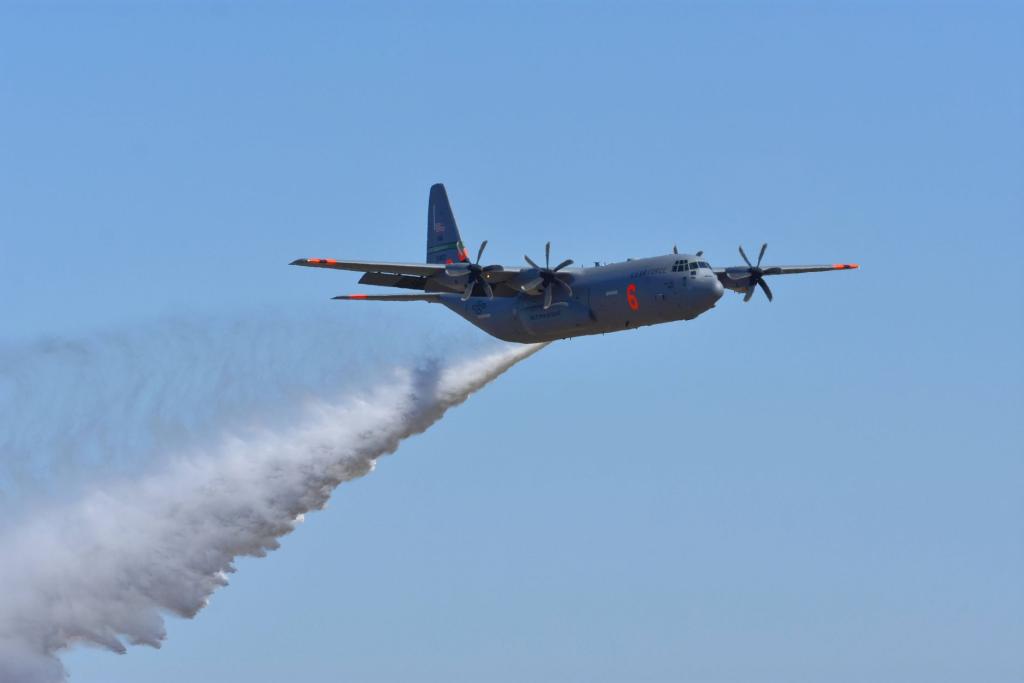
Indonesia has accepted military and civilian firefighting help from Malaysia as peatland and forest fires burning across Sumatra and Borneo push the country through its worst wildfire season in eleven years. The wildfire haze pouring out of the burning peatlands has already drifted across the strait, dimming skies and fouling the air in neighbouring Malaysia and Singapore. President Prabowo Subianto confirmed on Friday that Kuala Lumpur would send three helicopters, a water-bomber aircraft and 52 personnel after meeting Malaysian Deputy Prime Minister Ahmad Zahid Hamidi at his residence outside Jakarta. The crews and aircraft are expected to arrive soon, though no firm date has been announced, according to Reuters.
Worst fire season in eleven years
Indonesia is battling its most intense wildfires in eleven years, and Forestry Minister Raja Juli Antoni has warned that the blazes could keep burning until November. More than 36,000 hectares have burned across ten provinces, with West, Central and South Kalimantan on Borneo and Riau, South Sumatra and Jambi on Sumatra among the hardest hit. Indonesian police have arrested 72 people suspected of deliberately starting fires, and four companies are under investigation for allegedly using fire to clear land cheaply, the Associated Press reported. Peat fires are notoriously hard to kill because flames travel through dried organic soil long after surface blazes look dead. An El Nino-driven drought and a long dry season have left vegetation tinder-dry, while strong winds have spread flames across areas that remain unreachable for the more than 24,000 firefighters deployed on the ground.
Wildfire haze crosses borders
Smoke from the fires has drifted across the strait, pushing air quality to unhealthy levels in Malaysia and Singapore as the wildfire haze settles over cities far from the flames. In the Malaysian state of Sarawak, on the Borneo side of the border, nearly 600 schools closed last week as smog thickened, disrupting classes for roughly 200,000 students. About 30 air-quality monitoring stations in Malaysia recorded unhealthy pollution readings during the worst days. Indonesia has committed 30 aircraft for water-bombing and cloud-seeding over Kalimantan and 22 helicopters over Sumatra, while technicians continue to seed clouds with salt particles to force rain from passing weather systems, according to IBTimes Singapore.
Malaysia had already received clearance to fly cloud-seeding aircraft inside Indonesian airspace under an agreement struck last month, a rare concession given how sensitive the two countries have historically been about sovereignty. Environment minister Arthur Joseph Kurup said both nations had agreed to step up monitoring of fire hot spots and share air-quality data, with the El Nino expected to intensify toward October alongside the southwest monsoon. The wildfire haze episode has revived a familiar regional argument: the smoke respects no borders, but the firefighting budgets and the political costs of the burns stay national.
A cross-border response takes shape
The Malaysian package was formally offered on September 17, when Ahmad Zahid conveyed it to Indonesian Vice-President Gibran Rakabuming Raka during a four-day working visit that began the same day. The Bombardier CL-415MP, operated by the Malaysian Maritime Enforcement Agency, is a veteran of this fight: it flew over South Sumatra in 2015, dropping 546,000 litres of water in a five-day mission, the Malay Mail reported via Bernama. The three helicopters and the amphibious plane will draw water from lakes, seas and rivers before dumping it on burning peatland, and the 52 personnel come from the National Disaster Management Agency, the maritime enforcement agency and the Royal Malaysian Air Force.
Ahmad Zahid, who chairs Malaysia's National Disaster Management Committee, said the help was not interference in Indonesia's affairs but a joint effort against a problem that returns every dry season. He said Malaysia wanted a lasting mitigation plan so the wildfire haze does not recur year after year, and the proposal now awaits approval from the Indonesian president's office after a first round of talks with the vice-president. He framed the mission as self-interested as much as neighbourly: smoke from open burning in Kalimantan and Sumatra reaches Malaysian cities within days, and no amount of domestic air-quality policy in Kuala Lumpur can stop it at the source.
Why the fires keep coming
Land-clearing fires remain a fixture of Indonesia's dry season, when plantation owners and traditional farmers set blazes to open fields and sometimes let them escape into protected peatlands, where they can smoulder underground for weeks. Climate scientists have linked this year's severity to a strengthening El Nino, which is expected to intensify into October alongside the southwest monsoon, keeping conditions hot and dry deep into the autumn. With the fires still spreading and hot spots multiplying faster than crews can contain them, officials on both sides of the strait say the test will be whether regional cooperation can outpace a climate pattern that shows no sign of easing. Environmental agencies in both countries have urged people with respiratory conditions to stay indoors until the skies clear. Readers can find more on the crisis and the regional response via GenZ NewZ's search page, and GenZ NewZ will continue to track the story as the Malaysian crews deploy.
Comments 0
No comments yet. Be the first to share your thoughts!
Leave a comment
Share your thoughts. Your email will not be published.