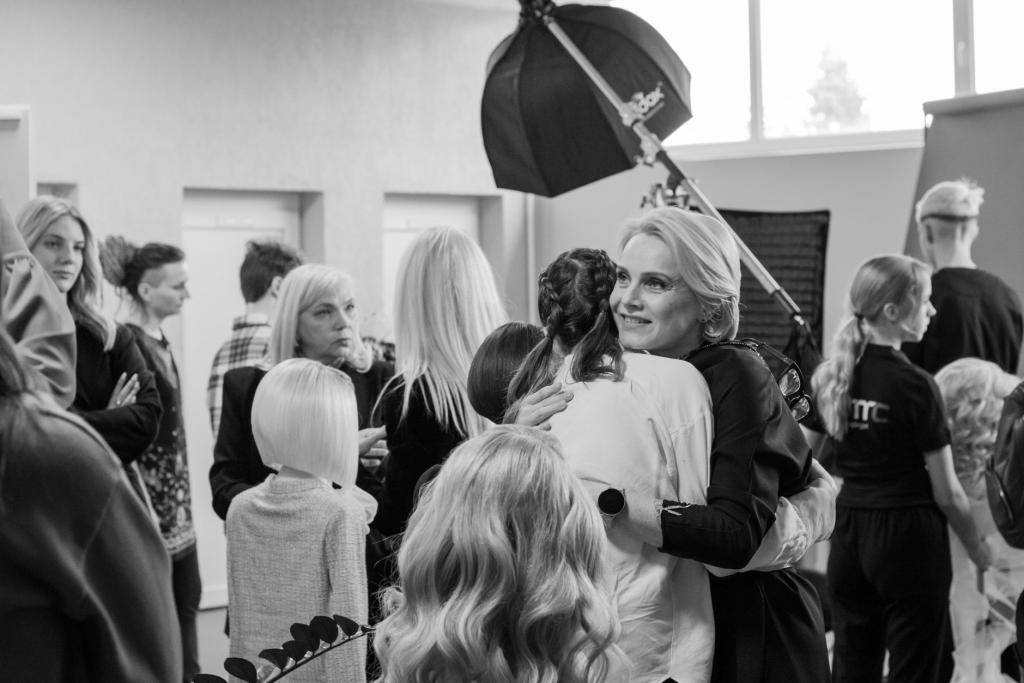
On September 21, 2026, Donatella Versace announced the biggest move of her career: a joint venture with Revolve Group to build an entirely new fashion and beauty brand, with its first products expected in 2027. The twist? For the first time in nearly three decades, the name above the door will not be Versace. The label is still unnamed, the price point undisclosed — but the partnership signals that one of fashion's most recognizable creative forces is starting from scratch, aimed squarely at a younger generation of shoppers.
According to the announcement, the designer will serve as chief creative officer of the independent business, which will cover both fashion and beauty — with beauty expected to lead the launch. The venture is being developed for the way a younger generation discovers style, experiences culture, shops, shares, and connects, and it is set to roll out across the United States, Latin America, Asia-Pacific, and the Middle East. The project was first detailed by Hypebeast, which reported that Revolve — with 1.23 billion dollars in total revenue last year — offers the designer a massive digital platform to build on.
In the announcement, the designer put the ambition in plain terms: "Revolve understands something I believe deeply: culture comes from connection," she said. "Together, we want to create that connection with a new voice, a new look, and a new energy." She added that she has always drawn inspiration from the next generation across music, film, art, and fashion, and that the partnership lets her reach that audience "in a completely new and personal way." Revolve co-founder and co-CEO Michael Mente called her one of the "defining creative voices of our time," while co-founder Mike Karanikolas said combining her creative authority with Revolve's technology, infrastructure, and global reach is a chance to build "something genuinely distinctive" for the long term, as reported by Hypebeast.
A Timeline of the Split
The announcement closes a thirty-year chapter. The designer took creative control of the Italian house after her brother Gianni's death in 1997 and held it for nearly three decades, becoming one of the industry's most visible figures. She stepped down as chief creative officer in March 2025, stayed on as chief brand ambassador, and then watched Capri Holdings sell the Versace house to the Prada Group in a deal worth more than a billion dollars, completed in December 2025, as detailed by Fashion Times. Roughly nine months later came the Revolve news — her first creative leadership role since leaving the top job.
For context on the scale of the platform, Revolve was founded in 2003 as a digital-first fashion retailer and has grown into a 3.04 million active-customer business, up eleven percent year over year as of the second quarter of 2026 — its fastest customer growth in nearly three years. The group also reported roughly 61 million dollars in net profit for 2025. Fashion industry coverage by Luxury Tribune notes the partnership is designed to reach younger customers and makes international distribution far simpler than a traditional luxury rollout.
Why Beauty Comes First
Starting with beauty is a strategic choice, not a concession. A lipstick, fragrance, or skincare line can be priced for experimentation rather than aspiration, which matters when the stated audience is millennials and Gen Z discovering the brand through feeds and shares rather than flagship stores. With about 12 million Instagram followers and deep ties to music and pop culture, the designer brings her own distribution channel — a built-in audience that most startups spend years buying.
The bet also reflects where luxury is hurting. Traditional houses are navigating an uneven market recovery across Asia, even as Dior commits to destination shows and Milan's runway calendar keeps churning. Revolve, by contrast, grew up on influencer networks, social commerce, and younger shoppers — exactly the mechanics this new brand says it wants to speak. As one industry analysis put it, without a historic network to defend or an established positioning to preserve, she can shape the identity from a clean slate and adapt to market shifts as they happen.
The Bet — and the Risk
There is a real counterpoint here, and it is worth stating plainly: no name, no logo, and no products have been revealed, and the celebrity-beauty lane is crowded with famous founders whose brands fizzled. An independent venture lives or dies on its first collection, and "new energy" is not a product strategy. The announcement is a promise, not proof.
Still, the contrast with the other side of the deal is instructive. While the Prada Group now faces the hard, expensive work of restoring desirability to a heritage house — keeping its archives, its boutiques, and its existing customers happy — the new venture has the one advantage legacy brands cannot buy: nothing to protect. If the beauty line lands at an accessible price and the fashion follows with a clear point of view, the partnership could become the template for how legacy designers reboot in the social-commerce era. If it does not, it will be a very public lesson in the same.
Why It Matters for Young Shoppers
For Gen Z readers, the practical stakes are simple. A beauty-first launch usually means entry prices in the tens of dollars rather than the thousands — a working-class-friendly way to buy into a designer's vision. The multi-region rollout plan (the US, Latin America, Asia-Pacific, and the Middle East) suggests the brand wants global community, not just a US drop. What to watch next: the name reveal, the pricing, and whether the 2027 debut keeps the promise of that "new voice." Fashion has a way of hyping reinvention; this time, there is real infrastructure behind it.
Read more: Fashion and END Label Is Here: The Curator Becomes the Brand.
Comments 0
No comments yet. Be the first to share your thoughts!
Leave a comment
Share your thoughts. Your email will not be published.