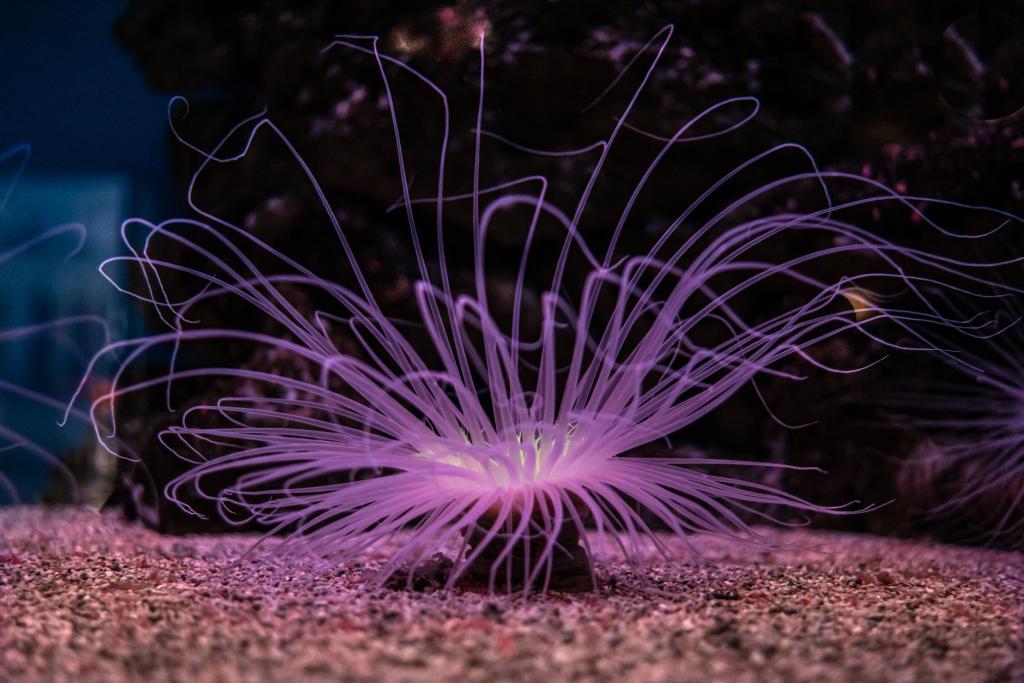
Deep in the Indian Ocean, on the slopes of underwater mountains near Australian island territories, scientists hauled up a tangle of branching tentacles that turned out to be something science had never formally described. The Deep-Sea Spaghetti Worms inside those tubes carry suction cups on their undersides, a feature so unusual that researchers have now placed them in a brand-new genus. According to the Australian Museum, which announced the discovery this week, the find is a reminder that the deep sea still holds entire branches of life waiting for a name.
The new genus is called Terebellosuctoria, a name that translates roughly to sucker-bearing members of the terebellid worm family. It belongs to the polychaetes, a class of segmented marine worms with bristled appendages along their bodies. They may look like centipedes, but their closest familiar relatives are earthworms. Two of the newly described species sit inside the new genus, including one named for a colleague who had earlier described similar sucker-like structures on another worm.
What makes the announcement notable is not just the odd anatomy. New species turn up regularly in deep-sea samples. A whole new genus, a rank above species in the tree of life, is far rarer, and it means the animals differ from every known group in ways that go beyond surface appearance. In this case, the deciding evidence came from three directions at once: body shape, DNA sequencing, and scanning electron microscopy.
A branching tangle that was not what it seemed
The story of the discovery begins with a case of mistaken identity on the deck of a research ship. The specimens came from voyages led by Museums Victoria aboard the CSIRO research vessel Investigator in the early part of this decade, working the seamounts around Christmas Island and the Cocos (Keeling) Islands. All told, the expeditions collected more than eight hundred and fifty marine worms, and thirteen species new to science have already been described from that haul.
One sample stood out. When a beam trawl brought it up from a seamount deeper than six hundred and seventy metres, the crew saw a branching brown mass covered in what looked like tentacles. Australian Museum researcher Elena Kupriyanova then noticed clusters of small orange spheres among the branches. Her first thought was that they looked like the eggs of a polychaete worm. Closer examination and dissection showed the branching structure was not an animal at all, but the elaborate extensions of a worm's tube. Out of those tubes came bright orange worms, some reaching seventy-five millimetres long.
Spaghetti worms get their nickname honestly. They build tubes in soft sediments and stretch out long tentacles to gather fine food particles from the surface of the sediment. The new animals do the same, but on seamount slopes where soft sediment is scarce. Researchers suggest the suckers help them hold on in that rugged setting, an adaptation that lets a sediment-dependent animal make a living on bare rock. "The sucker-like structure is what makes this new genus so interesting and unique," Kupriyanova said.
Why a new genus is rarer than a new species
Describing a new species is a matter of showing that a specimen differs consistently from its known relatives. Establishing a new genus is a bigger claim: it argues that the animal sits on its own twig of the evolutionary tree, distinct from every genus already named. The team reached that conclusion only after combining morphology, genetic data, and microscopic anatomy, a standard that guards against naming a new group on the basis of one odd trait.
The paper, published in Records of the Australian Museum, describes seven additional new species from three families, with two of them landing in the new genus. Naming matters beyond the label. A formal name gives other researchers something to search for, compare against, and protect. Without it, a species can sit in a museum jar for decades, known to a handful of specialists and invisible to conservation planning. As Kupriyanova put it, an expedition may collect hundreds or thousands of specimens, but learning what they actually are can take years, and the museum collections where they wait remain open for study long after the voyage ends.
That slow, careful work has a vocal champion in Pat Hutchings, a senior fellow at the museum who studies marine worms. She notes that marine worms are among the most abundant and diverse animals on the seafloor, where many recycle nutrients through the sediment, yet they remain unseen and underappreciated. "Only a tiny fraction has been officially named and described," she said. The largest marine worms stretch to three metres, but most are small, soft-bodied, and easy to overlook, which is exactly why so many remain unknown.
What the find says about the unmapped ocean
The Deep-Sea Spaghetti Worms are one small entry in a much larger ledger of ignorance. The Nippon Foundation-Nekton Ocean Census, a global effort to accelerate ocean species discovery, documented more than eleven hundred previously unknown marine species in a single year, a jump of over half in the annual identification rate, according to reporting on the census. Even at that pace, researchers estimate that up to nine in ten ocean species remain undiscovered. The ocean covers most of the planet, yet its depths are among the least explored habitats on Earth.
For readers, the stakes are practical, not just academic. Species that have not been described cannot be monitored, and ecosystems that have not been surveyed cannot be managed. Seamounts like the ones that yielded the new worms are also targets for deep-sea mining and fishing, which means the creatures living there could be damaged before anyone knows they exist. Every formal description, including this one, adds a dot to the map that policymakers use when deciding which parts of the seafloor deserve protection.
There is also a simpler reason to care. The deep sea keeps producing animals that look invented: worms with suction cups, tangle-shaped tubes, and tentacles that harvest drifting food in total darkness. Each one is a reminder that the planet still has surprises filed away in places no person has ever seen. The next trawl, the next core sample, or the next jar in a museum collection could hold the next branch on the tree. For more on how the ocean keeps rewriting what we know, see the recent finding on a swimming sea cucumber and more science coverage. The primary account of the discovery comes from the Australian Museum, and the wider census of ocean life is tracked in reporting on the Ocean Census.
Comments 0
No comments yet. Be the first to share your thoughts!
Leave a comment
Share your thoughts. Your email will not be published.