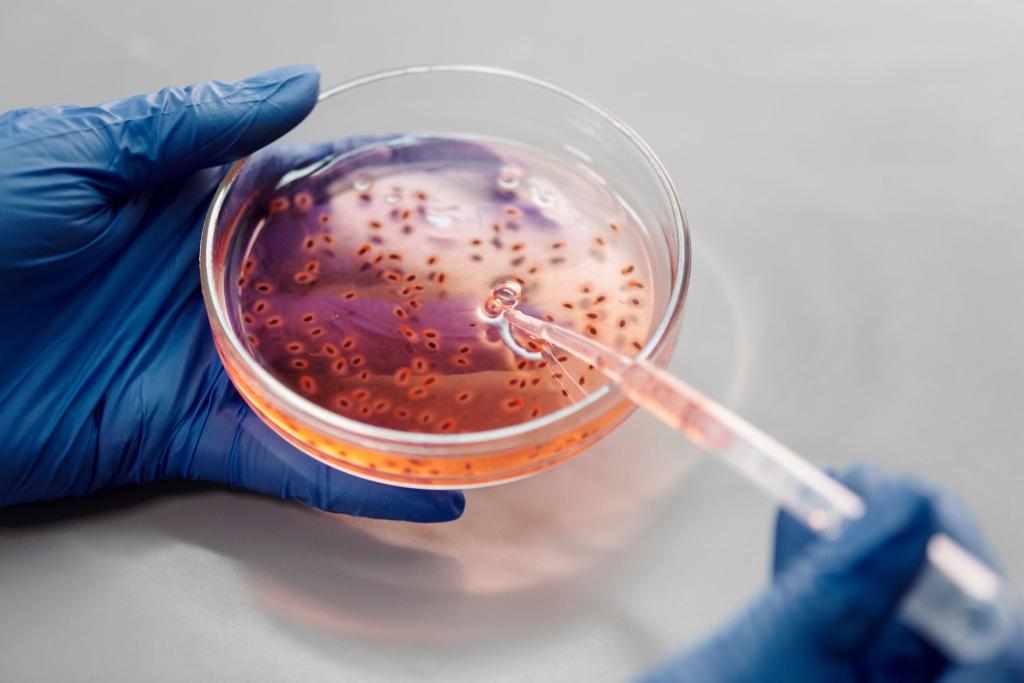
A deadly hospital fungus has been caught using a survival trick scientists had never seen in it before: copying its entire genome so it can keep growing through antifungal drugs. The finding, published in Nature Communications, comes from researchers at the University of Exeter and City St George's, University of London, and it helps explain why the yeast Candida auris keeps slipping past treatments that should kill it.
Candida auris was first identified less than two decades ago and has since spread to hospitals on every continent, with outbreaks reported in more than 60 countries. The World Health Organization has named it a global public health threat and placed it on its critical priority list of fungal pathogens. It clings to patient skin and medical equipment, spreads readily from person to person, and is notoriously hard to clear from clinical environments.
A lab accident exposed the trick
The discovery happened almost by chance. The team was running routine drug-resistance tests when a researcher left plates of fungal cells incubating for longer than the standard test period. When the plates were checked, cells had grown during the extra time despite being exposed to antifungal drugs, according to the University of Exeter. Follow-up testing showed the survivors had not picked up the single-gene mutations usually tied to drug resistance. Instead, they had duplicated their whole genome, multiplying the raw material available for mutation and dramatically improving their odds of hitting on changes that let them evade the drug.
Standard lab tests had suggested the fungus was not resistant and the drugs should have worked. The slow emergence of this mechanism, over a timescale longer than conventional testing captures, is exactly why it went undetected, the researchers say.
Two populations, one goal
The study revealed a second layer of cunning. The surviving cells formed two distinct populations, one growing slowly and the other more rapidly, a strategy the researchers call bet-hedging. By pursuing multiple tactics at once, the fungus maximizes its chances of developing resistance and evading treatment. The faster-growing cells carried a wide range of mutations in a gene nicknamed Crazy-one, known as CRZ1, which governs cell wall construction. Follow-up tests confirmed these mutants grew rapidly and that their cell walls appeared unaffected by antifungal drugs, neutralizing the main weapon in the clinical arsenal.
Senior author Professor Tihana Bicanic, a professor of infectious diseases and mycology at her university, said the results show fungal infections are more complicated than previously thought, with multiple populations potentially coexisting during an infection. She described emerging pathogens like this one as carrying a Swiss Army Knife of innovation in their own genome, enabling stepwise adaptation and drug resistance.
Why lab tests can miss it
The practical worry is that conventional susceptibility testing may keep missing resistance that only reveals itself over extended incubation. That means patients could be treated with drugs that look effective in the laboratory but fail at the bedside. Understanding that the fungus can hedge its bets, using whole-genome duplication and cell wall gene mutation in parallel, gives researchers a clearer picture of what they are up against.
The evidence is still early. It rests on a limited set of patient samples plus laboratory experiments, so the new mechanism is a warning rather than a full explanation of every treatment failure. That caveat matters, but so does the counterweight: when this infection reaches a vulnerable patient's bloodstream, the death rate reaches 45 percent, and outbreaks have been costly and disruptive. One UK intensive care unit had to close and undergo complete refurbishment to stop an outbreak, while controlling another was estimated to have cost one million pounds.
What comes next
The bottom line of the research: Deadly Fungus Outsmarts Antifungals by Copying Its Genome. The researchers are now exploring the use of antifungal drugs in combination, an approach being pursued through the UKRI-funded Fungi-CARE programme run with the London team. Combination therapy may deny the fungus the single, predictable pressure that whole-genome duplication so effectively exploits. For now, the study sounds the alarm for better antifungal drugs and stronger measures to keep the fungus out of the wards where it does the most harm.
Related coverage: WHO Urges Faster Action as Lead Poisoning Kills Millions.
Comments 0
No comments yet. Be the first to share your thoughts!
Leave a comment
Share your thoughts. Your email will not be published.