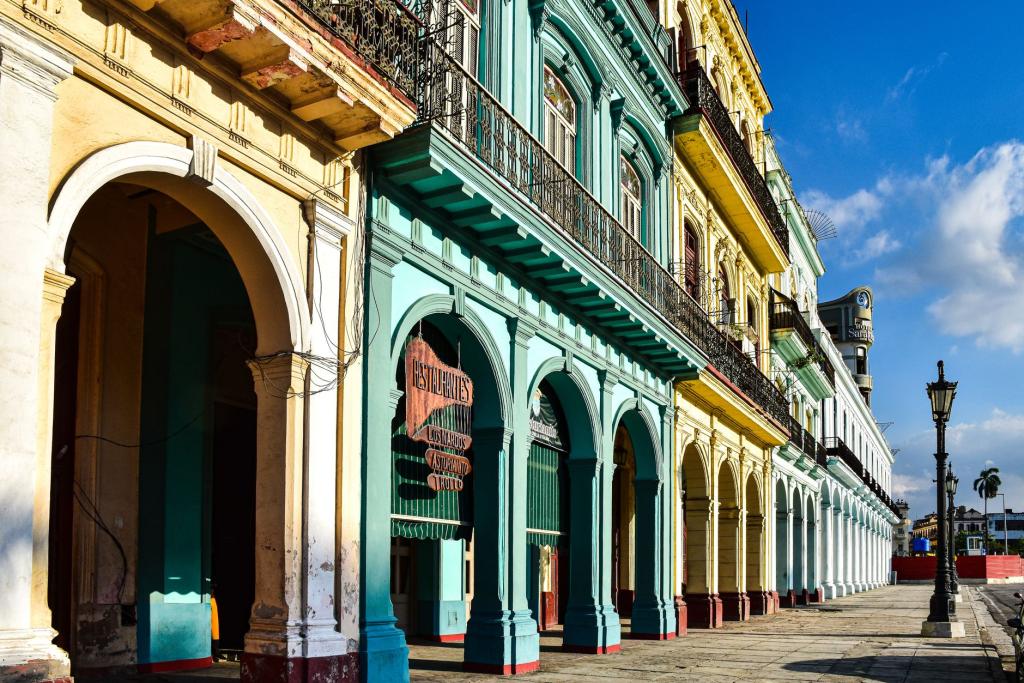
Cuba went dark on Friday afternoon. Just before 2 p.m. local time, the island's entire electrical system shut down, and the Ministry of Energy and Mines confirmed in a post to social media that a total disconnection had knocked out power for millions of people, Reuters reported. The Cuba grid collapse left homes, hospitals, water pumps and phone networks without electricity across an island of about nine million people, and officials gave no timeline for when the lights would come back on.
The outage started with a failure in high-voltage transmission lines in western Cuba, according to the authorities. The collapse spread as far as Matanzas province, and the eastern half of the island was disconnected soon after. The official newspaper Granma reported that unstable weather in central Cuba made the situation worse. By dusk, power had returned to only 5 percent of users in Havana, a city with roughly 862,000 customers, while engineers set up small power-distribution "micro-islands" in the provinces of Camagüey, Pinar del Río and Granma. Priority went to hospitals and emergency facilities, the Associated Press reported.
This was at least the sixth time the national grid has collapsed since January, the AP reported, and residents have stopped treating each failure as a shock. Even when the grid is online, Cubans routinely endure outages lasting more than 30 consecutive hours. In Havana the pattern has settled into a grim routine: traffic lights die at intersections, water stops flowing when municipal pumps lose power, and cooking becomes a gamble for families with electric stoves. Public transportation slows, work hours shrink, flights have been cancelled, and doctors warn of serious public health consequences when refrigeration and medical equipment fail.
For residents, the numbers on a ministry spreadsheet translate into a daily struggle to eat, wash and sleep. Mercedes Rodriguez, a 60-year-old worker in Havana, told the AP that the constant blackouts had become unbearable, saying there was not enough food or water and no electricity, and describing the country's condition as heartbreaking. Abilén Marrero, a homemaker in central Havana, said nobody could tell her when the power would return, only that waiting was the one option available. The U.S. Embassy in Havana issued a security alert hours after Friday's Cuba grid collapse, warning Americans on the island of widespread cellphone and internet outages and describing the electrical grid as increasingly unstable, Circuit Magazine reported.
A system starved of fuel and spare parts
Cuba's power plants are relics. Most of the Soviet-era thermoelectric stations are more than four decades old and run well past their intended lifespans. The Antonio Guiteras plant in Matanzas and the Lidio Ramón Pérez plant in Felton break down regularly, with boiler explosions and turbine failures taking units offline while a chronic shortage of spare parts keeps them idle longer. The deeper problem is fuel. Cuba depends on imported oil to run those plants, and imports have collapsed since January, when the United States imposed an energy blockade aimed at forcing a change in Cuba's political system. Since then, only one fuel tanker has reached the island, a Russian vessel that delivered oil in March, the AP reported.
The blockade has turned a difficult energy situation into a permanent emergency. Transmission faults that a healthy grid might absorb now cascade into nationwide failures because the system has no reserve capacity to fall back on. Blackouts have become so routine that state utility UNE publishes daily schedules of planned outages, and unplanned ones strike on top of them. United Nations human rights experts have condemned the American restrictions as a violation of international law and warned that the island risks a severe humanitarian crisis as shortages deepen. An independent study released this week estimated that 66 percent of Cubans now live in poverty, up from 45 percent in mid-2025, driven largely by rising food prices, TBS News reported.
Restoration crawls while outages pile up
Restoration work began immediately after Friday's Cuba grid collapse, but progress has been slow. Felix Estrada, the national load dispatch director at state grid operator UNE, said protocols for gradual restoration were activated and work continued through Saturday. Small generation islands were being established province by province, and limited power returned to priority circuits near hospitals and water pumping stations in Havana. By late Friday evening, however, much of the capital remained dark under cloud and rain.
The pattern of failure has quickened through the year. Earlier blackouts struck in March, July and early August, sometimes twice in a single week. Each collapse stresses the generating units that survive, pushes maintenance further into the future, and shortens the time until the next failure. Energy analysts note that repeated grid collapses are not isolated accidents but the signature of a system under sustained strain: one pressure, in this case the fuel embargo, degrades resilience, which multiplies the impact of the next equipment failure, which then compresses the window for repairs.
For now, Cubans are doing what they have done through every recent blackout: waiting. Generators hum outside the few businesses that can afford fuel, families gather around battery-powered radios for news, and food spoils in warm refrigerators. Whether the grid returns fully this weekend or the outage stretches into a longer crisis, the underlying arithmetic has not changed. An island that cannot import fuel, cannot repair its plants and cannot build reserve capacity will keep going dark, and each Cuba grid collapse makes the next one easier. Related coverage of energy supply shocks can be found in GenZ Newz reporting on the Strait of Hormuz tanker attacks.
Comments 0
No comments yet. Be the first to share your thoughts!
Leave a comment
Share your thoughts. Your email will not be published.