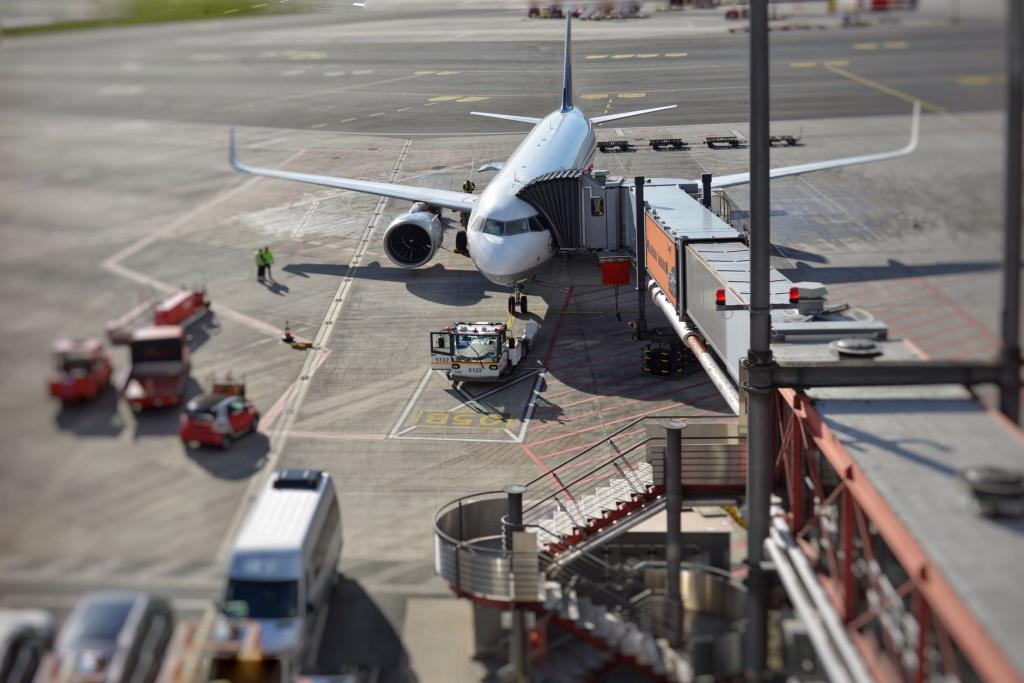
Taiwan's labour minister, Hung Sun-han, departed for China on Sunday on a Taiwan APEC ministerial trip to attend a human resources ministerial meeting in the eastern city of Nanjing. The journey marks the first trip to the mainland by a minister-level official since President Lai Ching-te's administration took office, and it comes at a time when Beijing has steadily intensified military and political pressure on Taipei, according to Reuters.
The labour ministry confirmed that Hung had left Taiwan for the gathering but released no further details about his schedule or who he might meet on the sidelines. Hung did not speak to reporters at the airport before his departure, according to images carried by Taiwanese media. China's Taiwan Affairs Office did not immediately respond to a request for comment, Reuters reported.
The Taiwan APEC ministerial trip arrives weeks ahead of November's APEC leaders summit in Shenzhen, where China is hosting the annual gathering of the 21-member economic forum. Any official contact between Taipei and Beijing, even in a multilateral setting, carries weight in a relationship that has been defined more by pressure than by dialogue in recent years.
Why a labour minister's trip carries weight
APEC is one of the few international organizations in which Taiwan holds membership, because Beijing works to block the island from joining most global bodies that require statehood. China is the host nation this year, which means Taiwanese officials attending events on the mainland must navigate political sensitivities that do not apply at meetings held elsewhere. Lower-level Taiwanese officials have already taken part in other APEC events in China this year, Reuters noted, but the presence of a sitting cabinet minister represents a step beyond what the Lai administration has authorized until now.
Hung's own political profile adds another layer to the visit. Before becoming labour minister, he served as a lawmaker for Lai's ruling Democratic Progressive Party and built a reputation as a vocal supporter of human rights causes in Hong Kong and Tibet, according to Reuters. That background could attract scrutiny in Beijing, where officials view such advocacy with open hostility.
The broader backdrop is one of sustained friction. China has rejected repeated offers of talks from Lai, calling him a separatist, and its military now operates around Taiwan on an almost daily basis. Lai, for his part, has said that only Taiwan's people can decide the island's future. Beijing regards the self-governed island as part of its territory and has not ruled out the use of force to bring it under its control.
Naming, protocol and the Shenzhen question
Even the way Taiwan's delegation is identified at the meeting reflects the careful choreography of cross-strait engagement. Taiwan participates in APEC under the name Chinese Taipei, the same designation it uses at the Olympic Games. Chinese officials and media, however, frequently render the name as China Taipei, despite repeated objections from Taipei. The dispute over a single word shows how much political meaning can hang on the formalities of multilateral gatherings.
The ministerial gathering in Nanjing deals with human resources and employment policy, and Taiwanese media reported that the sessions are scheduled for September 21 and 22. For Hung, whose portfolio covers labour rights and workforce policy, the agenda is squarely within his remit, even as the symbolism of his presence extends well beyond it.
Attention will soon turn to the November leaders summit in Shenzhen. Taiwan's president does not attend the APEC leaders gathering, in order to avoid political confrontation, and instead sends either former officials or prominent business leaders as a stand-in. In past years, that representative has been Morris Chang, the founder of chipmaking giant TSMC, whose central role in the global semiconductor supply chain gives Taiwan added diplomatic leverage, as explored in GenZ Newz's coverage of TSMC's dominance of the AI chip market. Taiwan has not yet announced who will represent it at the Shenzhen summit this year.
For now, both sides are saying little about what the Nanjing visit might produce. Whether the Taiwan APEC ministerial trip leads to further contact remains uncertain. Officials in Taipei have offered no public account of the trip's goals, and Beijing has yet to acknowledge it. The quiet surrounding the visit suggests that both governments understand the stakes: a routine multilateral meeting, or the first small signal of a shift in one of the world's most dangerous diplomatic standoffs. The answer will likely become clearer when Hung returns to Taiwan and faces questions at home. Readers can follow related diplomacy stories in the site's World section.
Comments 0
No comments yet. Be the first to share your thoughts!
Leave a comment
Share your thoughts. Your email will not be published.