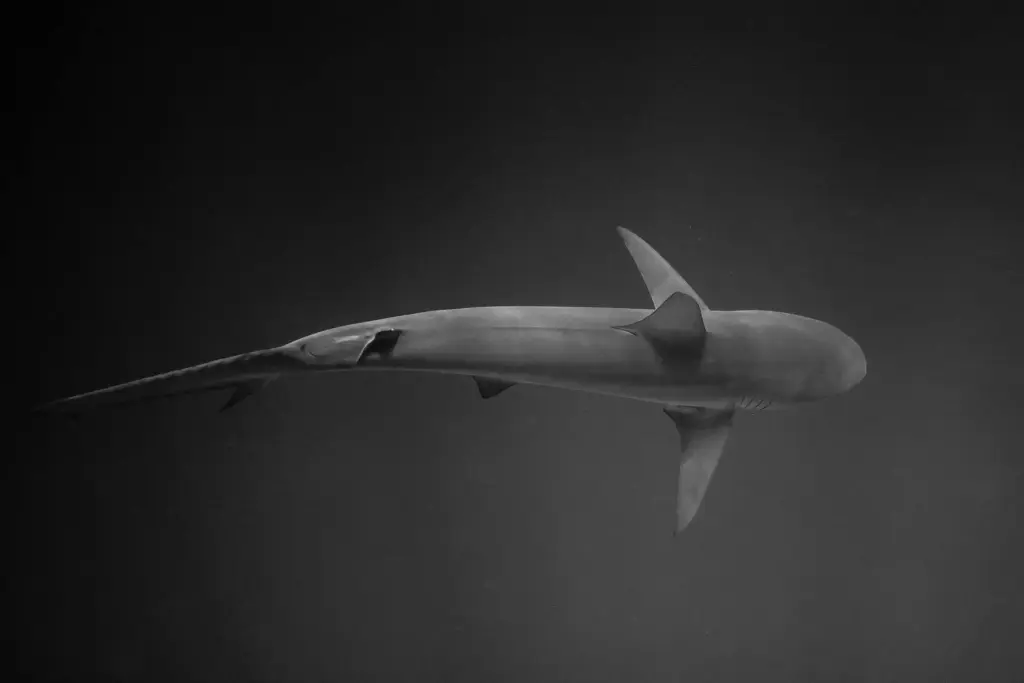
Marine scientists just announced one of the most exciting biodiversity discoveries of the year. During an intense 35-day expedition in the Coral Sea, researchers found more than 110 entirely new fish and invertebrate species—and the photographs reveal creatures that look like they emerged from science fiction.
According to The Guardian, the Coral Sea species discovered include everything from new catsharks and rays to ghostly chimaeras and bizarre sea anemones. These animals were found lurking in waters between 200 meters and 3 kilometers deep in the Coral Sea Marine Park—an area spanning nearly one million square kilometers east of Australia's famous Great Barrier Reef.
The research team from CSIRO's Investigator vessel traveled as far as Mellish Reef, roughly 1,000 kilometers off the Queensland coast. According to expedition reports, Dr. Will White, the voyage chief scientist and shark expert, described the findings as likely representing the largest taxonomic workshops of marine animals ever undertaken in Australia. He personally identified four new species among the Coral Sea species discovered: a deepwater skate, a ray, a catshark, and a chimaera—also known as a ghost shark.
Meet the Deep-Sea Newcomers
The new animals look like they swam straight out of a fantasy film. The deepwater catshark from genus Apristurus appears almost flabby with its dark body, slow movements, and rows of tiny teeth—essentially the complete opposite of the sleek predators most people picture when thinking of sharks. The new ray species, found on the Kenn Plateau between Australia and New Caledonia, belongs to the Urolophus genus and sports a distinctive long tail with a caudal fin at the end.
Perhaps the most haunting discovery among the Coral Sea species discovered is the new chimaera, a cartilaginous fish related to sharks that features what researchers describe as a rat-like tail, plump nose, and a prominent spine above the dorsal fin. These ghost sharks have always captured imagination because they look so unlike anything else in the ocean.
But the discoveries were not limited to vertebrates. Dr. Claire Rowe from the Australian Museum noted that invertebrate specialists on board photographed and collected tissue samples from numerous newly discovered animals, including what appear to be new species of sea anemones. Many of these deep-sea creatures are cryptic, meaning they are nearly impossible to identify based on physical characteristics alone—genetic testing is needed to confirm they are truly new to science.
Why This Coral Sea Discovery Actually Matters
Expedition chief scientist Dr. White explained that very limited data existed about deepwater biodiversity in this region before the voyage. That gap in knowledge matters significantly. The Coral Sea has warmed nearly half a degree Celsius over the past 30 to 40 years, and sea surface temperatures there have hit record highs in recent years. Climate change and potential deep-sea mining operations threaten these ecosystems before scientists even understand what lives there.
According to Dr. Rowe, "so little is known about the deep sea. It's such an unexplored area, and with so many threats to our ocean, such as overfishing and climate change and deep sea mining, we need to understand what's out there before it's lost."
The specimens collected during this expedition have been distributed to collections at CSIRO, the Australian Museum, and state museums across Australia. Researchers are conducting further genetic analysis to confirm exactly how many Coral Sea species discovered during the voyage—and early estimates suggest the total could eventually exceed 200 as more specimens are identified.
This discovery serves as a powerful reminder that there is still so much to learn about this planet. While humanity dreams about colonizing Mars and exploring distant galaxies, entire communities of bizarre, beautiful creatures are swimming undetected in Earth's oceans. The Coral Sea species discovered during this expedition represent just a fraction of what likely remains hidden in the deep sea.
The Coral Sea expedition proves that conservation and exploration must go hand in hand. Scientists cannot protect what they do not know exists. And with ocean temperatures rising and human activities pushing into deeper waters, discoveries like these highlight why protecting marine ecosystems matters more than ever for the future of the planet.
Comments 0
No comments yet. Be the first to share your thoughts!
Leave a comment
Share your thoughts. Your email will not be published.