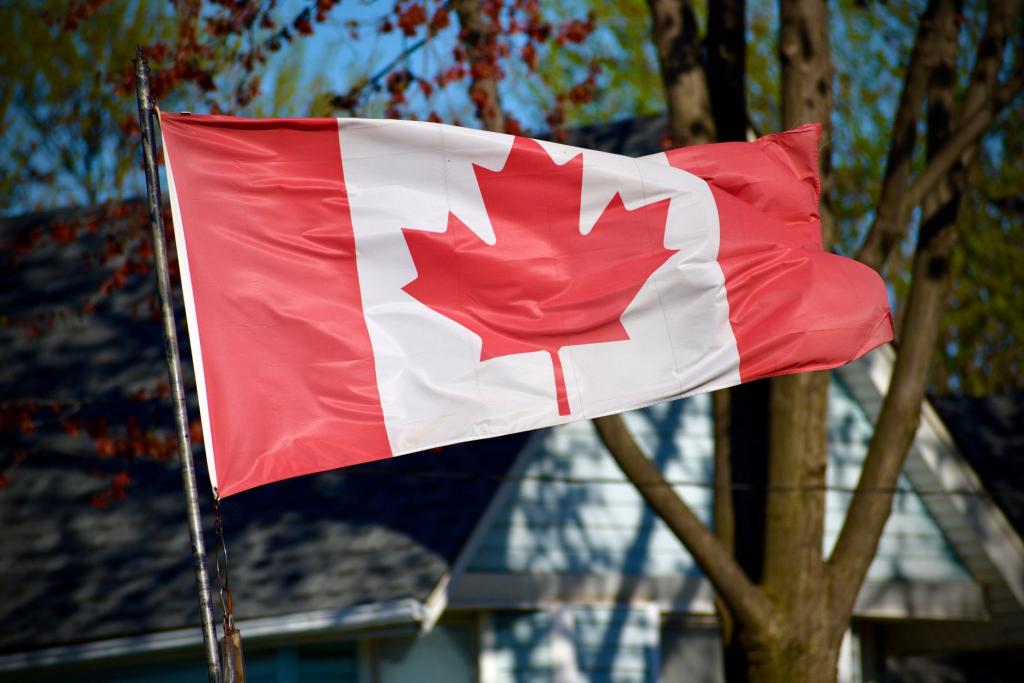
Canada is putting serious money behind its Olympic ambitions. In Winnipeg this week, the federal government announced more than seventeen million dollars in fresh Olympic Funding for the country's Olympic and Paralympic training institutes, part of a much larger package aimed at everyone from playground beginners to podium contenders. According to the announcement, the money will buy athletes better access to sports science, nutrition, mental-performance coaching and medical support — the unglamorous machinery that turns raw talent into medals.
The headline figure covers the 2026–27 fiscal year for the Canadian Olympic and Paralympic Sport Institute Network, the chain of regional centres where national-team athletes train. It includes new money of more than five million dollars this year on top of existing commitments. The institute network is the backbone of high-performance sport in the country: when an athlete needs a physiologist to fine-tune recovery, a nutritionist to plan a training block or a mental-performance coach before a final, these are the facilities that provide it. The funding announcement, made at the Canadian Sport Centre Manitoba — itself a legacy of the 1999 Pan American Games in Winnipeg — frames the investment as a bet that better support systems produce better results on the world stage.
Where the rest of the money goes
The institute money is only one slice of the package. The announcement also sits inside one hundred twelve million dollars in new Sport Support Program funding, a mid-year injection for national sport organizations delivered through what the government calls a streamlined process. That money is earmarked for several priorities at once: safe-sport and integrity measures, expanding grassroots participation, developing athletes and strengthening high-performance programs across the country. The breadth matters, because Canada's sport system has faced criticism in recent years over gaps in athlete safety and uneven funding between marquee sports and smaller ones. Spreading money across integrity, access and excellence is an attempt to answer all three critiques at the same time.
Individual athletes are getting a direct boost too. In July, the government announced a three-million-dollar annual increase to the Athlete Assistance Program, lifting its total yearly funding to forty-three million dollars. That program pays monthly stipends to carded athletes — the ranked competitors the system officially backs — and the increase extends support to more of them, including athletes in sports newly added to the Olympic and Paralympic programs and guides for athletes with visual impairments. It also raises support for para athletes and for athletes who are parents. For a young wrestler or para swimmer balancing training with rent, those monthly allocations can be the difference between staying in the sport and walking away from it.
Zooming out further, all of this sits within what the government describes as a generational one-billion-dollar investment in sport — the largest in the country's history. That envelope covers community access, hosting world-class events, upgrading stadiums, fields and recreation facilities, and the athlete pipeline from first tryout to final. The scale is a deliberate signal: after years of debate about whether Canada punches below its weight in sport funding relative to rival nations, Ottawa is choosing to spend at a level it can point to as historic.
Why it matters beyond the podium
For most Canadians, the payoff will not be measured in medals. The community-facility and participation side of the package is aimed at the rinks, pools and fields where kids actually play — the infrastructure that decides whether sport is something a family can afford. If the money flows as promised, local clubs should see better fields and more programming, and national organizations should face real accountability on safe sport after a string of damaging scandals in Canadian athletics. That is the theory behind the new Olympic Funding: that medals start with systems, and systems start with money reaching the right places. That accountability piece may end up mattering more than any single funding line: trust in the system is what keeps parents enrolling their kids.
There is a counterpoint that deserves air. Sports economists have long questioned whether public money for elite sport pays off, arguing that medal counts rarely move the needle on public health or national unity as much as politicians claim, and that community recreation delivers better returns per dollar. The government's answer, delivered by the sport minister in Winnipeg, leans on the nation-builder argument: every time a Canadian athlete competes, they wear the maple leaf, and the country rallies behind them. "Canada's top athletes are a great source of pride for our entire country," Adam van Koeverden said in the announcement. "Every athlete needs a strong team behind them. Today’s federal announcement highlights a direct investment in the national team, supporting its pursuit of excellence and helping athletes at every step of their sport journey."
Matt Barr, who leads the Manitoba centre and spoke on behalf of the institute network, welcomed the funding as recognition of the role the institutes play, saying the network looks forward to putting the resources to work for athletes, coaches and communities. The timeline is tight: with the next Olympic cycle already underway, institutes will need to turn this year's money into staffing, equipment and programming quickly for it to matter in upcoming qualifying campaigns. Watch for the first test in how national sport organizations report back on the streamlined mid-year funding — whether it reaches clubs and athletes, or stalls in administration, will be the real measure of the announcement.
The investment also lands at a moment when science keeps raising the bar for what elite training requires. New research on how the body remembers past infections hints at how deeply physiology shapes performance, while the revival of night trains shows how travel infrastructure affects who can afford to compete far from home. As the minister's announcement put it, the goal is building from the playground to the podium — and this week, Ottawa attached a very large number to that promise.
Comments 0
No comments yet. Be the first to share your thoughts!
Leave a comment
Share your thoughts. Your email will not be published.