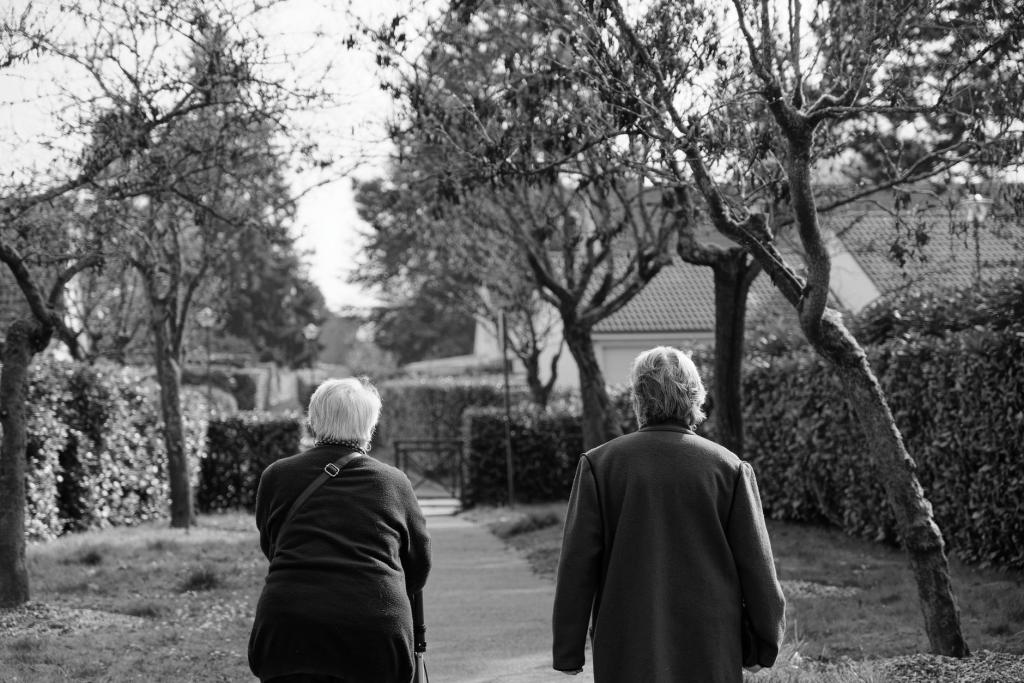
Older adults who took part in a supervised brisk walking program were far more likely to move to a milder frailty category than peers who strolled at a comfortable pace, according to a clinical trial published on September 30, 2026, in the journal PLOS One. The researchers behind the trial say it is the first study to show that high-intensity walking can reverse frailty that has already set in, rather than only slowing it down.
Frailty is a state of weakness and low reserve that leaves older people more exposed to falls, hospital stays and loss of independence. In this trial, frailty was scored with a short tool that checks grip strength and asks about tiredness, appetite, trouble with stairs or long walks, and usual activity levels. Everyone enrolled was either frail or pre-frail, the earlier warning stage before full frailty.
Same schedule, different effort
The trial was run in independent living communities near Chicago, with whole communities assigned to one pace or the other so neighbors would not watch another group walk at a different speed. Lead author Margaret Danilovich of Northwestern University Feinberg School of Medicine and corresponding author Daniel S. Rubin of the University of Chicago worked with colleagues at Northwestern and the University of Michigan. The brisk walking group and the casual group followed the same timetable, walking with a research assistant three times a week for 45 minutes at a time over 16 weeks.
Only the effort differed. The brisk walking group aimed for about 70 percent of each person's estimated maximum heart rate, and assistants used set prompts to urge walkers on when their pace slipped. Because many participants took medication that can blunt heart rate, the team also judged effort by how hard the walk felt. Across the sessions, the brisk walking group averaged 71 percent of maximum heart rate, while the casual group averaged 59 percent.
Residents were at least 60 years old and could walk a short distance with no more than moderate help. People with uncontrolled heart, metabolic, kidney or breathing disease that limited exercise were not enrolled. In the end, the analysis covered 105 people, and the two groups were similar in most respects at the start.
What improved, and what did not
After the program ended, about seven in ten people in the brisk walking group had moved to a milder frailty category, compared with fewer than half in the casual group. Half of the brisk walkers no longer counted as frail or pre-frail at all, compared with roughly a quarter of the casual walkers. The authors reported the gap as nearly triple the odds of improvement, and they were careful to note that odds are not the same as being three times as likely.
Everyday movement improved alongside the frailty scores. The brisk walking group raised its usual walking speed by more and covered about 160 feet more than the casual group in a six-minute walking test. Thigh monitors showed the brisk walkers adding nearly five hundred steps a day compared with their starting point, while the casual walkers lost a similar number. The average participant was 79 years old, so gains of that size can decide whether a trip to the grocery store ends in exhaustion or not.
Some measures did not separate the groups. Balance, a timed walking test and a general physical performance score showed no clear difference between brisk walking and casual walking, and neither did the continuous frailty score that sits underneath the category changes. The researchers suggest that faster walking asks more of the heart and lungs, which may build the reserve that gentle strolling does not, though the trial was not designed to prove that mechanism.
Dropouts weaken the headline result
The trial's main weakness is how many people left it. Of the residents who enrolled, sixty never reached the final analysis, and losses were heavier in the brisk walking group than in the casual group. People who dropped out tended to be slightly older and weaker at the start. When the researchers adjusted their calculations for the missing participants, the brisk walking advantage shrank and fell short of the usual statistical threshold, which means chance cannot be ruled out for the adjusted result. According to the study authors, the effect was still large enough to matter in clinical practice.
Safety events were limited. Across all the supervised sessions, one fall in the brisk group was judged definitely related to the program and caused no injury, and a small number of knee, back and leg pain episodes were rated possibly or probably related in both groups. Serious health events that occurred during the trial were judged unrelated to the walking.
The findings also come with limits on who they describe. Sessions were supervised one on one in retirement community hallways and stairwells, so the trial cannot say whether brisk walking works as well when frail adults walk alone or in unsupervised groups. Most participants were women, and the study population was drawn from one metropolitan area. The work was funded by the National Institute on Aging, part of the National Institutes of Health, and the authors declared no competing interests.
The result sits alongside other recent research on how aging bodies respond to strain, including work on astronaut hip fractures tied to long spaceflights and a study of flatworm brain regeneration genes that could guide Parkinson's therapies. For readers who want the full methods and tables, StudyFinds analyzed the full PLOS One paper, including its funding notes and limitations. Anyone who is frail should talk to a doctor before trying vigorous walking, since the trial's pace was set and watched by research staff.
Comments 0
No comments yet. Be the first to share your thoughts!
Leave a comment
Share your thoughts. Your email will not be published.