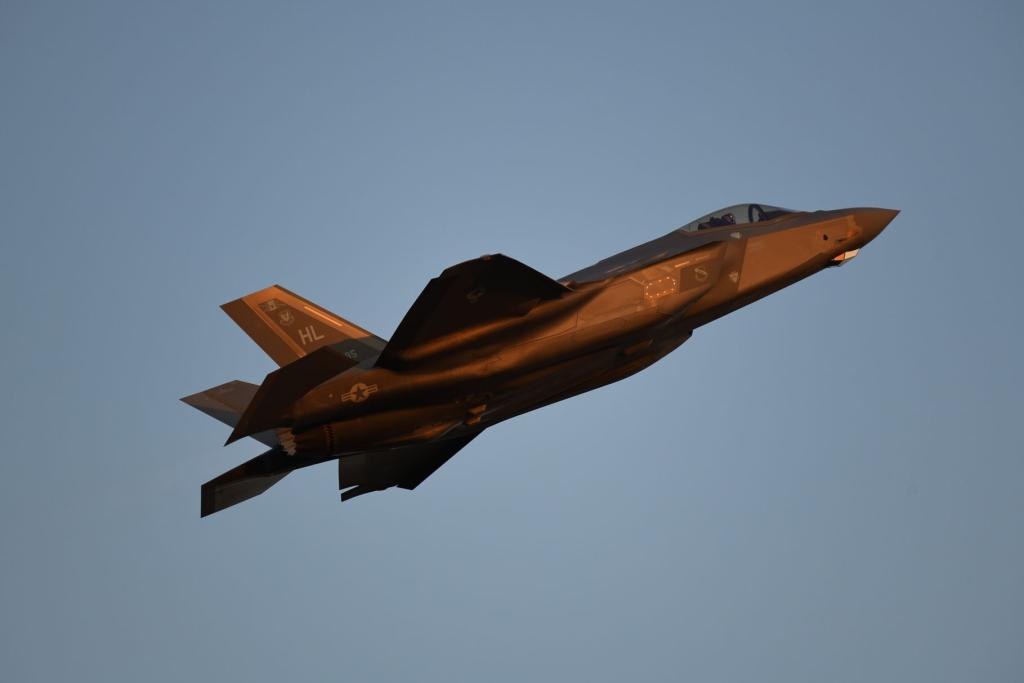
Boeing just pulled off the comeback of the decade in American defense. The company has won the U.S. Navy's contract to design and build the F/A-XX fighter, the sixth-generation stealth jet that will replace the F/A-18 Super Hornet fleet — the $20 billion F/A-XX fighter development contract, beating out rival Northrop Grumman. Announced Tuesday, Sept. 29, the award means Boeing now holds both of the Pentagon's marquee next-generation fighter programs, a position nobody would have predicted for a company still digging out of years of commercial and defense turbulence.
According to Reuters, which reported the award, Boeing shares rose 2.25% in extended trading on the news while Northrop Grumman fell 3.5% — the market's blunt verdict on who won and who lost. The F/A-XX will feature advanced stealth, longer range, an open mission-systems architecture, and integration with uncrewed 'loyal wingman' drones that fly alongside piloted aircraft. Specific technical details are classified, but the Navy has described it as the centerpiece of carrier air power for the 2030s and beyond — the real-world version of the 'Top Gun' fantasy, minus the volleyball.
Boeing's double win and the road to it
This is Boeing's second sixth-generation fighter victory. The Air Force selected Boeing in March 2025 to build the F-47, its own next-gen fighter, leaving Lockheed Martin out of both competitions entirely after it was eliminated from the F/A-XX contest in March 2025. The final head-to-head came down to Boeing versus Northrop Grumman, and the Navy went with Boeing's St. Louis-based F/A-XX fighter team — a decision that caps a remarkable turnaround for a company many analysts had written off.
The program nearly died before it got here. Pentagon officials tried to slow the F/A-XX down, reportedly doubting whether America's industrial base could build two sixth-generation fighters at once, and Congress had to intervene — earmarking $750 million for the program in the 2025 tax-cut and spending law and another $1.4 billion for fiscal 2026. In a statement, Boeing Defense, Space & Security CEO Steve Parker said, 'It's an honor to be selected to produce the Navy's first sixth-generation platform,' adding that delivering two advanced fighters in parallel was always the company's plan. Pentagon chief weapons buyer Michael Duffey called the award 'a crucial, non-negotiable investment in America's national security.'
Production will center on Boeing's secure manufacturing facility in St. Louis, Missouri — the company's largest in the United States — where the F/A-18 and EA-18G Growler lines are winding down. That gives the region a generational jobs pipeline just as Boeing pitches the F/A-XX and F-47 as magnets for engineering and tech talent. It also lands with real human stakes: Boeing's St. Louis fighter workers returned from a 101-day strike last year, and the award turns a story of labor strife into one of industrial resurrection. As reported in the Reuters coverage of the award and Boeing's own official press release, the first production F/A-XX fighter jets are expected in the 2030s, with Super Hornets — flying since the 1990s — soldiering on into the 2040s.
Why hundreds of billions should matter to you
Here's the number that should stop you scrolling: the F/A-XX fighter development contract is $20 billion, but the program could grow to hundreds of billions of dollars over its lifetime as production ramps up and potential international customers place orders. That is taxpayer money, greenlit partly because Congress overrode skeptical Pentagon officials — a clean, concrete example of how defense spending actually gets decided in Washington.
And then there's the technology itself. The F/A-XX fighter is being designed from day one to operate alongside AI-controlled drone wingmen — machines that fly formation with a human pilot, scout ahead, and carry extra weapons. This is the future of air warfare that Gen Z will inherit and, through taxes, fund: not just faster jets, but a mixed human-machine team in the sky. Whether you find that thrilling or terrifying, it is the most consequential military aviation decision of the decade, and it was just made.
The bottom line: Boeing, written off by plenty of analysts a few years ago, now owns the Pentagon's fighter future — the F-47 for the Air Force and the F/A-XX fighter for the Navy. It lands in a busy policy season, from the US-China tariff deal to the escalation of drone warfare over Ukraine: the money and the machines are moving at the same time. Northrop Grumman walks away empty-handed, Lockheed Martin watches from the sidelines, and St. Louis gets the jobs. Watch the stock, watch the hiring boards, and watch Congress the next time someone asks where the money goes.
Comments 0
No comments yet. Be the first to share your thoughts!
Leave a comment
Share your thoughts. Your email will not be published.