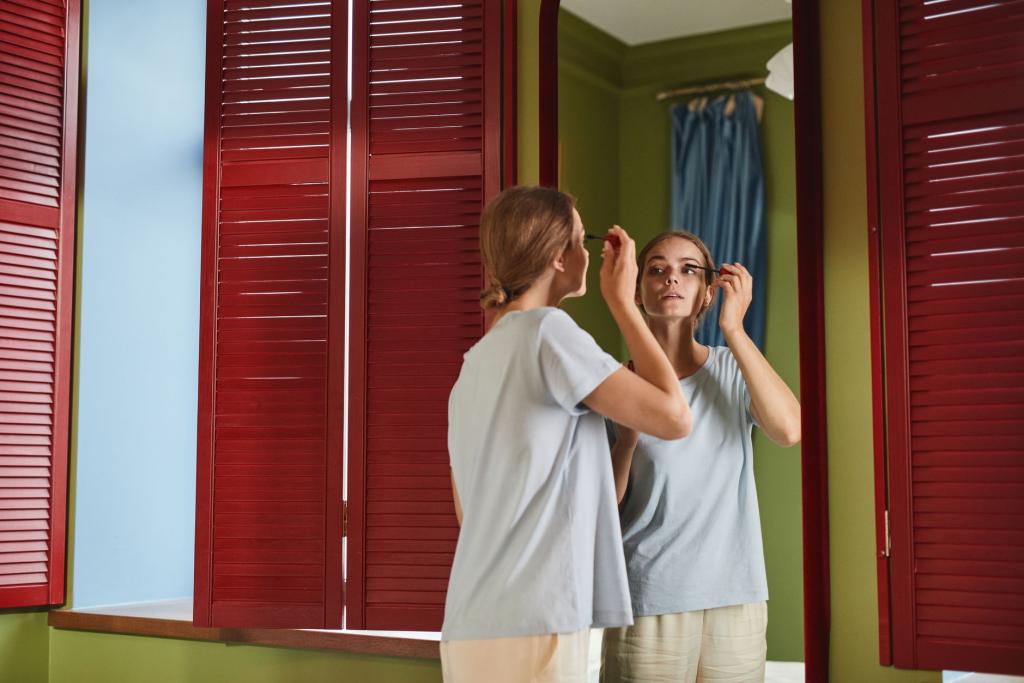
Blush Draping is having its biggest comeback since the eighties, and this time the sweep of color from cheekbone to temple is softer, sheerer, and far easier to get right. The technique means brushing blush upward from the apples of the cheeks toward the temples instead of dabbing it on the middle of the cheek, using color itself to sculpt the face. It dates back to the seventies and eighties, when American makeup artist Way Bandy turned blush into a face-shaping tool for stars including Cher, Madonna, and Diana Ross. The modern revival keeps the lifted effect but drops the intensity, thanks to creamy formulas and a buildable, transparent finish. If heavy contouring ever felt like painting by numbers, this is the looser and more forgiving answer.
What makes the return interesting is how little it resembles a simple copy of the original. According to a mid-October 2026 feature on the revival, today's version is customized rather than stamped on: the blush sits higher and spreads over a larger area than the classic cheek-dot, which gives the face an immediate upward, lifted look. The same coverage notes that blush has become one of the most sought-after products in the beauty kit, taking over the sculpting job that bronzers used to do almost millimeter by millimeter. Sculpting has not disappeared. It has just gone softer, and above all, more colorful.
Why Blush Draping fits the moment
The timing is no accident. Beauty right now is moving away from precision toward a lived-in finish, the "having-a-life-core" mood that trend watchers have been tracking all fall, where undone hair and visible expression lines read as chic. One trend platform logged searches for tired-girl makeup more than tripling, a sign that the polished, filtered face is losing its grip. Draping slots neatly into that shift: it is a contour method that looks like a flush, not a diagram.
Makeup artists say the placement is doing the real work. "We are seeing it applied higher on the cheekbones to create a subtle lifting effect," makeup artist Ubhi told Bustle in its summer beauty roundup, describing how the color is blended upward toward the temples and even into the outer eye area. That upward motion is the whole trick. Higher placement reads as a lift, a more central placement reads as fresh and youthful, and a light wash over the bridge of the nose mimics the rosy look left by a day in the sun. A similar explainer culture is growing around everyday rituals, from the quiet-stroll movement covered here to the stay-home budgeting trend explored in this survey story.
There is also a practical argument that has nothing to do with aesthetics. In a cost-conscious era, one product that can stand in for bronzer, blush, and highlighter is genuinely useful, and draping works with a single cream or liquid blush. Cream formulas blend most naturally into the skin for that flushed-from-the-cold effect, while powder versions give more control for oilier skin. Shade choice follows undertone: cool roses and berries for cool undertones, warm corals and peaches for warm ones, and soft mauves or terracottas in between. Sheer, watercolor-like finishes are having their own moment, because the goal is a believable flush that melts into the skin rather than a visible layer of pigment. "What I love about a watercolor look is that you see the color, but not a thick layer of product," makeup artist Christian Briceno told Bustle.
How to try it without the eighties excess
The framework is simple enough to test in one sitting. Start with the apples of the cheeks to anchor the color, then blend upward and outward toward the temples in a soft C shape, keeping the motion going up rather than sideways. Build slowly: a first pass that reads clearly at a few feet away is enough, and a second pass should stay in the temple zone only, since adding more product near the cheek pulls the color downward. A light wash of the same blush across the nose ties everything together, and checking the result in daylight tells the truth that bathroom lighting hides.
The common mistakes are all fixable. Beauty writers warn against loading too much product at once, placing the color too close to the center of the face, and skipping the blending that softens the edges. Testing over bare skin or a single thin base layer helps, because blush layered over heavy sunscreen, primer, foundation, concealer, powder, and setting spray has many chances to misbehave. A clean brush matters too: old foundation on a blush brush can make powder grab and cream turn muddy. And if the placement looks like ordinary blush on the cheek, the starting point was probably too low — move it up and try again.
Not every face needs the full sweep, and that is part of the appeal. The technique adapts to face shape and personal taste, which is why it has survived four decades of trend cycles. Whether it stays a staple or fades into the next revival, this version of Blush Draping has already done something useful: it proved that sculpting a face does not require a separate product for every job. For more on how young people are rewriting the rules of everyday rituals, see our look at the third-space boom.
Comments 0
No comments yet. Be the first to share your thoughts!
Leave a comment
Share your thoughts. Your email will not be published.