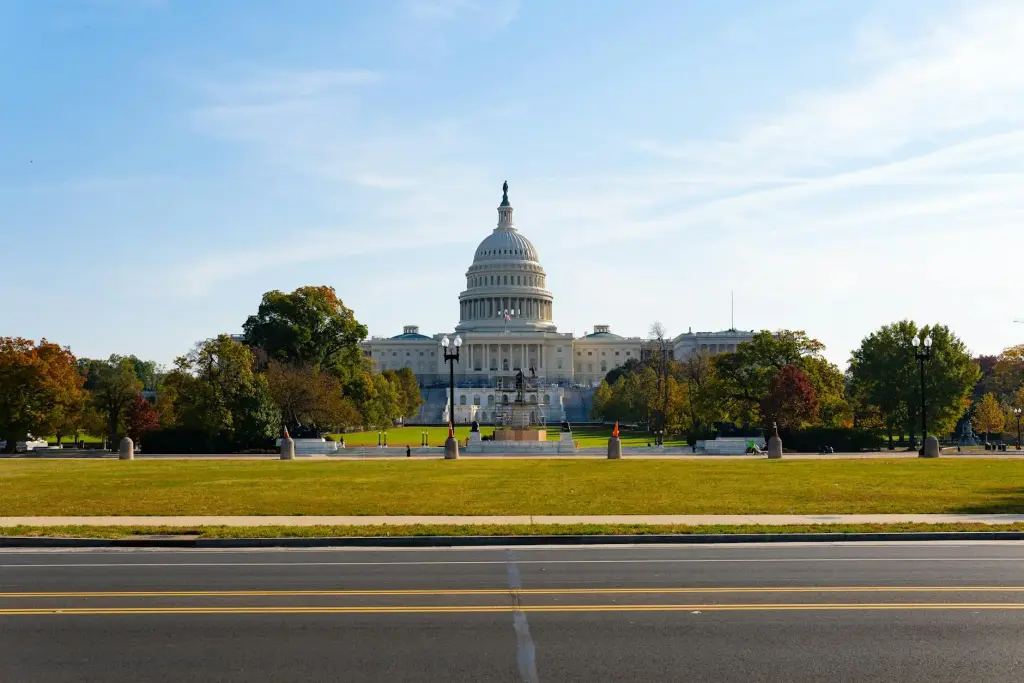
The Supreme Court is about to decide one of the most consequential immigration cases in decades. On April 1, the justices will hear arguments on whether President Trump can end automatic citizenship through executive order. This birthright citizenship Supreme Court case could strip approximately 255,000 babies born on U.S. soil of their citizenship every single year.
What Is Birthright Citizenship?
The 14th Amendment to the Constitution has guaranteed automatic citizenship to "all persons born or naturalized in the United States, and subject to the jurisdiction thereof" since 1868. This principle was reaffirmed in the landmark 1898 Supreme Court case US v. Wong Kim Ark, which established that virtually everyone born on American soil is a citizen.
According to USA Today, there has been only one major exemption: children of foreign diplomats. But Trump argues that children of people in the country illegally or temporarily should also be exempt from automatic citizenship.
What Trump's Executive Order Would Do
Trump signed the executive order on his first day back in office, directing federal agencies not to recognize citizenship for babies born in the United States if neither parent is a citizen or lawful permanent resident. This would affect not just undocumented immigrants, but also parents on student visas, work visas, and those with temporary humanitarian protections.
The Migration Policy Institute estimates that roughly 255,000 children would start life without U.S. citizenship each year under this policy, about 6% of all births. By 2075, the share of the U.S. population without citizenship or legal status would be 40% larger than it would be without this change.
Some children would become stateless, meaning no country claims them, with no pathway to citizenship even if their parents eventually gain legal status. As immigration experts note, many federal immigration laws are built around the assumption of automatic citizenship and don't address these scenarios.
The Broader Impact on Families
The consequences extend far beyond immigrant families. If the order goes into effect, every new parent would need evidence of their own citizenship or immigration status to ensure their child is a citizen. According to the Brennan Center for Justice, at least 3.8 million American citizens don't have ready access to birth certificates, passports, or naturalization certificates to prove their status.
Stephen Yale-Loehr, a retired Cornell Law School professor and longtime immigration scholar, told USA Today that "we would essentially need a new federal bureaucracy to adjudicate the citizenship of newborns."
There's also the question of retroactivity. While Trump's order directly applies to people born after it takes effect, if the Supreme Court agrees that the 14th Amendment has been misinterpreted for generations, that could "cast a shadow" over the citizenship of millions of Americans already living here.
How the Court Could Rule
The Supreme Court has multiple options in this birthright citizenship Supreme Court case. They could rule that Trump's policy violates the original understanding of the 14th Amendment, finding that birthright citizenship is constitutionally protected. Alternatively, they could bypass the constitutional question entirely and rule that the order violates a 1952 immigration law.
While that would still block Trump's policy, it would be an incomplete victory. Congress could potentially change immigration laws, which would likely trigger another legal challenge and send the constitutional question back to the high court.
The ACLU and other immigrant rights groups argue that the decision the government is seeking "would really signal a kind of open season on questioning the citizenship of other Americans, something we've already seen far too often."
This case connects to broader debates about immigration and civil rights that have sparked massive protests across the country. The outcome will affect not just immigrant communities but the fundamental definition of who gets to be an American.
The Supreme Court is expected to issue its ruling by late June or early July. Given the court's 6-3 conservative majority, the outcome remains highly uncertain. But one thing is clear: the decision will reshape American immigration policy and the meaning of birthright citizenship for generations to come.
Comments 0
No comments yet. Be the first to share your thoughts!
Leave a comment
Share your thoughts. Your email will not be published.