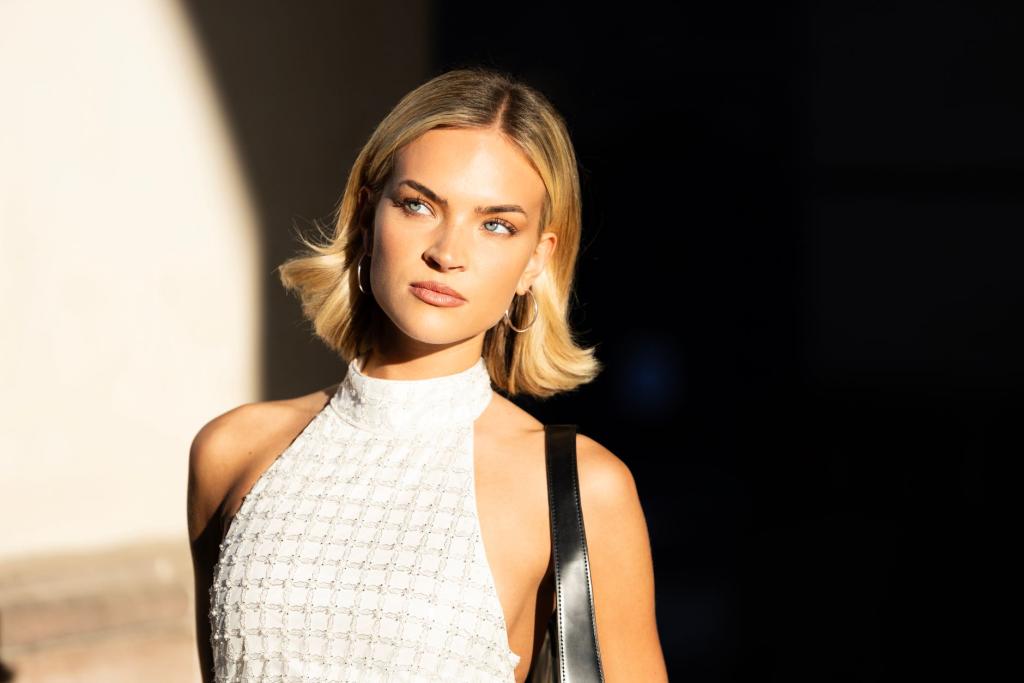
Donatella Versace is not done with fashion. Eighteen months after stepping down from the house that carries her brother's name, she is building a new one from scratch. On September 21 the 71-year-old designer announced the Donatella Versace Revolve deal: a joint venture with REVOLVE, the Los Angeles e-tailer that Gen Z treats as a default checkout button, to create an independent beauty and fashion business. Donatella will lead the new venture as chief creative officer, while REVOLVE supplies the technology, the marketing, and the e-commerce engine.
The first move is beauty. Neither the brand name nor the products have been revealed yet, but the venture's opening launch will be in beauty, with details expected in the coming months, according to reporting from TheIndustry.fashion. The initial markets will be the United States, Latin America, Asia-Pacific, and the Middle East, and the business will live on a brand-new digital platform built for how a younger generation shops, shares, and scrolls.
What the Donatella Versace Revolve deal actually includes
Strip away the glamour and the Donatella Versace Revolve deal is a clean division of labor. Donatella brings creative direction, a global personal brand, and decades of cultural capital from her years dressing pop stars and defining red-carpet excess. REVOLVE brings digital commerce, technology, consumer data, operations, marketing, and a direct line to millions of shoppers. The press release describes a venture "reflecting Donatella's personal creative vision, designed around how a new generation discovers style, experiences culture, shops, shares and connects."
Donatella put it in her own words on Instagram: "I believe creativity should be fearless, inclusive and alive in the world. I have always been inspired by the next generation, in music, film, art and, of course, fashion. This partnership gives me the freedom to speak to that generation in a completely new and personal way, through beauty and fashion. REVOLVE understands something I believe deeply: culture comes from connection."
Mike Karanikolas, co-founder and co-chief executive of REVOLVE Group, framed the other half of the bargain in a similar post: "By combining Donatella's creative authority with REVOLVE's technology, infrastructure and global reach, we have an opportunity to create something genuinely distinctive, and build it for the long term." Reuters reported that REVOLVE booked roughly 1.4 billion dollars in sales last year and markets itself as "the next-generation fashion retailer for Millennial and Generation Z consumers."
Why she walked away, and why now
The Donatella Versace Revolve deal only makes sense against the backstory. Donatella stepped down in March 2025 as creative director of Versace, a role she had held for nearly 28 years after taking over following the 1997 murder of her brother Gianni. She moved into a newly created chief brand ambassador role, and the house was subsequently acquired by Prada Group. A year and a half later, she is choosing to compete as a founder rather than preside as an ambassador.
Her choice of partner says as much as the timing. REVOLVE is not a traditional department store or a licensing partner that would bury her name in a fragrance deal. It is a digital-first retailer that built its empire on influencer trips, haul culture, and data about what twenty-somethings actually click on. Its online platform carries more than a hundred thousand products from over fourteen hundred brands, and its marketing machine can turn a single social post into a sellout afternoon.
This is also REVOLVE's biggest swing yet. The company has a track record of long-term collaborations with Nicole Richie and model Elsa Hosk, plus one-off projects with Jennifer Lopez and designer Peter Dundas, as Modaes reported. None of those partners carries Donatella's level of fashion authority. The company is betting that her name, attached to a venture built for digital-native shoppers, is worth more than any capsule collection.
What it means for luxury
Luxury fashion has spent a decade trying to figure out Gen Z without looking desperate. Houses have hired streetwear designers, dropped video-game collaborations, and launched TikTok accounts that embarrass everyone involved. Donatella's move inverts the playbook: instead of a heritage house chasing youth culture, youth culture's retailer is absorbing a heritage icon. The Balenciaga Sonic capsule showed how hungry Gen Z is for luxury that plays in their worlds; this deal puts one of luxury's defining figures permanently inside that world.
The venture opens a familiar door. Fragrance and cosmetics have always been luxury's entry point for young buyers who cannot yet afford the handbag, and a beauty-first launch lets Donatella build an audience before asking for fashion budgets. It is also the category where REVOLVE's community marketing hits hardest, and where her own image, the platinum hair and smoky eye, translates most directly.
Whether star power still moves product in an era of infinite choice is the real question here. Donatella spent her career insisting that fashion is about confidence and self-expression, and she built one of the most recognizable personal brands in the industry before "personal brand" was even a phrase. If she can turn that into a company that speaks to a generation raised on dupes and discount codes, every luxury house will be taking notes. The runway mood this year already showed the industry drifting from quiet restraint toward personality and joy, and quiet was never really her language.
For now, the details are thin: no name, no products, no prices, no confirmed launch date. The joint venture's press release even notes that definitive agreements are still being negotiated. But the direction is clear. After nearly three decades protecting a legacy, Donatella Versace is finally building something that is entirely hers, and she chose the most Gen Z retailer on the internet to build it with.
Comments 0
No comments yet. Be the first to share your thoughts!
Leave a comment
Share your thoughts. Your email will not be published.