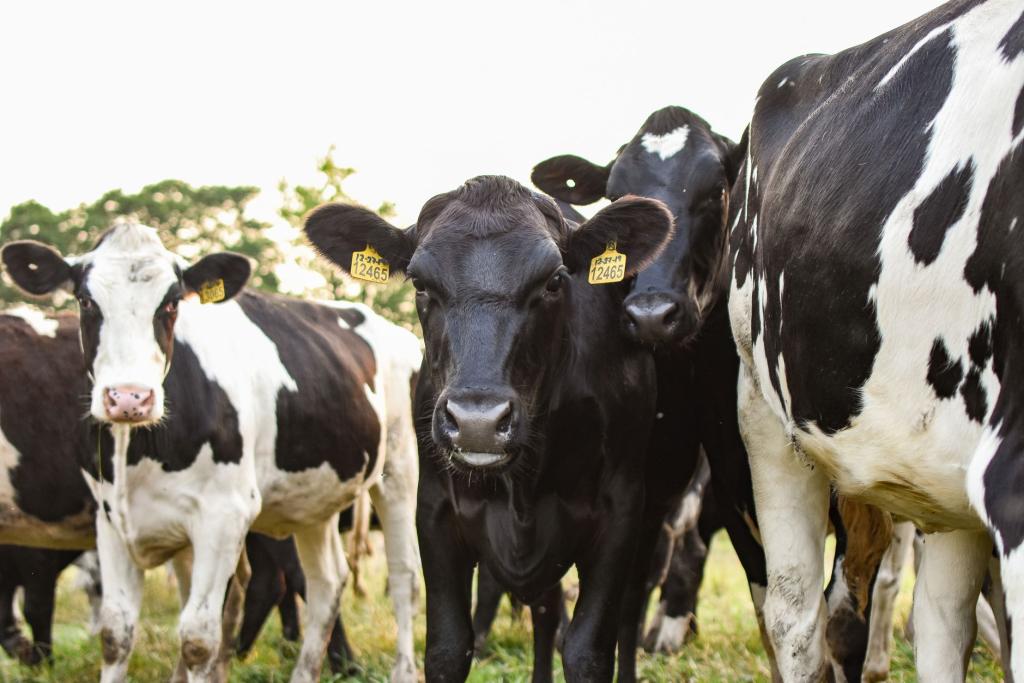
Boston-based ArkeaBio has closed a fifteen-million-dollar Series A2 extension round to push its livestock methane shot toward commercialization, as reported by Tech Startups. Announced in September 2026, the financing was led by AgriZeroNZ — the joint venture backed by the New Zealand government and major agribusinesses — with support from Breakthrough Energy Ventures, the climate fund founded by Bill Gates. The shot works by coaxing an animal's immune system to make antibodies against the microbes in the rumen that produce methane, and the startup argues the approach fits the way farmers already work, since cattle are routinely vaccinated as part of normal herd health programs.
The problem is large. The company's backers estimate that methane burped up by ruminants adds up to about three billion tonnes of carbon dioxide equivalent a year, representing roughly six percent of annual greenhouse gas output, according to Global AgInvesting's coverage of the startup's earlier financing. Methane also punches far above its weight as a warming agent: the US Environmental Protection Agency notes that a tonne of the gas absorbs far more energy than a tonne of carbon dioxide over any given period, and a United Nations assessment puts it at more than eighty times the potency across a twenty-year horizon. Because that warming is front-loaded, cutting burp methane now buys the climate faster relief than many slower-acting measures.
Why ArkeaBio Is Betting on a Shot Instead of Feed Changes
Several technical approaches are chasing the same burps. Feed additives, including DSM's 3-nitrooxypropanol, claim meaningful cuts but must be mixed into rations every day — awkward for pasture-raised herds that rarely see a feed bunk, a limitation noted by Fast Company. Seaweed-based supplements face the same logistics problem. Selective breeding can produce lower-methane animals, as with low-emission dairy lines developed in the island nation, but gains arrive over generations. Microbiome engineering — from engineered enzymes to Fonterra's "Kowbucha" probiotic — is earlier-stage and still proving itself inside real animals.
The immunization approach sidesteps daily compliance: one or two jabs a year could do the work of a daily feed regime. Chief executive Frank Wooten has made the operational case plainly, noting that vaccination is already part of livestock routines in essentially every market — a point he made to AgFunderNews, which first reported his appointment as CEO. AgriZeroNZ chief executive Wayne McNee has called a ruminant immunization "a low cost, high-impact solution for a range of farming systems," in comments to the same outlet.
The catch is potency. Wooten told AgFunderNews that the first commercial product aims for methane reductions between ten and fifteen percent — below what some feed additives claim — with later generations expected to improve. A cut in the low double digits is meaningful but modest, and it is a company projection rather than a field-proven result. ArkeaBio's shot still has to clear large-scale field trials and convince regulators that a novel immunization is safe and effective in animals, which is why the next two years matter so much.
ArkeaBio's Narrowed Road to Market
The startup plans to seek regulatory approval in New Zealand in 2027 and hopes to begin commercial sales in 2028, with the fresh capital meant to carry it through its first commercial product. Focusing on NZ first makes strategic sense: livestock methane accounts for close to half of the country's annual emissions tally, and the local innovation system has been experimenting with methane tools — from slow-release boluses to daffodil-derived inhibitors — for years, as reported by Radio New Zealand. Wooten said the new financing should carry the company through that first product.
There is a sobering footnote to the financing. ArkeaBio trimmed roughly a third of its workforce while raising the round, narrowing its focus to its first market, its first product, and initial revenue. That combination — fresh capital plus a leaner payroll — makes investors' priorities clear: runway and commercialization now, rather than funding every research program at once. But a thinner team chasing a 2028 commercial launch with a modest first-generation cut is a real commercialization risk, and timelines this early are company projections, not guarantees.
Why It Matters for What's on Your Plate
For readers who eat dairy and meat, the stakes are concrete. Major food and dairy companies have set 2030 emissions targets they cannot hit without farm-level tools, and farmers need options that do not overhaul daily routines. If a yearly jab works, adoption could spread quickly across grazing systems worldwide — and the milk and meat of the next decade would carry a smaller climate footprint. That is the bet behind the new financing: that ease of use beats raw potency when the goal is global scale.
The funding keeps a promising but unproven climate tool alive. Whether the shot clears trials and regulators — and whether farmers actually buy in — will decide if this becomes a climate story or just a funding one. If it works at scale, it would hand policymakers and food companies a tool that does not depend on changing what grazing herds eat every day — a problem no daily feed additive has fully solved. For more on climate technology, see our climate emergency coverage, including South Africa's tree-planting boom.
Comments 0
No comments yet. Be the first to share your thoughts!
Leave a comment
Share your thoughts. Your email will not be published.