Two women open their laptops and log on for shifts doing the same job. Both are American, both are moms, and both spend their hours on data work: the human labor that trains artificial intelligence. One of them, Brook Hansen, started doing data work seriously after she was let go from her customer service job while six months pregnant. As a stay-at-home mom, the work supplements her husband's income and brings in a few hundred dollars a week, she told Bloomberg Law.
The other woman is Anu Brixey, a radiologist. She makes that same amount in about an hour.
Data work was long seen as the digital version of blue-collar labor: penny tasks, done for cents, by people with few better options. That picture is changing fast, according to Bloomberg Law's reporting: the AI training side hustle is pulling in white-collar specialists who charge serious money for their expertise. LinkedIn named data annotators the fourth-fastest-growing job role in the United States this year, and recruiters are hunting for software engineers at up to one hundred twenty dollars an hour, condensed matter experts at one hundred seventy, and civil rights attorneys at four hundred, all hired to help train next-generation AI systems. In industry shorthand these workers are the "experts," sharing the data economy with lower-paid generalists on less specialized tasks.
When Hansen started data work a decade ago, she was mostly transcribing audio or drawing boxes around people and cars in photos on Amazon's Mechanical Turk, where microtasks demanded little focus and paid in cents. Mechanical Turk, once the center of the American data-work world, shut down last month after twenty-one years, according to Bloomberg Law: the end of the internet's first gig, as this site reported at the time.
Newer platforms are picking up where it left off. Mercor, a three-year-old company that recruits white-collar data workers, has been discussing new funding at a valuation of twenty billion dollars, and average pay on the platform now sits at one hundred ten dollars an hour, though the company would not say what share of tasks actually pay that rate. British platform Prolific told the outlet that its "experts" make up thirty percent of participants, and vice president Ana Price said the compensation has to be compelling because these workers tend to be short on time rather than short on money. It is a sign of how far independent work has traveled from the penny-task era.
The pay scale, from pennies to professionals
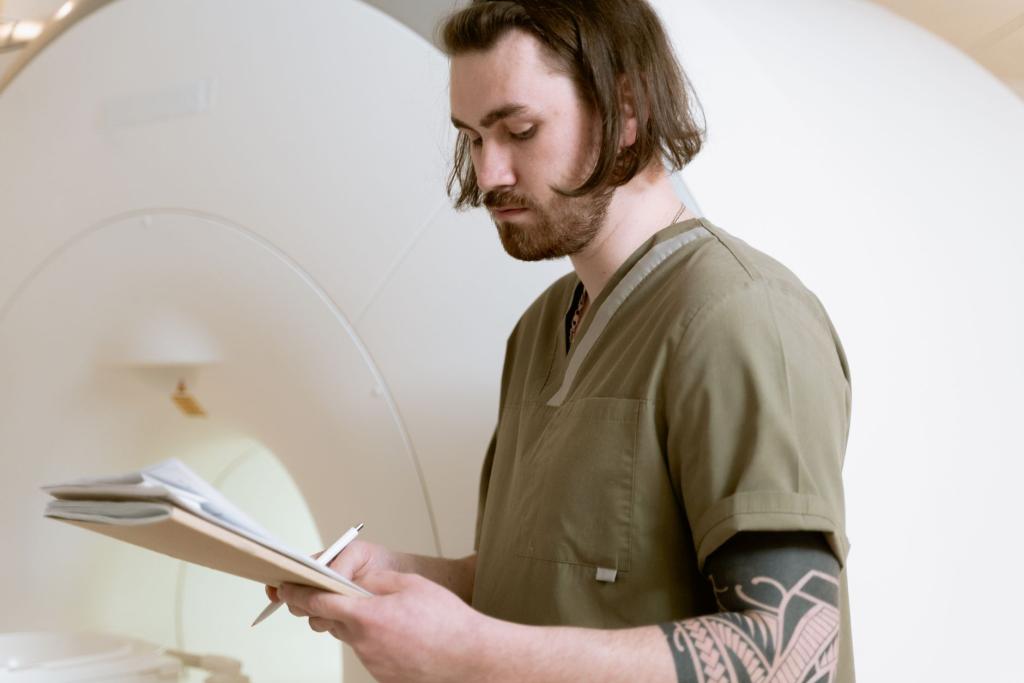
Brixey's story shows what the AI training side hustle looks like at the top of the market. Four years ago, she got a message from an AI company seeking radiologists to interpret chest, lung and heart scans for model training. She had already seen an AI tool for catching lung nodules throw too many false positives at a medical center where she worked. After long weeks at the hospital, she now spends some weekends labeling data, highlighting spots where she can see calcium in a heart scan. She signs up for at most two projects a year, and she told Bloomberg Law she is motivated more by the technology's potential than by the money, because she wants to see patient care improve.
Researchers who study data work are less impressed by the pay rates. Antonio Casilli, a professor at the Polytechnic Institute of Paris, told Bloomberg Law that highly paid experts take part in relatively few projects, and that companies courting investors prefer to look like they are hiring geniuses while leaning on the same low-paid workforce as before. The experts, in his words, are "the cherry on top." Most of the work, he said, is still done by low-wage workers facing precarious conditions and sudden account deactivations. The AI training side hustle, in other words, may be splitting into two markets: a few big paychecks at the top and scraps at the bottom. The unevenness fits a broader pattern: side hustle earnings have been sliding, with Gen Z feeling it hardest.
The catch the paycheck does not show
The deeper worry is what happens to the expertise itself. Danielle Li, a professor at MIT who studies AI and the labor market, told the outlet that labor has always been something employers rent: stop paying and you lose access. That arrangement breaks down, she said, when an employer can own a version of that labor inside an AI model. Fan Yang, a research fellow at Melbourne Law School, described the shift as a new kind of outsourcing: businesses buy AI tools that still depend on humans, repositioned as data workers on ad hoc contracts. Li warned that a small group of data workers could in theory replace or devalue an entire profession, because everyone else's choices end up shaped by the data they supply.
Some professionals already feel that unease. Pauley Chea, another radiologist moonlighting as a data worker, told Bloomberg Law that people in the field are worried, and that the uncertainty runs deepest among medical students and residents with years of training ahead. Recruiters have struggled to lure some professions at all. Users of the finance forum Wall Street Oasis pointed out, in comments quoted by Bloomberg Law, that investment bankers are often bound by employment contracts and have little spare time, which is why platforms keep sweetening the pay.
And the trend may not stop at volunteers. Former OpenAI engineer Will DePue has argued that data matters to the industry as much as computing power, according to Bloomberg Law's reporting, and companies are acting like it. Micro1, an AI data startup valued at four billion dollars, tells clients that every hour of employee work can simultaneously run the organization, train AI models and generate revenue, its founder Ali Ansari wrote in January. Bloomberg Law noted that Reuters reported in April that Meta started installing software to track employees' clicks, keystrokes and mouse movements, with an internal memo saying the tracking would help its models improve simply from daily work. Taken together, they describe an AI training side hustle that no longer depends on volunteers alone.
That is the strange bargain of the AI training side hustle. For a radiologist, labeling scans on a weekend is a well-paid gig that might also improve patient care. For the mom who started on Mechanical Turk a decade ago, the work paid in cents and brought its own stress, as she told the outlet. Both are training the same machines, and the machines are learning from both. The money is real today. So is the chance that the training ends up teaching the model to do the trainer's day job. Hansen, who has spent ten years watching data work change, put the one constant in plain terms, Bloomberg Law reported: without people like her, the models can never be perfect.
Comments 0
No comments yet. Be the first to share your thoughts!
Leave a comment
Share your thoughts. Your email will not be published.