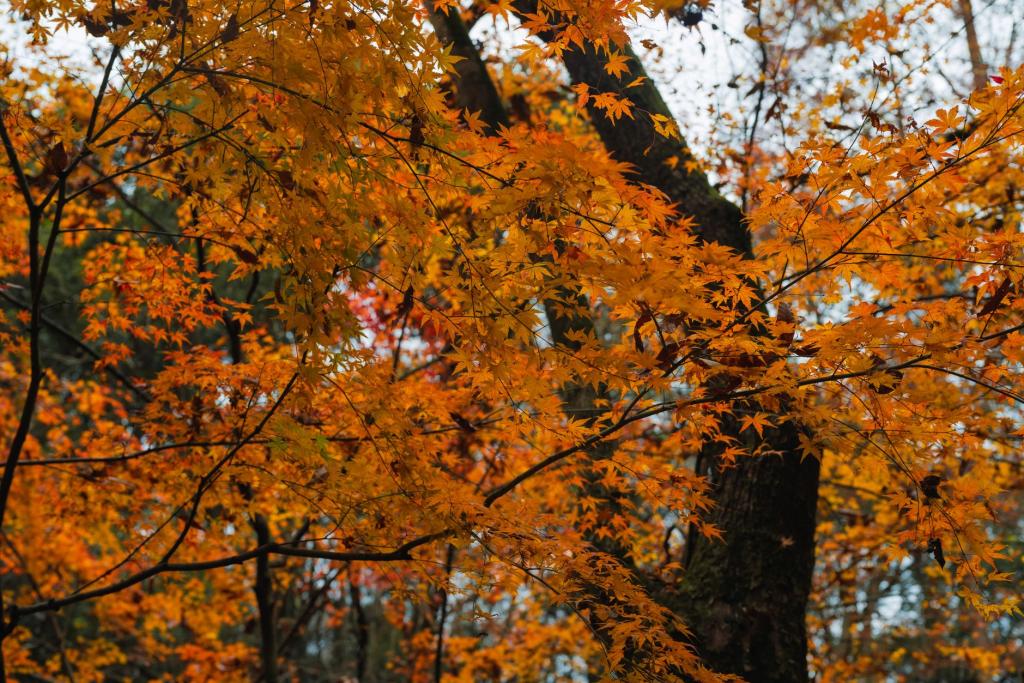
The most photogenic weeks of the year have started. Across the northern mountains, peak Fall Foliage is arriving right now, and forecasters say this season could deliver the best color show in years. According to the Farmers' Almanac and its Fall Foliage Map, which was updated for this autumn, the brilliant reds that have stayed dull through recent dry seasons are expected back across much of the East, on a close-to-normal timeline.
This is the rare natural event you can actually plan around. Peak color lasts only about a week in any one spot, but the season rolls across the country for nearly two months, so almost everyone gets a shot. Here is when to go, why this year looks special, and how to read the color like a forecaster.
When peak color arrives, week by week
Fall Foliage moves like a slow wave from north to south and from mountaintop to valley, not state by state. The broad progression on this year's Fall Foliage Map runs like this: late September to early October brings peak to northern Maine, the highest elevations of Vermont and New Hampshire, and the northern Rockies. Early to mid-October covers most of northern New England, the northern Great Lakes, and the northern Midwest. Mid to late October is the heart of the season for the rest of the Northeast, southern New England, and the central Plains. Late October into early November belongs to the Ohio Valley, the interior Mid-Atlantic, and the Appalachians, and early to mid-November finishes the show across the Southeast and Gulf states.
Within a single state the timing can swing by weeks. Northern Maine typically peaks in the last week of September into the first week of October, while coastal and southern Maine often waits until mid to late October. Vermont's highest elevations can turn surprisingly early, with valleys staying brilliant into late October. The practical rule, as the Almanac puts it: farther north means earlier, higher elevation means earlier, and warmer coastline means later.
Why this year could be the best in years
The Almanac's Fall Foliage Outlook for this season points to the central Appalachians as one of the most promising areas for strong autumn color, with good prospects across much of the East and Southeast. Parts of the Upper Midwest, the Pacific Northwest, the northern tier, and the Deep South could see more uneven or short-lived displays, mostly because of heat and drought stress.
That is a meaningful upgrade over recent seasons. As the Daily Yonder reported, New England visitors this year can expect the return of vibrant reds that have been dull in recent years, with foliage arriving on a normal timeline in many parts of the region. The reds are the divas of the season: they come from anthocyanin pigments that trees actively produce in autumn, and they need the right weather script to really pop.
The science behind the Fall Foliage show
Shortening days are the main signal telling deciduous trees to stop producing as much chlorophyll. As the green breaks down, yellow and orange pigments that were there all along become visible, while some trees generate the reds and purples associated with spectacular Fall Foliage. The Smithsonian's explanation of leaf color, cited by the Almanac, lays out the chemistry in detail.
What makes one year brilliant and another washed out is mostly weather. Healthy trees with adequate moisture, followed by sunny autumn days and cool nights, tend to favor brilliant displays. Extended drought, unusual warmth, an early hard freeze, or a powerful windstorm can reduce the intensity or shorten the season. A single windy storm at the wrong moment can strip a hillside of its colorful leaves in a day or two, which is why forecasters keep one eye on the sky even at peak. That weather lottery is what makes or breaks a Fall Foliage season.
The eight-billion-dollar road trip
Leaf peeping is not just scenery; it is big business. According to the U.S. Forest Service, the New England area alone receives an estimated eight billion dollars in annual local revenue from fall visitors, as the agency noted in its fall colors guidance. Small towns from the Berkshires to the Blue Ridge count on the autumn surge to fill inns, orchards, and scenic railways.
The smartest way to chase it is by changing elevation, not just driving north. In the Appalachians, where huge elevation differences stretch the season across weeks, high ridges can peak well before nearby valleys, so you can effectively follow peak color up and down the mountains. Track state-level updates like Vermont's foliage forecaster or the Maine Forest Service's reports once you are within a week or two of expected peak, and have a backup plan: Great Smoky Mountains National Park has already warned of autumn congestion and limited parking at popular spots, so midweek trips and lesser-known overlooks are your friends.
The long view is less certain
There is a real counterweight to the optimism. University of Vermont forest ecophysiologist Alexandra Kosiba told the Daily Yonder that with continued climate change, the region may face both a later fall foliage season and a less vibrant one, a warning also carried by Governing. Foliage expert Jim Salge has observed that the last decade has skewed later than historical averages, as reported by The Well News.
For now, though, the show goes on, and this year the script favors the audience. Flexibility is the new leaf-peeping skill: watch the weekly reports, aim for the elevation that is peaking, and go. If you miss your window up north, the South is still turning well into November, since the Fall Foliage season runs long. For more on the season, see our Plants and Trees coverage, and if autumn has you thinking about greenery indoors, check out why winter houseplants are Gen Z's mood fix.
Comments 0
No comments yet. Be the first to share your thoughts!
Leave a comment
Share your thoughts. Your email will not be published.