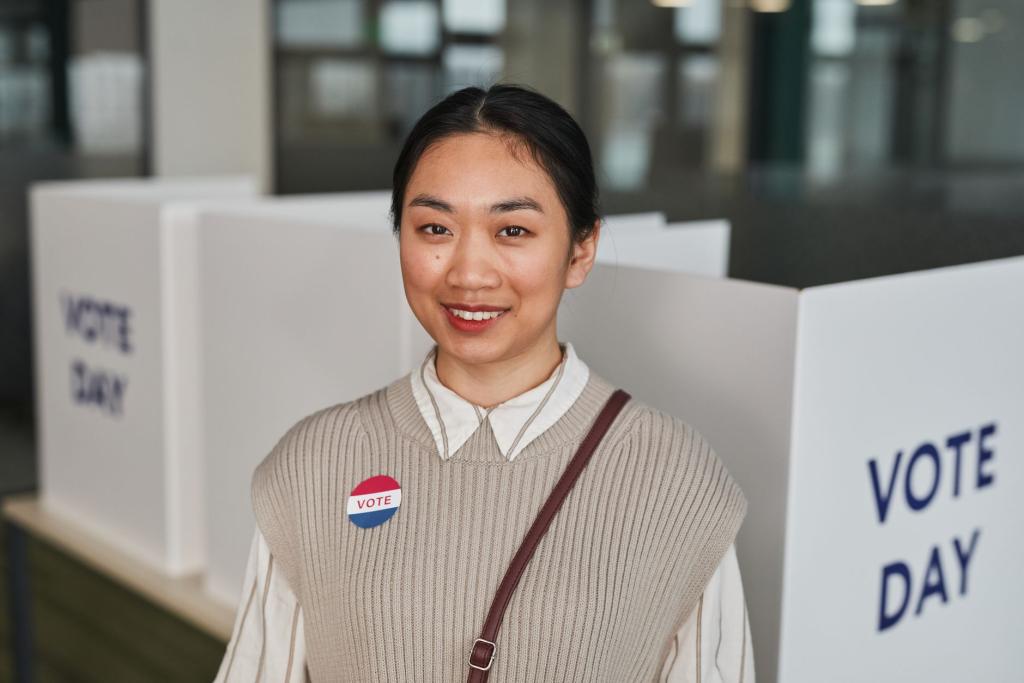
Election Day is November 3, 2026 — just five weeks away — and the 2026 Midterms are shaping up as a high-stakes test for American democracy. The polling picture now heavily favors Democrats, yet public faith in the process itself has sunk to its lowest point since the 2024 election, creating a split screen for young voters heading into the final stretch.
The 2026 Midterms polling picture
According to the Silver Bulletin forecast, updated September 30, 2026, Democrats have opened a D+9.6 advantage on the likely-voter-adjusted generic congressional ballot. Democratic candidates also hold at least slight polling leads in the six states considered the likeliest Senate tipping points: Texas (D+3.4), Maine (D+2.7), Ohio (D+5.0), Iowa (D+1.7), Michigan (D+3.8) and Alaska (D+2.5).
The forecaster attributes the shift to a mix of strong Democratic candidates, an unpopular president, and inflation — with gas and diesel prices singled out as the most visible pressure point squeezing voters.
But the same forecast carries a blunt warning: polling error is always possible, and it "wouldn't take much" for Democrats to lose the Senate anyway. With margins that tight in the decisive states, even a modest polling miss could flip the outcome — a reminder that the race is competitive, not decided.
Voter trust is sliding fast
At the same time, a UC San Diego survey of 5,016 American adults, led by the university's Center for Transparent and Trusted Elections, found that fewer than half of respondents — 49% — expect the November elections to be free and fair. The study was conducted September 1–9, 2026 and released September 15, 2026. Another 23% said they do not expect them to be, and 28% said they don't know.
Confidence that votes will be counted accurately has been falling for nearly two years. Right after the 2024 election, 77% of Americans said they trusted the national count; that share fell to 60% by January 2026 and to 55% by September, with the slide happening across party lines.
In the latest round, 63% of Democrats and 58% of Republicans said they were at least somewhat confident votes would be counted as cast; among independents the share was just under half. Independents have slid the furthest in recent months, dropping eight points since January, while the other two groups dipped only slightly. Nearly nine in ten respondents said they were at least moderately sure about their level of confidence — a sign these doubts are settled, not soft. "What stands out is that trust isn't declining within just one party," said center co-director Thad Kousser, noting that what drives the doubts differs widely by party.
One worry crosses party lines: artificial intelligence. More than three-quarters of Americans said they were concerned that misleading audio or video deepfakes could affect the outcome. Lauren Prather, the center's other co-director, described an information environment where it is "increasingly difficult to determine what is authentic and whom to trust," pointing to broad concern about AI-generated misinformation and foreign interference even among voters who disagree sharply on other aspects of how elections are run.
What the 2026 Midterms mean for young voters
Here is what is actually at stake in the 2026 Midterms. Every House seat is up for grabs, control of the Senate could turn on a handful of close races, and voters in many states will also choose governors, state legislators and local officials who decide everything from school funding to housing policy. For Gen Z voters — many casting ballots in their first or second midterm — these down-ballot races often have the most direct effect on daily life.
If you are voting for the first time, the single most useful step is checking your registration now rather than waiting for November. Deadlines vary by state, and some states close registration weeks before voting day. Look up your sample ballot in advance so you know every race you will be asked to decide, and if your state offers early or mail voting, check the rules for it: the survey found sharp partisan divides over mail ballots, and their availability can vary from place to place. GenZ NewZ will keep following the race on our politics page, including the latest polling on the midterm map.
The weeks ahead are a long time in politics, and the polling-error caveat cuts both ways: the current lead could grow or evaporate. What will not change between now and November 3, 2026 is the underlying question the trust numbers raise — whether voters believe the system they are being asked to take part in. For young voters, that question is worth thinking about before, not after, they cast a ballot.
Comments 0
No comments yet. Be the first to share your thoughts!
Leave a comment
Share your thoughts. Your email will not be published.