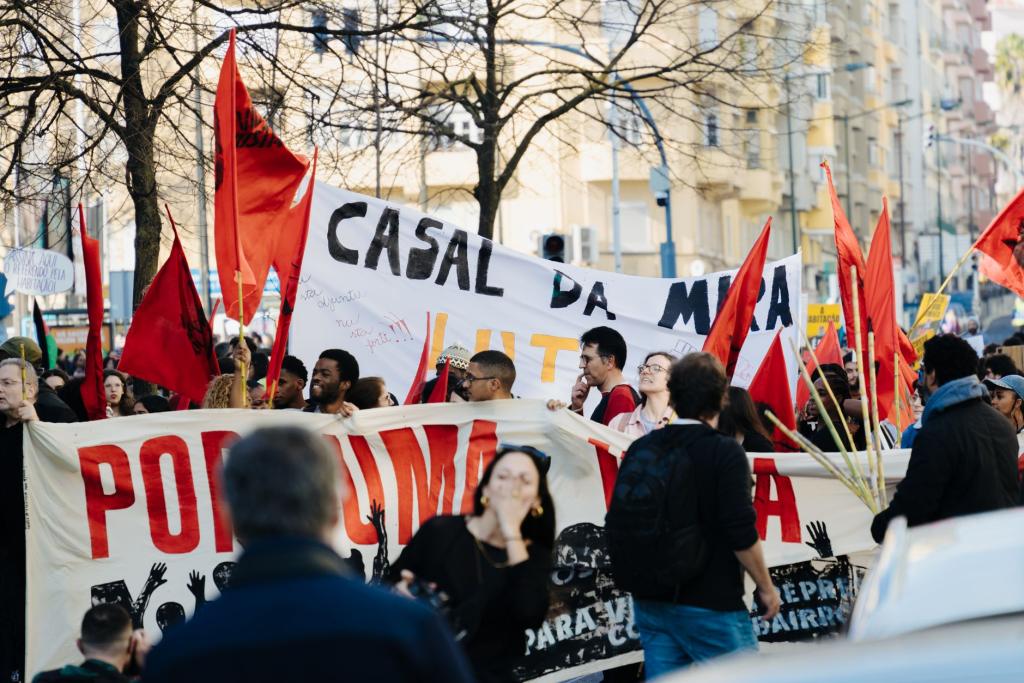
On October 11, 2026, tens of thousands of people filled the streets of Brussels in one of Belgium's largest climate demonstrations since the school strikes of 2019. Police counted 45,000 participants while organizers estimated around 60,000, roughly double last year's turnout, according to newmobility.news. After years of quiet, the latest wave of youth climate protests has begun.
Three days later, activists scaled the European Parliament building with anti-fossil-gas banners. Youth climate protests are also being organized in Sydney, where students are planning a rally for October 24 on Gadigal Country to push their government on coal and gas ahead of the COP31 UN climate summit. And as the summit nears, the country set to host it is cracking down on the very people who defend the environment.
From school walkouts to a broader movement
Seven years ago, youth climate protests were largely associated with Greta Thunberg and Belgium's young campaigners, including Anuna De Wever, as thousands of schoolchildren skipped classes to demand action against global warming. Sunday's march showed how the movement has grown up. The Belgian Climate Coalition brought together environmental organizations, trade unions, human rights groups, development NGOs, universities, youth movements and families, with opposition politicians joining too.
The coalition's demands include phasing out fossil-fuel subsidies, taxing exceptional oil and gas profits, protecting nature, and helping households and businesses switch to renewable energy. Affordable home insulation, renewable heating, accessible public transport and protection against extreme weather sit at the center of its program. Today's youth climate protests have a broader, more intergenerational profile than the 2019 strikes, linking climate action to purchasing power, health, social justice and energy security, newmobility.news reported. The youth climate protests that defined 2019 have returned with an older crowd and sharper demands.
The youth climate protests are returning at a complicated moment for climate politics. In the United States, the Trump administration has rolled back major federal climate regulations. European governments are reconsidering or postponing parts of their green agenda in the name of affordability and industrial competitiveness, and the EU's planned carbon pricing for road transport and buildings has been delayed until 2028. Global energy-related carbon dioxide emissions reached another record in 2025, at almost 38.4 billion tonnes, according to the International Energy Agency — about five percent above their 2019 level, when the school strikes peaked. At the same time, global investment in clean energy technologies is expected to reach more than two trillion dollars in 2026, nearly twice the amount invested in fossil fuels. The world is spending heavily on solutions without yet cutting emissions in a sustained way.
Climbing the Parliament: fossil gas becomes the target
On October 14, 2026, dozens of activists from 17 countries protested at the European Parliament in Brussels, a day before EU heads of government met in the city to discuss energy prices and Europe's dependence on fossil fuels. Climbers from Greenpeace Belgium scaled the parliament building and hung banners reading "Burning gas ruins Europe" and "Wars, poverty, climate crisis: burning gas steals our future," while fellow activists used fake smoke to simulate fire, the organization said in a statement.
These youth climate protests were part of the People vs Gas coalition's push for a short-term emergency plan to shield people from rising energy costs and a clear roadmap for Europe to phase out fossil gas by 2035. Activists from Extinction Rebellion Belgium unfurled a large banner reading "Gas kills" inside the parliament, and the Red Rebels protest group held a performance in Place du Luxembourg about the human and environmental toll of climate breakdown. Members of the Red Rebels and the banner messages were documented in footage of the action reported by APT.
The youth climate protests put household bills at the center of the fight: Greenpeace Belgium released estimates showing that higher energy prices cost EU households an extra 61.5 billion euros between March and August, compared with the same months in 2021 — on average, about 50 euros more per household per month. "EU politicians must get Europe off dirty and expensive fossil fuels, and onto renewable energy that can cut pollution while bringing down prices for ordinary people," said Greenpeace EU climate and energy campaigner Thomas Gelin.
The youth climate protests land as EU leaders gather on October 15–16 to talk energy prices, competitiveness and longer-term plans to cut fossil-fuel dependence. But the summit arrives with its own contradictions. On October 14, the European Commission formally proposed pushing back key parts of its methane regulation for oil and gas imports by one full year, after lobbying from governments and industry over tight energy markets and higher costs, reported by Reuters. Commission President Ursula von der Leyen announced the bloc would give exporters flexibility for one more year on methane, and French President Emmanuel Macron had written to the Commission in September warning the new obligations could expose importers to legal risks. More than 50 organizations publicly opposed the delay, arguing there is no demonstrated link between the methane rules and the current energy crunch.
Students rally in Sydney ahead of the summit
The mobilization is not confined to Europe. The Sydney youth climate protests are being organized by Sydney Students for Climate, which is planning a rally on October 24, on Gadigal Country, to present demands to the Australian Labor government before COP31. The group's organizer, Lucy Millett, wrote in Green Left that the students who walked out of class over the Black Summer fires of 2019–2020 are now demanding real action, arguing that federal net-zero deadlines have become hollow.
The rally carries three demands: end new and expanded coal and gas mines, set binding emissions targets for the coal and gas sector, and fund a fair transition for affected communities through investment in local industries and workforce retraining. The context is stark. Since coming to power, the Labor government has approved or extended 37 fossil fuel projects, and the NSW Independent Planning Commission approved the Hunter Valley Operations Continuation Project on September 30, which would add another 800 million tonnes of greenhouse gas emissions. Australia plays a key negotiating and co-hosting role at COP31, and organizers say the Sydney youth climate protests will help rebuild a mass public focus strong enough to pressure the government into meaningful climate action.
The summit's host is cracking down
While young people take to the streets to demand a livable future, the country about to host the UN climate summit is suppressing its own environmental defenders. On October 13, 2026, Human Rights Watch reported that Turkish authorities are arbitrarily arresting and prosecuting activists and others involved in environmental protests even as COP31 nears.
The organization interviewed 23 people at environmental protests in August 2026 and reviewed media reports, documents and judicial proceedings. Protests against coal mining in the Akbelen forest in the southwestern Muğla province have continued since 2023, while gold mining exploration on the Perşembe Plateau and surrounding areas in the eastern Black Sea region has sparked protests throughout 2026. Authorities in both areas have forcibly dispersed nonviolent protesters with tear gas, water cannons and pepper spray, while police have arrested and fined protesters, intimidated residents with arbitrary identity checks, and opened investigations against journalists covering the demonstrations.
In one instance, on July 29, authorities arrested protesters in the eastern Black Sea area for up to eight hours without legal due process, including two children and an 84-year-old woman. As youth climate protests surge elsewhere, the crackdown fits a wider pattern of shrinking civic space: in advance of a July NATO summit in Ankara, authorities ordered the arrest of 225 people, among them 13 members of a nature conservation organization. Human Rights Watch researcher Deniz Bayram said the crackdown is a salient reminder of Türkiye's intolerance of dissent and urged states attending COP31 to speak out, noting that as host, Türkiye has an obligation to facilitate civil society participation in the conference.
The road to COP31
- October 11, 2026: Tens of thousands march in Brussels in one of Belgium's biggest climate demonstrations since 2019.
- October 13, 2026: Human Rights Watch reports Türkiye is arbitrarily arresting and prosecuting environmental protesters ahead of COP31.
- October 14, 2026: Greenpeace activists scale the European Parliament demanding a fossil-gas phase-out by 2035; the Commission proposes delaying methane import rules by a year.
- October 15–16, 2026: EU leaders meet in Brussels on energy prices, competitiveness and cutting fossil-fuel dependence.
- October 24, 2026: Students rally in Sydney ahead of the summit.
- November 2026: COP31 convenes in Antalya, Türkiye.
From the streets of Brussels to the forests of Muğla, a generation of young activists that first marched as schoolchildren is returning as young adults — and the youth climate protests are back ahead of a November summit that will test whether governments are listening. For the generation driving these youth climate protests, COP31 is the next exam.
Comments 0
No comments yet. Be the first to share your thoughts!
Leave a comment
Share your thoughts. Your email will not be published.