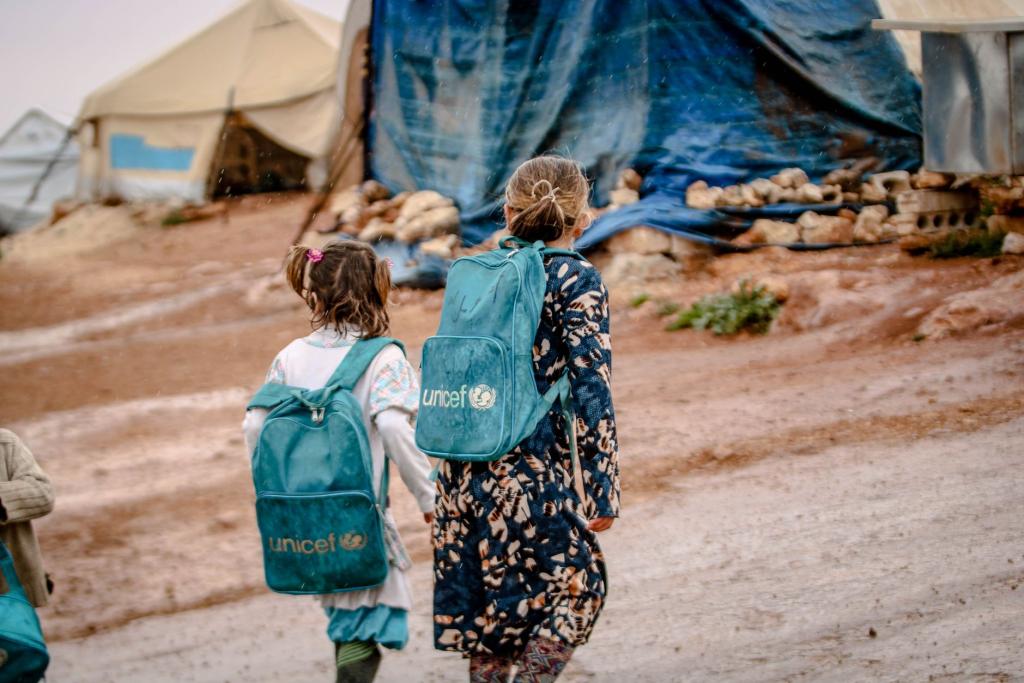
UNICEF is warning that renewed fighting in Yemen is driving a deepening Yemen child hunger crisis, with an estimated one hundred thirty thousand people fleeing clashes in the country's southwest in recent weeks. Around seventy-one thousand of those displaced are children, most of them from Taiz governorate, the agency said on Friday.
Mobile health teams screening displaced families found that more than one in four of nearly 2,900 children checked were acutely malnourished, according to UNICEF. Around 200 of those children had severe acute malnutrition, the deadliest form of the condition.
Akhil Iyer, UNICEF's representative in Yemen, briefed reporters in Geneva on Friday and said the agency is seeing a clearly visible increase in acute malnutrition among children caught up in the fighting. "Conflict drives hunger, and hunger makes children more vulnerable to conflict," Iyer said. A UN News report on the briefing carried the same figures.
Screenings cover only part of the Yemen child hunger crisis
The screening figures come only from areas UNICEF's mobile teams can reach, the agency said, and describe a small slice of a much wider Yemen child hunger crisis. UNICEF projects that 2.2 million children under five will suffer acute malnutrition this year, including more than half a million with the severe form.
The displacement itself is compounding the danger. Families who fled the fighting have lost their homes, their incomes, and their access to regular health care, arriving in makeshift shelters where food and clean water are scarce. For young children, even a short interruption in nutrition can push them into acute malnutrition, and each new wave of fighting displaces families again before they can recover.
Getting help to those families is getting harder. The World Health Organization said reaching communities with the highest health needs is becoming "increasingly difficult," as repeated displacement exhausts families that have already fled more than once. Clinics that once served settled communities now have to chase a moving population through insecure territory. Without that access, the Yemen child hunger crisis can deepen unseen, because malnourished children in unreachable villages never make it into a screening count.
Most of the newly displaced were uprooted from or within Taiz, the southwestern governorate where fighting has been heaviest over the past three weeks, according to UNICEF. Large parts of the region remain cut off from aid, which means the measured cases are only the part of the Yemen child hunger crisis that anyone can count.
A mother who fled with nothing
To show what the displacement looks like up close, Iyer described a young mother named Haifa who fled Yemen's west coast when gunfire started closing in on her home. The walls of her house shook from the fighting, he said, and she grabbed her family and ran with no time to plan.
Haifa and her family now live in extreme heat beside a tent, with no source of income. They struggle to find enough food and medicine, according to Iyer's account. Their story is one of tens of thousands now playing out across the southwest, where the Yemen child hunger crisis is most acute.
How the fighting escalated
Yemen's civil war between the Saudi-backed government forces and the Iran-backed Houthis had been largely frozen since a 2022 truce. The conflict has drawn wider UN scrutiny this year, including a UN reprisals report flagging transnational repression across 32 states. It intensified this year, and in recent weeks the Houthis have made large territorial gains against government forces, seizing the strategic port city of Mocha and nearly the entire Red Sea coast, according to reporting on the conflict. Those gains displaced families in areas that had been relatively calm, widening the map of the Yemen child hunger crisis.
The fighting has centered on the southwest, where government forces and Houthi fighters are contesting territory along the Red Sea coast. For children in Taiz, displacement layered on top of shuttered clinics and lost income has pushed the Yemen child hunger crisis into a worse phase in a matter of weeks.
UNICEF has also verified that at least 15 children were killed and 14 injured in the fighting since early September, with three more still reported missing. "Behind every one of those children is a parent living through the unimaginable: grief, fear, or the agony of not knowing," Iyer said. "Beyond being uprooted from their homes, too many children have already paid the heaviest price in this conflict."
The agency says the rising malnutrition cases its teams can measure are only the visible part of the Yemen child hunger crisis. In the areas it cannot reach, where fighting is heaviest, the true toll on children is likely worse, and no screening team is there to count it.
Comments 0
No comments yet. Be the first to share your thoughts!
Leave a comment
Share your thoughts. Your email will not be published.