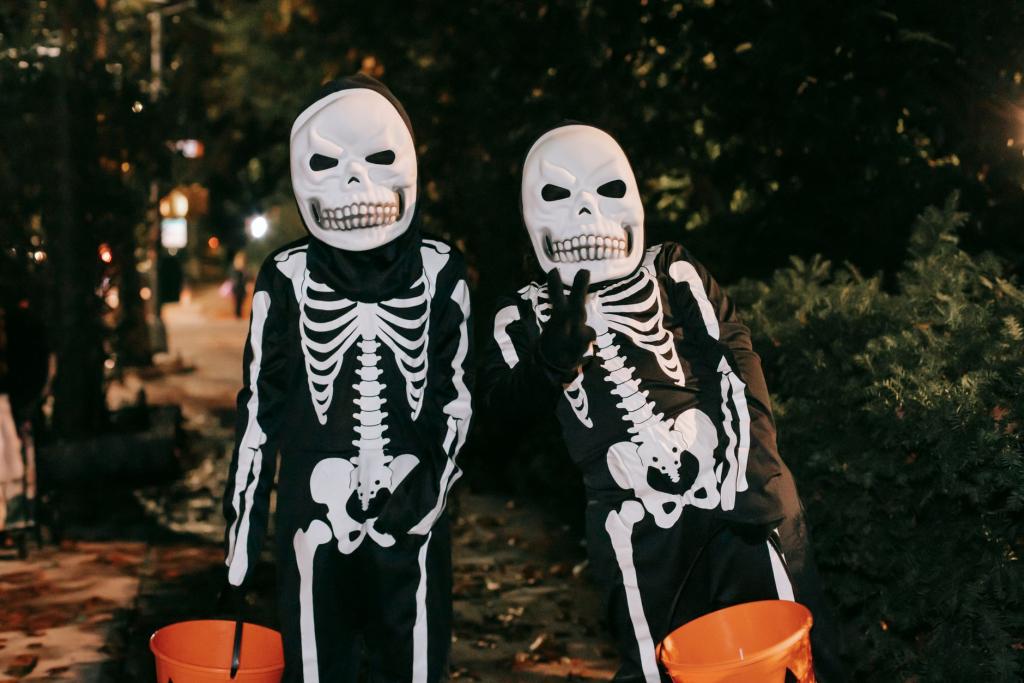
Arguing that Halloween is the best holiday will draw skepticism at every December dinner party — but the argument holds up. Christmas gets treated as untouchable, the holiday all others get measured against. Strip away the nostalgia, though, and it is mostly logistics: gift lists, airport lines, obligatory phone calls, and a January credit card bill that lands right on schedule. Halloween asks for almost nothing and returns a night of creative freedom. This is an unpopular-opinion piece, so the position is stated plainly: the numbers favor spooky season.
The Money Case: Halloween Is the Best Holiday for Your Wallet
Start with the numbers. According to the National Retail Federation, American consumers plan to spend a record 13.5 billion dollars on Halloween this year, working out to an average of 115.14 dollars per person. That sounds like a lot until you stack it against the winter holidays, where consumers planned to spend an average of 890.49 dollars per person, with the bulk of it — about 628 dollars — going straight to gifts for family and friends. Halloween buys you a costume, a bag of candy, and a night of self-expression. Christmas charges you roughly seven and a half times that per person, then expects gratitude while your account balance sinks.
The candy economics tell their own story. Nearly every celebrant buys sweets, and total candy spending is projected at 4.1 billion dollars — yet Halloween is the one night when candy also flows toward you, handed out free by neighbors who decorated their lawns for the occasion. Christmas candy you buy yourself and then guard from your siblings. And when prices rise, Halloween shoppers simply get thrifty without anyone's feelings getting hurt: the federation's survey found that about a third of shoppers plan to hunt for the best prices, and more than a quarter are chasing coupons or sales. Try bringing that coupon-store candor to a family gift exchange and observe how the conversation goes.
Even the retail industry concedes Halloween is the low-pressure holiday. "Consumers continue to make Halloween a spending priority, but they are also approaching the season with affordability in mind," the NRF said in its writeup of this year's survey results. The takeaway: people love this holiday, and nobody is wrecking their finances over it.
One Night, No Travel, No Guilt
Christmas is not a day; it is a month of obligations. It starts with the gift spreadsheet, escalates through travel booking windows and shipping deadlines, and peaks with a full production schedule of meals, gatherings, and small talk with relatives you otherwise see at funerals. Halloween is one evening. You pick a costume — or you do not — you eat candy, you watch something scary, and you are done. There is no airport, no seating chart, no debate over whose house hosts the chaos this year.
Then there is the mental-health ledger. A late-2025 survey from Citizens found that 60 percent of Americans feel stressed heading into the holiday season, and fewer than a third feel confident about managing their finances through it. More than half of shoppers start the season already carrying credit card debt, according to the bank's poll, as reported by ConsumerAffairs. A separate national survey commissioned by Beyond Finance found two-thirds of Americans sense an unhealthy cultural pressure to buy gifts they cannot afford, and half admitted they had bought or planned to buy at least one gift purely out of obligation. Halloween generates none of this. There is no cultural pressure to upsize your pumpkin budget.
The movies are not close, either. Halloween's canon is all-timer material — horror classics you genuinely want to rewatch every year. Christmas movies are mostly the same five films rotated until they lose meaning, plus a streaming-service original about a snowed-in marketing executive finding love. And for the astrology crowd: if autumn counts as a season of reinvention in your horoscope, Halloween is the one night that actually hands you a costume budget.
The Counterpoint: Christmas Gets Its Due
Fair is fair, so here is the defense. Christmas owns nostalgia in a way no other holiday can touch. It is built for togetherness — whole families gathering, traditions passed down, tables full of food that took all day to make. It is also the season of peak generosity, when charitable giving spikes and strangers donate to food drives and toy programs. Those are real virtues, and the warm glow of a December evening is not a fabrication. Plenty of people treasure it, and they are not wrong to.
But none of that requires the logistics industrial complex Christmas has become. Togetherness does not need a month of planning and a four-figure budget; generosity is not confined to one season, and frankly the most charitable thing many families could do in December is refuse to perform wealth they do not have. The nostalgia is real — it is also heavily marketed, engineered by decades of ads telling you that love looks like a wrapped box. Halloween's joy is simpler and harder to fake: people dress up because they want to, not because the calendar and their in-laws demand it.
One Night Beats One Month
Halloween wins because it respects your time, your wallet, and your autonomy. It is creative without being expensive, communal without being obligatory, and scary in the fun way rather than the financial way. Christmas defenders will call this cynical; the ledger still balances. Keep the carols and the cookies if you love them — just admit that the crown belongs to the holiday that lets you be someone else for a night and asks for nothing back. Halloween is the best holiday, and this unpopular opinion is here to defend it. The calendar just has not caught up yet.
Comments 0
No comments yet. Be the first to share your thoughts!
Leave a comment
Share your thoughts. Your email will not be published.