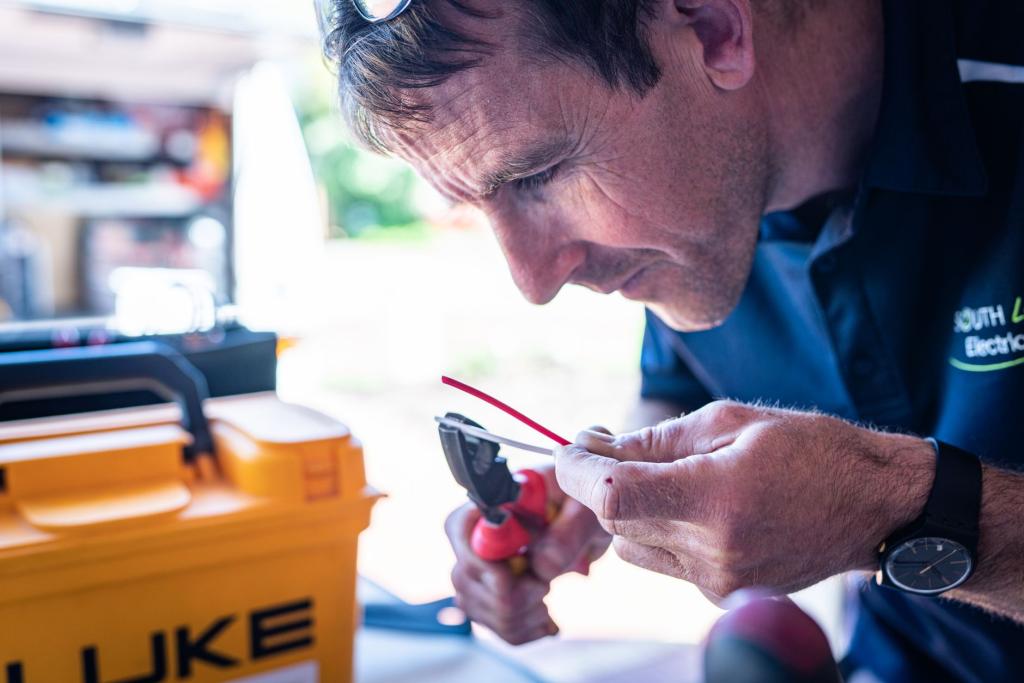
The career advice a generation grew up on is being rewritten in real time. Nearly half of Gen Z is now learning or seriously considering a skilled trade, according to Thumbtack's third annual Future of the Skilled Trades Report, released September 16, 2026. The college-to-desk pipeline that defined success for millennials is losing its grip, and artificial intelligence is the reason many young people cite for letting go.
The survey of 1,000 U.S. young adults aged 16 to 30 found that more than 80 percent believe it has become harder for young people to build a stable career than it was just a few years ago, with four out of five saying AI will eliminate many traditional entry-level jobs. That fear is already changing behavior: 92 percent of respondents have made at least one change to their career strategy in response to the job market. And 30 percent say AI has made them more interested in the trades, a field where a chatbot cannot rewire a breaker box. Three in four believe the skilled trades may become one of the smartest career choices for their generation.
"As AI reshapes the workforce, America's need for skilled labor is only becoming more urgent," said Marco Zappacosta, co-founder and CEO of Thumbtack. "The opportunity isn't to choose between technology and the trades, it's to bring them together. AI can help skilled professionals become more productive, build stronger businesses and spend more time doing the work only they can do."
The enrollment data backs it up
This is not just survey talk. Undergraduate certificate enrollment grew 10.2 percent in spring 2026, the fastest of any credential type, according to the National Student Clearinghouse Research Center. Enrollment at vocational-focused public two-year institutions has reached 871,000 students, up nearly 20 percent since spring 2020, and high-vocational public two-year institutions added 24,000 students this spring, a 2.8 percent year-over-year gain, as reported by Inside Higher Ed. That momentum is exactly what makes careers in the skilled trades look increasingly attractive to a generation priced out of the default degree path.
The clearest sign of the shift is which majors are moving. At two-year institutions, enrollment in mechanic and repair technologies rose 10.4 percent in the fall, with engineering technologies up 8.3 percent, according to Clearinghouse data reported by University Business. Meanwhile enrollment in computer and information science, the field that was supposed to be the safe bet, fell 5.8 percent at two-year schools and dropped 11.2 percent in a single year across the spring data. The major built on doing things with your hands is growing; the major training you to write code is shrinking. For context on which degrees AI is actually hitting, see the GenZ NewZ report on AI-exposed majors.
Career changers are joining the pipeline
The trades are not just attracting school-leavers. Among working tradespeople with less than two years in the industry, 38 percent previously held a corporate or white-collar job, and 26 percent entered the trades after burning out and wanting a career reset, according to the Thumbtack pro survey. The workforce is being rebuilt by people who tried the desk life and walked away, and jobs in the skilled trades are pulling them in.
The new generation is also bringing technology with it. Thirty-five percent of trades professionals say they use AI regularly in their businesses, most often for marketing, customer communication, and research, and the rate is even higher among recent entrants: 52 percent of pros with under two years of experience use AI routinely. "There's a lot of interest from young people who want to learn the trades," said Deon Marecheau, owner of Antillean Restoration and a Thumbtack pro advisor. He added that taking on apprentices gives firms a way to develop talented people who can grow with the business or take those skills wherever their careers lead.
Satisfaction is running high on the inside. Nearly eight in ten trades pros would recommend the skilled trades to a young person, and close to half say they are seeing higher demand and higher income than a year ago. The report's ranking of the metro areas best positioned for the skilled-labor future puts Washington, D.C. at the top, followed by Charlotte, Atlanta, Raleigh-Durham, Baltimore, Chicago, West Palm Beach, Austin, Seattle, and Dallas.
The catch: demand is high, but the business is hard
A note of caution comes from the pros themselves. Nearly three-quarters turned away work in the past year, most often because a project was not a good fit or not profitable enough. That selectivity reflects a harder truth: competition is real, homeowners are increasingly price-sensitive, and the administrative load of running a trade business can make strong demand difficult to convert into lasting growth. A toolbelt is not a shortcut; it is a small business.
The restlessness is not limited to would-be electricians either. A separate September 2026 survey from Robert Half found that 55 percent of Gen Z professionals plan to look for a new job before the end of the year, up from 32 percent just one year ago, with better pay, stronger benefits, and clearer advancement topping the wish list. The generation is not rejecting work. It is rejecting the version of work it was promised.
For readers weighing the pivot, the practical takeaways are straightforward. Apprenticeship programs and vocational certificates are the entry ramps, and they are filling fast, so early applications matter in strong-demand metros. Look past the headlines about rising demand and ask about completion rates, licensing timelines, and the physical and financial realities of the first two years. The college degree is not dead, but the default path is, and the myth of the lazy young worker is dead with it. Gen Z is doing the math on what a career is supposed to deliver, and for a growing share, the answer is a career in the skilled trades. More coverage of work and careers lives on the Career Path topic page.
Comments 0
No comments yet. Be the first to share your thoughts!
Leave a comment
Share your thoughts. Your email will not be published.