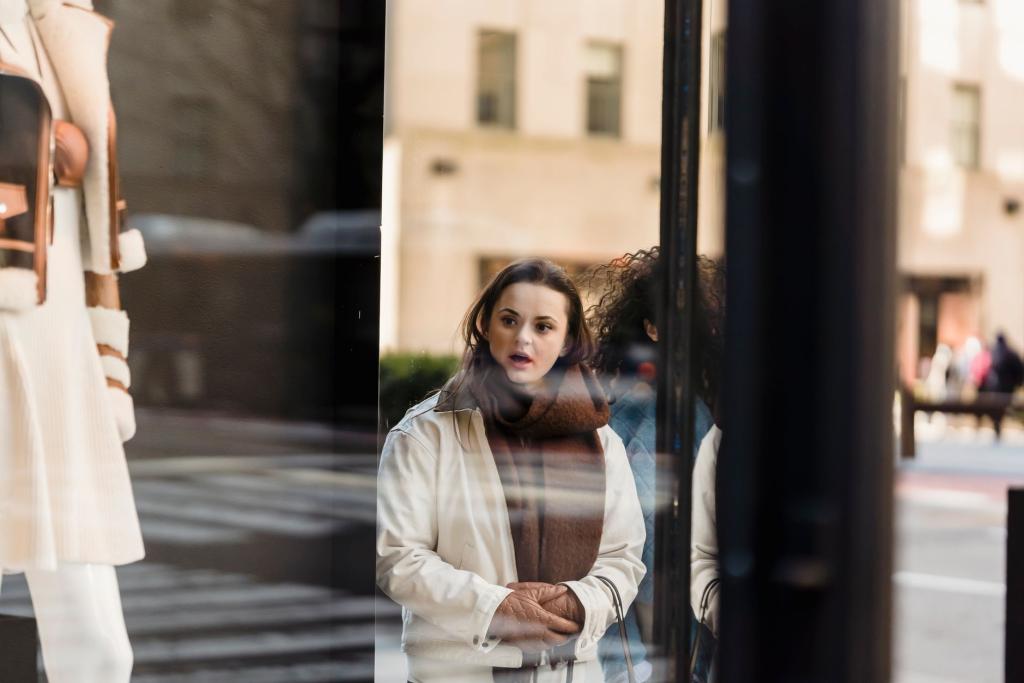
September was supposed to be the month Britain started buying coats. Instead, the monthly retail sales data published today shows Clothing Sales stalling in unseasonably warm weather, while beauty counters recorded their strongest month of the year. Total UK retail sales rose 1.3% year on year across the monitored period, according to Drapers' coverage of the BRC-KPMG monitor, trailing both the prior September's gain and the twelve-month average. Shoppers kept spending, but they spent it selectively.
For Gen Z, the timing felt personal. September is fall-haul season on social feeds — the month of boot unboxings, knitwear try-ons, and the first puffer-jacket sighting. But when the weather refuses to cool down, nobody is rushing to buy a wool coat. This month's Clothing Sales numbers are what happens when the seasonal calendar and the actual climate stop matching: racks of autumn stock sitting while shoppers scroll past. September's Clothing Sales slump is a reminder that the industry's drop calendar assumes a climate that no longer reliably shows up.
Why Clothing Sales Stalled in the Warmth
Clothing was the clear weak spot in an otherwise mixed non-food picture, with fashion dragging the category down by roughly nine-tenths of a percentage point and footwear also soft. The cause, as reported by Sharecast, was straightforward: the warm spell sapped demand for autumn and winter ranges just as they landed in stores. Overall non-food sales edged up only 0.3%, a sharp step down from the same month a year earlier. In-store non-food sales barely moved at all, while online kept inching forward and now accounts for 38.3% of non-food spending, up slightly on last year.
This is not an isolated blip. Designers at Paris Fashion Week were already wrestling with what hotter autumns mean for the seasonal calendar — as GenZ NewZ reported earlier this month — and now the Clothing Sales data shows retailers living it. When consumers cannot feel autumn, they do not buy autumn. The risk for high streets is a build-up of full-price stock that eventually has to be discounted, squeezing margins right when costs are climbing.
Beauty Boomed on the Small-Indulgence Effect
The bright spot was health and beauty, which posted its strongest month of the year so far. Shoppers deprioritised big-ticket Clothing Sales but happily refreshed routines and treated themselves to small indulgences — the classic lipstick-effect trade-down. Toys also performed well, helped by the launch of Pokémon's thirtieth-anniversary products, and back-to-school spending gave retailers another lift. Food sales grew 2.5%, a slower pace than a year earlier but still the steadiest part of the basket.
The pattern says a lot about how younger shoppers are budgeting. When money is tight but morale is low, a new serum or a collectible beats a new coat — lower commitment, instant payoff, and made for the group chat. That instinct showed up in the channel split too: online non-food sales grew 0.7% while physical stores managed just 0.1%, a continuation of the steady drift toward the phone as the default shop floor.
What Cautious Shoppers Mean for the High Street
The mood behind the numbers is gloomy. BRC chief executive Helen Dickinson said growth "remained subdued" as households stay cautious ahead of expected rises in bills and taxes. She urged the chancellor to back retail in the Budget due later this month, warning that another increase in business rates would push up prices and choke investment and jobs on high streets. KPMG's Linda Ellett noted that non-food sales were essentially flat in September and have softened over the last three months.
Consumer sentiment backs the caution: expectations for the economy fell to minus thirty-four from minus twenty-eight, while spending expectations around Clothing Sales weakened further. For readers, the takeaway is practical. Retailers heading into the crucial final quarter are nervous, which usually means promotions arrive earlier and run deeper — good news for bargain hunters, less good for anyone hoping the high street stabilises on its own. Watch October's data for whether the first real cold snap finally unlocks the Clothing Sales that September could not.
For younger shoppers, the practical read is simpler: expect discounts to arrive early. Retailers sitting on unsold autumn stock rarely hold their nerve until the festive season, and Clothing Sales data this soft usually translates into markdowns within weeks. The flip side is choice fatigue — endless mid-season sales train everyone to wait, which is exactly the cycle high streets are trying to break. Whether the first proper cold snap rescues the season or just delays the reckoning will show up in next month's numbers.
The bigger fashion question is structural. If warm Septembers become the norm, the industry's whole autumn-drop rhythm has to adapt — lighter transitional ranges, later coat launches, and marketing that sells the season shoppers are actually living in. Today's figures are the receipts: the weather changed, and the tills noticed — and September's Clothing Sales figures may end up looking like a warning shot for every warm autumn to come.
Comments 0
No comments yet. Be the first to share your thoughts!
Leave a comment
Share your thoughts. Your email will not be published.