The death toll from the Wainwright base explosion has been revised down to four, and the Canadian military has released the names of the soldiers killed in Saturday's fire at one of the country's busiest training bases. The dead are Sgt. Morgan Wong of the Loyal Edmonton Regiment and Privates Shaun Farrell, Aidan Goulding and Hayden Lykkemark of Princess Patricia's Canadian Light Infantry, the unit that was conducting the exercise, according to the military. Alberta Premier Danielle Smith said thirty-nine people were being treated in hospital as of Sunday afternoon, with nineteen of them in critical condition, and Prime Minister Mark Carney described the Wainwright base explosion as one of the worst tragedies for the forces on Canadian soil in peacetime.
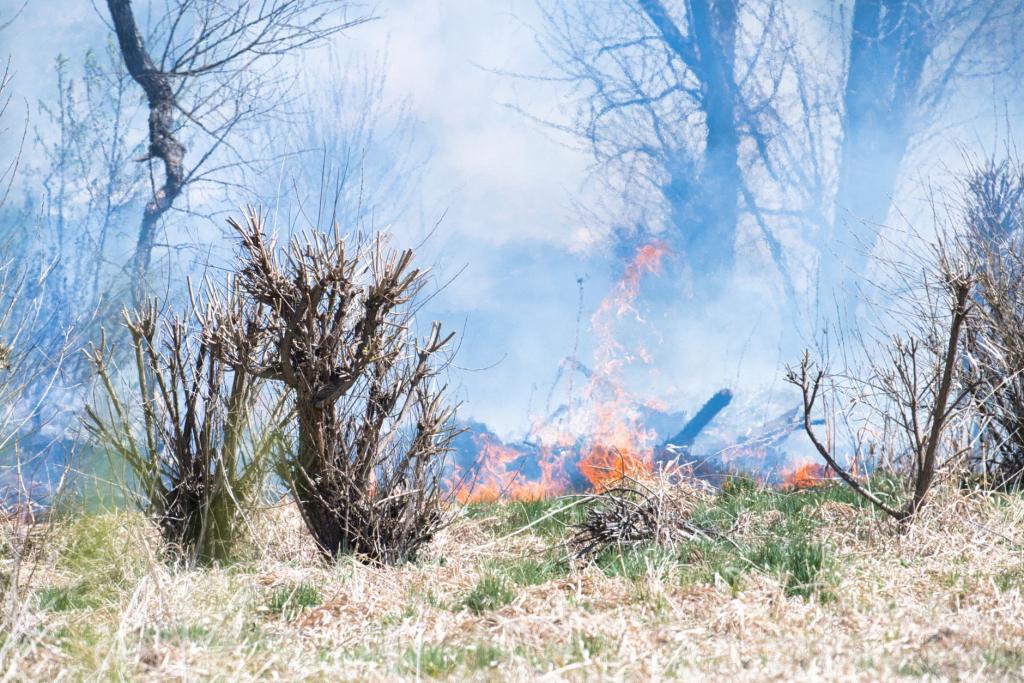
The account of how the fire reached the soldiers has shifted sharply from the first reports. Multiple military sources initially told Global News that a live-fire exercise struck a natural gas line or well, setting off the Wainwright base explosion and the blaze; the military has never publicly confirmed that version. On Sunday, Maj. Gen. Wade Rutland gave a different account: a grass fire had been burning about a kilometre from the training ground for several hours, and range control let the exercise continue because the fire was judged contained and expected to stay clear of the troops. Then unusually strong winds shifted the blaze across the open ground in roughly a minute, engulfing the soldiers. Rutland said he had never seen anything like it, and the revised account has raised fresh questions about how the Wainwright base explosion unfolded.
Carney said he had ordered defence and emergency preparedness officials to deliver a detailed report on the incident, and Rutland said the coming investigation into the Wainwright base explosion would determine whether the tragedy was preventable. Defence Minister David McGuinty travelled to Wainwright for briefings, and the Royal Canadian Mounted Police are involved in the investigation. The military is still holding back official casualty figures in some cases until families have been notified, and the exact sequence behind the fire remains under investigation. For the latest official account, see CNN's report on the revised toll and the investigation.
Edmonton hospitals pushed to their limits
The medical response has strained Alberta's health system. Patients were airlifted and driven from the base to hospitals in Edmonton, more than two hundred kilometres away, where officials declared a Code Orange mass-casualty protocol and the public was urged to avoid the University of Alberta Hospital emergency department, CBC News reported. Dr. Warren Thirsk, an emergency physician at Royal Alexandra Hospital, told the broadcaster that staff were receiving more patients than they could readily count, calling the Wainwright base explosion the kind of disaster the city might see once in a generation.
STARS air ambulances from Edmonton and Saskatoon ferried the most seriously hurt. The response took on an extraordinary scale Saturday night, when Royal Canadian Air Force members parachuted into the base to reinforce the emergency effort, footage shared by Global News correspondent Jeff Semple showed, the New York Post reported. The Municipal District of Wainwright said the fire crossed the base fence into the surrounding district on Saturday evening, and by Sunday officials said it was not expected to spread beyond its current boundaries. No evacuation orders were issued.
A base built for live-fire training
Canadian Forces Base Wainwright is the country's principal base for live-fire training exercises and home to the Canadian Manoeuvre Training Centre, with roughly a thousand military and civilian staff working on site on a regular day, according to CBC News. The exercise at the heart of the Wainwright base explosion involved troops from military bases across the country, and the town of Wainwright, population about sixty-six hundred, sits just north of the fence line. The military said official casualty figures would not be released until families had been notified, so the full scale of the loss was still being assessed when the first reports went out.
What investigators will be looking at
Investigators now have two competing accounts of the fire's origin to reconcile: the military sources who told Global News a round struck a gas line or well, and the official account of a grass fire carried by wind. The investigation into the Wainwright base explosion will have to answer why range control judged the grass fire contained, what the wind forecasts showed, and whether the exercise should have been halted hours earlier. Gusts approaching one hundred kilometres an hour had already been driving flames across the base perimeter before the wind shift, according to the Municipal District of Wainwright. Carney said Canadians come together in crisis and pledged full answers for the families waiting on them.
GenZ NewZ has also covered the scrapped Fort Hood execution livestream, Carney's Alberta referendum rally, and Canada's extended Ebola travel restrictions.
Comments 0
No comments yet. Be the first to share your thoughts!
Leave a comment
Share your thoughts. Your email will not be published.