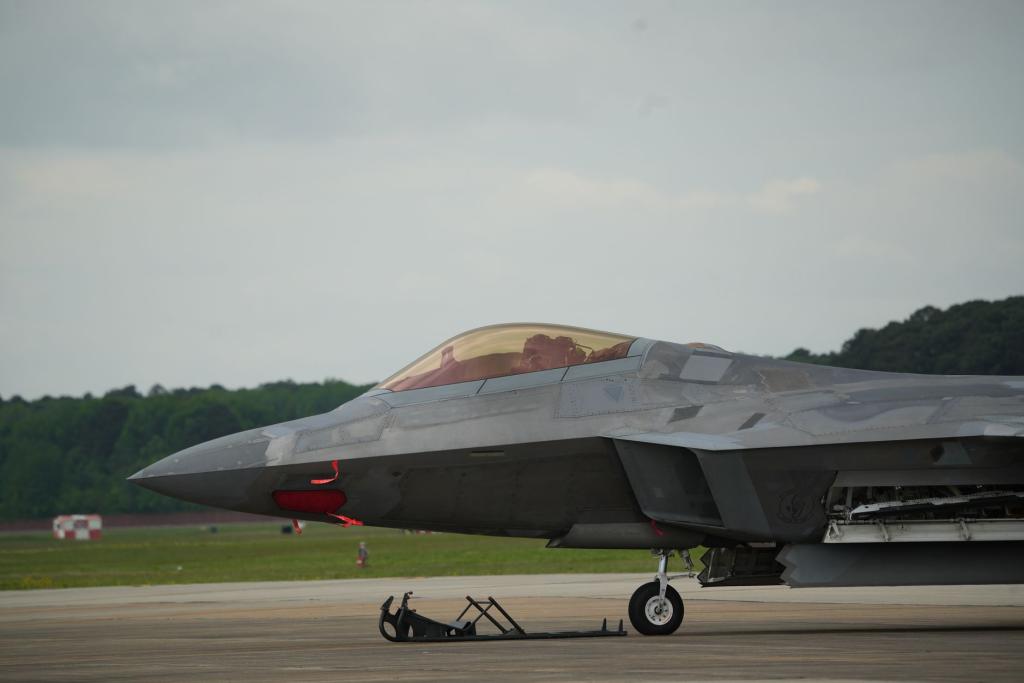
The United States has approved the proposed F-35 Saudi Arabia sale: 48 F-35 stealth fighters bound for the kingdom in a deal worth an estimated $24.3 billion. The State Department announced the package on Thursday, September 17, describing it as a way to strengthen Saudi homeland defense as the region slides deeper into war.
The deal still needs approval from Congress, which gets 30 days to review or object under American law, and deliveries would remain years away even if the F-35 Saudi Arabia sale clears that hurdle. But the announcement alone marks a sharp policy shift. Washington had refused for years to place the world's most advanced fighter jet in Saudi hands, and the reversal rewrites the map of Middle Eastern air power.
What the $24.3 billion package includes
According to the State Department's notification to Congress, the package covers 48 of Lockheed Martin's F-35 Lightning II aircraft with conventional takeoff and landing, plus 49 Pratt & Whitney F135-PW-100 engines. It also bundles cryptographic equipment, electronic-warfare support, communications systems, spare parts, training, and logistics. Lockheed Martin's aeronautics division in Fort Worth, Texas, and Pratt & Whitney Military Engines in East Hartford, Connecticut, would act as the principal contractors. The notification values the F-35 Saudi Arabia sale at an estimated $24.3 billion, with deliveries spread over several years once production slots are assigned.
Riyadh has chased the jet for years. Saudi Arabia made a direct appeal for the F-35 to President Donald Trump in early 2025, and Trump said publicly last November that Washington intended to sell the aircraft to the kingdom. The push follows a nearly $142 billion American arms package approved for Saudi Arabia in 2025, which the White House called the largest defense cooperation agreement in its history, as Reuters reported. If the new deal closes, Saudi Arabia would become only the second country in the Middle East to fly the stealth fighter, alongside Israel.
Why the deal alarms Israel
Israel currently stands as the only country in the region operating the F-35, and Israeli officials have long fought to keep it that way. American law requires Washington to preserve Israel's "qualitative military edge," the promise that Israel keeps more advanced American weapons than its Arab neighbors. Last November, when Trump first floated the Saudi sale, an Israeli security source told CNN the prospect was very concerning, saying the severity of the threat was not exaggerated. After the State Department's announcement, Israeli officials did not immediately comment, while the department itself insisted the F-35 Saudi Arabia sale would not alter the military balance in the region. Backers of the deal in Washington argue the opposite logic, pointing to the Houthi strikes as proof the kingdom needs stronger air defenses.
China adds a second layer of unease. The Trump administration advanced plans to sell F-35s to the United Arab Emirates during the president's first term, but that deal collapsed under the Biden administration over the Emirates' military cooperation with Beijing. Analysts say similar concerns shadow Saudi Arabia's ties with China, though the administration moved ahead anyway, according to reporting by CNN. The Saudi embassy in Washington praised the transaction, saying it reflected the strength and enduring nature of the Saudi-American partnership, a relationship GenZ NewZ's Politics coverage has tracked through a year of escalating arms deals.
The war driving the purchase
The timing of the F-35 Saudi Arabia sale is no accident. Saudi oil facilities and military bases came under attack from Iran-backed Houthi rebels in Yemen just days before the announcement, in an escalation that threatens to widen the region's conflicts. The Houthis have intensified drone and missile strikes on Saudi oil complexes since the conflict flared again in July, disrupting operations and threatening shipping routes, while Tehran's forces have also struck the kingdom since the United States and Israel opened their war against Iran in February.
Saudi diplomats have been pressing Washington for backing to push back, with Crown Prince Mohammed bin Salman seeking military assistance from Trump as the rebels threaten the Red Sea. The State Department said the proposed sale would improve the kingdom's ability to deter current and future threats and sharpen its air-to-air and air-to-ground self-defense capability. Readers can follow more of the conflict's fallout at GenZ NewZ's War coverage.
For now, the fate of the F-35 Saudi Arabia sale rests with Congress, which has a month to weigh in. If it survives that review, the deal would hand the Trump administration the kind of multibillion-dollar arms headline it has openly chased, while giving Riyadh the stealth edge it has wanted for a decade.
Comments 0
No comments yet. Be the first to share your thoughts!
Leave a comment
Share your thoughts. Your email will not be published.