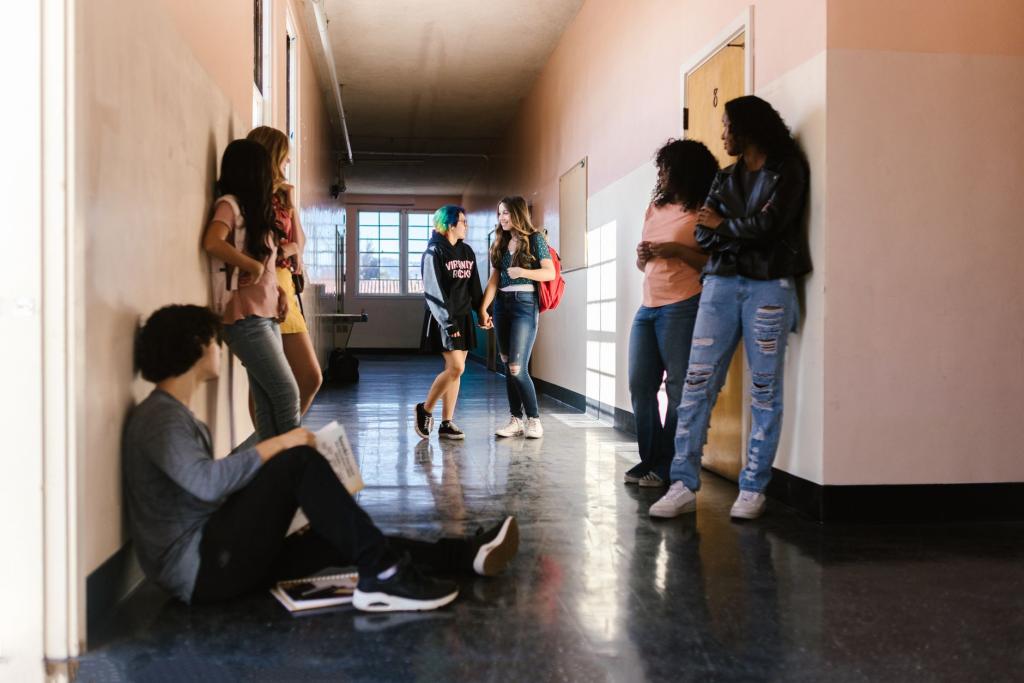
Every adult with a theory about teen harassment has the same villain: the phone. Take it away, lock it up, slap a warning label on the app, and the kids will be fine. It is a tidy story, and it puts the whole problem somewhere a parent can confiscate. A study published this month in JAMA Pediatrics complicates that story, and the complication is the part nobody put on a poster. The school hallway is about as hostile as the group chat.
The research was led by Angela Y. Lee of the University of Wisconsin-Madison and published online September 18. Her co-authors include Jonathan Haidt and Jeffrey Hancock. The team surveyed 472 adolescents ages 13 to 17 across 47 states through the nationally representative Understanding America Study panel, collecting responses from February to December 2025. The teens reported what they had run into during the previous four weeks, both online and offline, across 20 platforms including Instagram, TikTok, Snapchat, YouTube, Discord and Facebook. The researchers note that prevalence varied by platform, and that existing research on online harms rarely examines those platform-level differences at all. The top-line numbers look like the usual bad news: 44.7 percent said they had witnessed harassment, and 29.8 percent said they had been harassed directly.
The awkward part comes when the researchers split direct harassment by setting. Teens reported being targeted for harm at nearly identical rates offline and online: 18.5 percent offline versus 16.4 percent online. A teenager is about as likely to be harassed by someone standing in front of them as by someone behind a screen. The cruelty did not start with the app, and it will not end when the phone goes into a drawer at the start of homeroom.
The hallway counts too
The public conversation about teen harassment treats online harm as a special, stranger danger, something platforms did to children who would otherwise be safe. The data suggests targeting someone for harm is a people problem that happens in every setting, and calling it a tech problem lets the physical world off the hook.
None of that makes the internet harmless, and the study is blunt about where screens are worse. Exposure to violent imagery ran 10.7 percent online against 1.6 percent offline. Unwanted sexual images reached 13.4 percent online versus 2.0 percent offline. Content encouraging self-harm was seen by 9.7 percent online and 5.2 percent offline. More than half of the teens surveyed, 51.5 percent, said technology use had disrupted their sleep.
Those numbers describe two different kinds of damage. The harms that concentrate online are mostly about exposure: images, videos and posts pushed through feeds. The harm that spreads evenly across both worlds is harassment itself, one person deciding to target another. An algorithm can show a teenager something awful. Only a peer can decide that teenager is the target.
Measure first, panic second
The researchers are careful about what their numbers can prove. The study is small and cross-sectional, a snapshot rather than a trend line. According to the study authors, the findings are meant as a baseline, the first systematic measurement of teen harms across platforms, built to work the way public health already tracks youth substance use, sexual behavior and violence. Their position is that even people who disagree about solutions need a consistent way to measure whether anything is working, and they call for larger studies run the way other public health monitoring programs run. It fits a broader push to measure generational change properly, alongside recent coverage of Gen Z drinking less and how AI is reshaping junior hiring across 41 countries.
That leaves two separate problems where the panic saw one. The sleep figure, 51.5 percent, points at something phones genuinely do: keep kids up at night. The harassment figure points at something phones merely host. Policies aimed only at the online half, phone bans, warning labels, age gates, can only ever reach part of the damage. Full details are in the published abstract.
The unpopular opinion, then, is that blaming the phone is the easy version of caring. It locates the danger in a device instead of in the hallways, cafeterias and locker rooms where teenagers actually spend their days, plus the chats where they spend their nights. The new data does not say the internet is safe. It says teen harassment was never an internet-only problem, and the numbers now exist to prove it.
Comments 0
No comments yet. Be the first to share your thoughts!
Leave a comment
Share your thoughts. Your email will not be published.