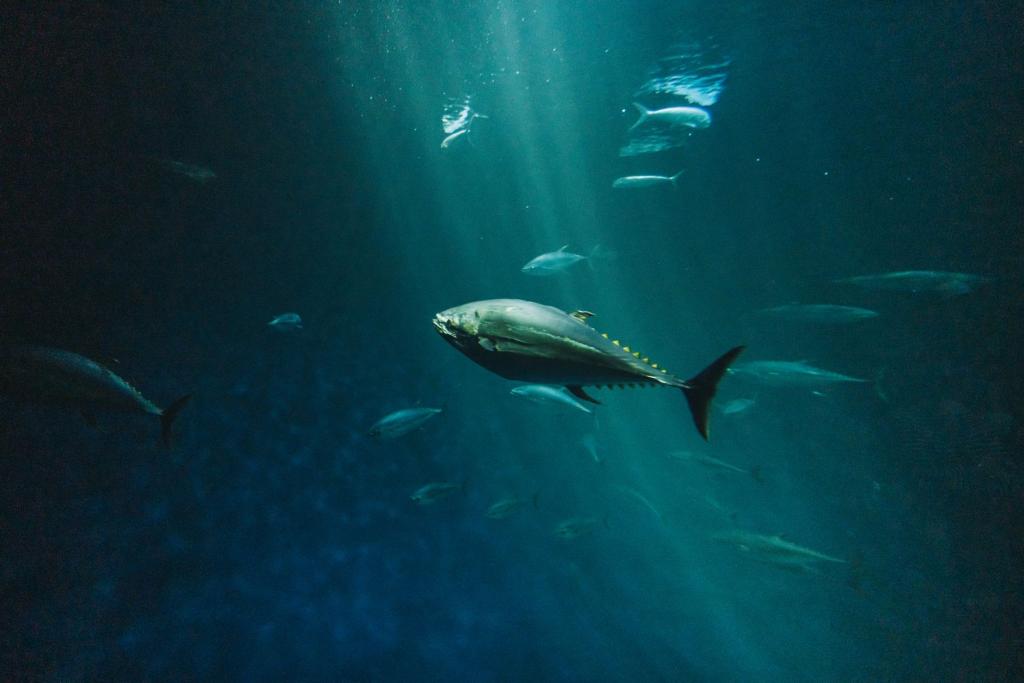
Two giant tuna pulled from the water off Victoria in July 2026 have been genetically confirmed as Pacific bluefin tuna, the first genetically confirmed recreational catches of the species in the state's waters. CSIRO announced the finding in October 2026 after DNA analysis at its Hobart laboratories, and the result suggests these powerful ocean travellers may be showing up off southern Australia far more regularly than anyone had recognised.
The pair were hooked just days apart by anglers fishing wide off Western Port Bay in the eastern reaches of Bass Strait, working depths of 50 to 60 metres. The larger of the two fish tipped the scales at roughly 165 kilograms and stretched 2.12 metres long, while its companion weighed 131.6 kilograms and measured 2.02 metres. On deck, everyone assumed they had landed southern bluefin tuna, the local heavyweight that Victorian game fishers target through the colder months.
But a few sharp-eyed fishers thought something looked off. Jonah Yick, a Tuna Champions scientific ambassador, and experienced fisher Dave Standing noticed features that did not fit the familiar species: fin proportions, skin markings and a body shape that differed from the southern bluefin they knew well. Yick later described the catches as having come "in close proximity, literally on Melbourne's doorstep", a turn of events he called an amazing catch and story.
Recognising the moment might matter, Standing tracked down the anglers behind both catches and organised the collection of muscle samples. The tissue travelled to Yick, who passed it on to Dr Peter Grewe, CSIRO's lead geneticist for tuna genomics. Grewe ran a rapid species-identification test developed in the CSIRO labs that flagged both fish as Pacific bluefin, then backed it up with a second round of forensic-grade sequencing. He said he was "extremely confident in these results" after the follow-up work. According to CSIRO's October 2026 announcement, the captures represent the first genetically confirmed Pacific bluefin caught by recreational fishers in Victoria.
From Japan to Victoria: a species built for distance
The confirmation matters because Pacific bluefin are not supposed to be a Victorian story. More at home in the Northern Hemisphere, they rank among the largest and most powerful tuna on the planet, able to grow to almost three metres in length and approach 450 kilograms, well beyond the size of the two fish that were tested. They are also one of the world's most valuable fish, prized in high-end Japanese restaurants. Only a handful have ever been landed by recreational anglers in Australia, and the species had never been confirmed in Victoria until now.
Their life history is built for ocean-scale travel. In their first year, many young Pacific bluefin cross the entire Pacific from the two known spawning grounds near the southern end of Japan, a journey of more than 8,000 kilometres. Others swim south from Japan to New Zealand, covering close to 5,000 kilometres, before the adults return to their birth waters to spawn and then head back to rich feeding grounds off California and across the Tasman. Against that backdrop, a few fish ending up off Victoria's coast looks less like a freak accident and more like a pattern nobody had the DNA evidence to prove.
Why anglers and fishery managers should care
The discovery lands just as more boats are chasing tuna off south-eastern Australia. With southern bluefin tuna stocks rebuilding, the fishery has boomed in popularity, and Grewe notes that the chances of running into something unusual rise when more lines are in the water. Without genetic testing, both July fish would almost certainly have been recorded as southern bluefin, and that is the management headache. Catch records feed stock assessments, so if Pacific bluefin have been quietly passing through for years, the data on both species could be blurrier than it looks.
Then came the encore. Months after the July catches, anglers working off Lakes Entrance further along the coast began hauling big numbers of tuna, with fish ranging between 130 and 217 kilograms. Preliminary assessments based on external features suggest these may be Pacific bluefin as well, and samples collected by local fisher Simon Webster are now being tested. Word travelled fast through the fishing community: Yick said he was told more than 150 boats were out off that stretch over a single weekend.
For Victorian anglers, the practical lesson is simple: look closely at the next big bluefin, photograph odd fin lengths or unusual belly markings, and flag anything strange to scientists. This entire discovery hinged on fishers noticing what did not look right and getting tissue samples into the right hands fast. It is a textbook case of citizen science, with everyday people on the water supplying the observations no laboratory can gather alone. And it opens a new chapter for the fishery: the remarkable fish once thought to belong to the far side of the Pacific may have been visiting Victoria all along.
Comments 0
No comments yet. Be the first to share your thoughts!
Leave a comment
Share your thoughts. Your email will not be published.