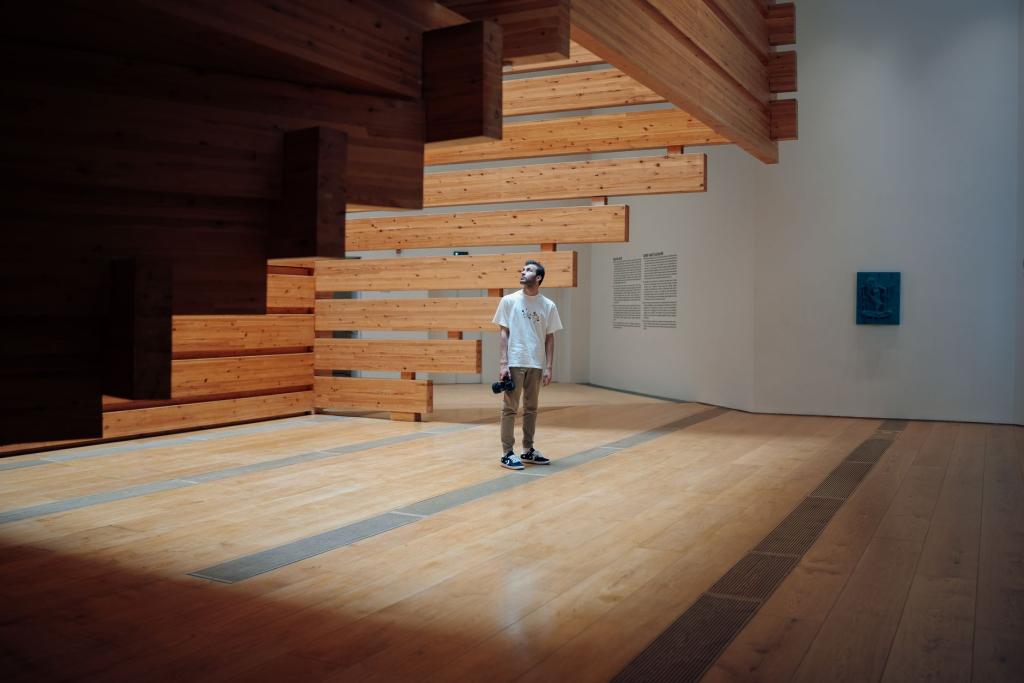
The Turner Prize 2026 exhibition opened to the public on 26 September at the Middlesbrough Institute of Modern Art, part of Teesside University, where it runs until 29 March. According to The Art Newspaper, which covered the press opening, the show is the first Turner Prize staged inside a university setting, and admission is free, though visitors need to book tickets in advance. Tate Britain director Alex Farquharson, who chairs the prize jury, described the exhibition as a cross-section of British visual art today, with the four shortlisted artists engaging ecological thought, human precarity, the geopolitics of oil and the lived experience of deindustrialisation in the North of England.
The Turner Prize was founded by Tate in 1984 and is awarded to a British artist for the most outstanding contribution to art made in Britain over the past year. Each year the exhibition moves to a different city, and this time the choice of Middlesbrough carries its own resonance: one of the shortlisted artists grew up in the North and built his installation directly out of that experience. Running alongside the main show is Turner on Tees, a local programme of exhibitions and showcases at arts venues across the Tees Valley. Farquharson has called the prize an incredibly positive thing for the town, pushing back against recent press coverage that has treated Middlesbrough harshly.
The four artists vying for the prize
Plymouth-born Tanoa Sasraku is showing Morale Patch, an installation about extractivism, the removal of natural resources for export and profit. The room is designed to feel oppressive, down to a strong-smelling rubber floor, and paperweights filled with crude oil sit on a chequered central display that stands in for water and desert. The work, titled Watchlist, traces the instruments and organisations that move oil around the world and maps the corporate networks behind it.
Marguerite Humeau, who was born in France and lives in London, builds sculptural compositions from unlikely natural materials. Her installation Torches uses beeswax, walnut wood said to be 150 years old, yeast aged 4,500 years and a culture drawn from termite mushrooms. Farquharson singled out her piece for how it handles scale, saying it deals with natural life and making things small, and reminds viewers that people have taken up far too much space in the natural environment.
Simeon Barclay took the most radical route of the four shortlisted artists. The Huddersfield-born artist turned his performance piece The Ruin into an architectural intervention: a scaffolding structure bathed in red light, paired with an hour-long recorded spoken word piece about masculine identity, class and race. The installation recalls the building of the M62 motorway, the trans-Pennine route constructed between 1957 and 1976, which for Barclay as a young man became a gateway to different possibilities and adventures. Stills from his childhood, showing images of household ephemera, also feature in the piece.
London-born Kira Freije presents Unspeak the Chorus, a series of apparently fragile sculptures made from steel strips with faces, hands and feet cast in aluminium. The skeletal figures lounge on a settee or grasp their stomachs, arranged among animal forms in a bespoke gallery space dominated by mirrored walls pitted with lights, with a gentle mist hanging over everything.
How the winner is chosen
The Turner Prize jury this year brings together Sarah Allen, head of programme at the South London Gallery; Joe Hill, director of the Yorkshire Sculpture Park; Sook-Kyung Lee, director of The Whitworth in Manchester; and Alona Pardo, director of the Arts Council Collection. Each artist earned a place on the shortlist through a solo exhibition shown over the past year, then produced a new installation specifically for the Middlesbrough show.
The winner of the Turner Prize will be announced on 10 December during a ceremony at Mima, taking home a cash prize of twenty-five thousand pounds while each of the three runners-up receives ten thousand pounds. Farquharson, who has watched the format of the Turner Prize tested over the years, said the prize really matters and has stood the test of time as a stress test for British art. He also pointed to the British Art Show, whose tenth edition launches in Coventry next month, as another consistently accurate view of the art world.
With the Turner Prize exhibition open through late March, visitors in the North East have half a year to see the four installations in person before the prize is decided. The Art Newspaper reported on the press opening on 24 September, and the Tees Valley Combined Authority has published full visitor information, including opening hours and the free ticket booking, for anyone planning a trip to Middlesbrough.
Comments 0
No comments yet. Be the first to share your thoughts!
Leave a comment
Share your thoughts. Your email will not be published.