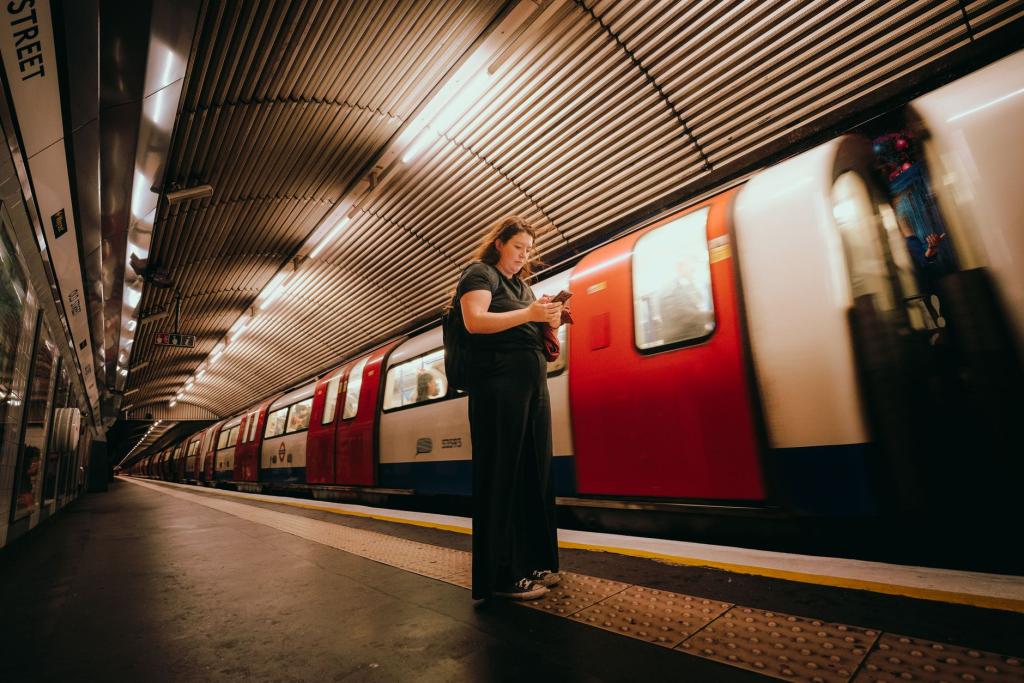
Tube Girl Sabrina Bahsoon, the TikTok creator famous for joyful dance videos filmed on the London Underground, has revealed that she spent months in hospital this year after doctors diagnosed her with anti-NMDA receptor encephalitis, a rare brain condition that was first misdiagnosed as psychosis. According to a LadBible report published on 2 October 2026, Bahsoon said the illness began in March 2026 with a sudden episode of hysterical crying after a night out with friends, and it led to her being sectioned in a psychiatric hospital for two months on anti-psychotic medication prescribed for the wrong illness. Her story is now making the rounds across the internet-famous corner of the creator world, where fans who once copied her carefree commute dances are reckoning with how quickly her life flipped.
For those who missed the original wave, Bahsoon became a viral sensation in August 2023 after filming herself dancing and lip-syncing on the Tube, turning rush-hour carriages into her personal stage. According to Grazia, the Malaysian-born law graduate from Durham University sparked the Tube Girl hashtag, which has racked up hundreds of millions of views on TikTok as people around the world recreated the trend. She parlayed the fame into fashion-week appearances, a role as a global ambassador for MAC Cosmetics, and music releases including her debut single MINE in 2024 and Not My Kind in 2025.
The night everything changed
The trouble started, she said, on 19 March 2026. Bahsoon had filmed a Tube video with friends that evening, and when she got home she simply started crying uncontrollably. She described screaming, shouting and acting what she called very psychotic, not realising she was experiencing her first episode of psychosis. By the next morning she was behaving so strangely that her sisters rushed to her flat, after she told them she had broken up with her boyfriend. While they were there, she began posting TikToks of herself screaming and shouting at the camera, crying and trying to hurt herself, until her sisters called an ambulance.
She spent two days in hospital, screaming the entire time and getting no sleep, according to the report. Despite her condition getting worse, the emergency department discharged her, and Bahsoon said she was already starting to lose her memories by then. Back at home, she began having violent outbursts and trying to hit things, so her family called paramedics again. The paramedics called the police, who handcuffed her to restrain her. Back at the hospital, staff sedated her because she was violent with anyone who came near, and the decision was made to section her.
Two months under the wrong diagnosis
Bahsoon was transferred to a psychiatric hospital with a diagnosis of psychosis, and she stayed there for two months on anti-psychotic medication. The drugs did nothing for her, because her problem was not a psychiatric illness at all. During that stretch she lost around 12kg and slipped into what she described as a catatonic state, while her family watched her deteriorate under the wrong treatment. It was only when her father insisted on further tests that doctors finally identified the real cause: anti-NMDA receptor encephalitis. The psychiatric hospital apologised once the truth came out.
The condition, sometimes called brain on fire after the film of the same name, is a rare disorder in which the immune system attacks chemical receptors in the brain, effectively turning the body against the mind. Research referenced in the coverage has found that dramatic psychiatric symptoms can show up in up to 60 percent of autoimmune encephalitis cases, which explains why the illness is so often mistaken for a mental health crisis first. The film Brain on Fire dramatised one such story years earlier, but Bahsoon's case puts a painfully real face on the statistics.
An operation, a discharge, and a reason to speak out
On 18 June 2026, Bahsoon underwent an operation to treat the condition, a procedure that carried the risk of costing her her ovaries, though fortunately that did not happen. She was finally discharged in July 2026, and she is now rebuilding her life after what she called months of absolute hell. The ordeal spanned from that first March evening to her summer discharge, a timeline her team says she wants others to learn from.
Thomas Drachkovitch of Dream Bay Group, who works with the creator, said Bahsoon had endured something most people could not imagine and had fought her way back in a remarkable way. He said she is sharing her story so that other people might recognise anti-NMDA receptor encephalitis sooner. Bahsoon herself put it more simply: she was grateful her family pushed for answers, saying she did not know what she would have done if she had been alone. Her openness has landed in a feed already full of creator confessions, from Alix Earle's viral admission that she had never read a book to the industry's wider reckoning with influencer wellbeing.
The takeaway for readers goes beyond one creator's ordeal. If psychiatric treatment is not working, her family's experience argues for pushing hard for more tests rather than accepting the first label. Conditions that attack the brain can wear a psychiatric disguise, and the difference between the right and wrong ward can come down to one parent refusing to take no for an answer. For Tube Girl Sabrina Bahsoon, whose brand was built on fearless joy in public, the bravest performance of her career may turn out to be this one: telling the internet what really happened when the cameras were off.
Comments 0
No comments yet. Be the first to share your thoughts!
Leave a comment
Share your thoughts. Your email will not be published.