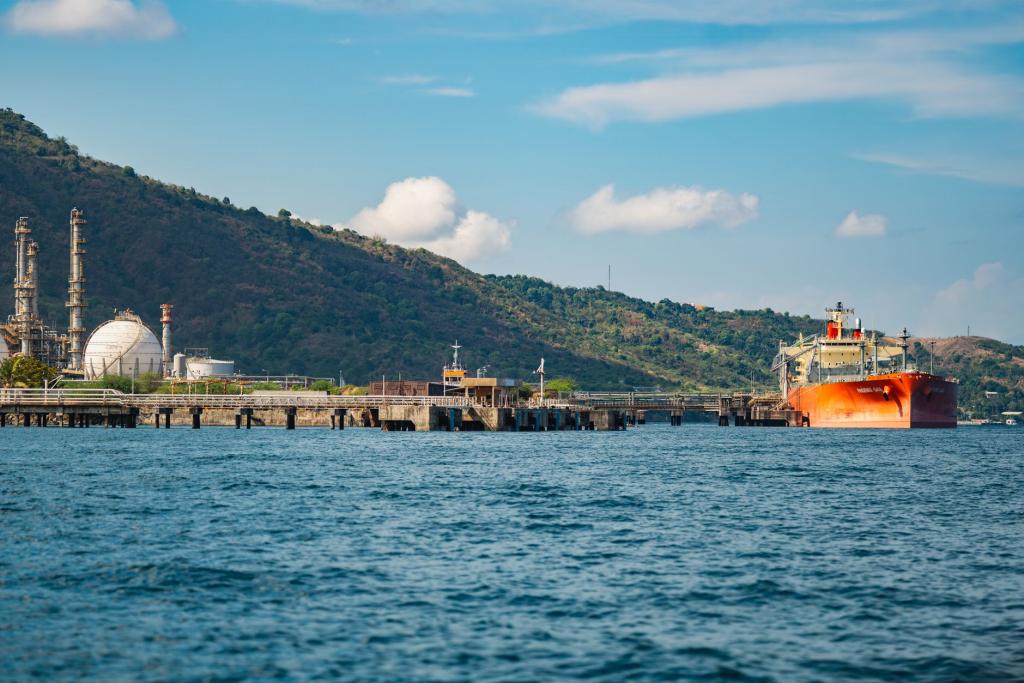
The Trump diesel deal, announced by President Donald Trump on Friday, October 9, sends large quantities of Russian diesel fuel into the American and global markets after his agreement with Russian President Vladimir Putin. The announcement is aimed at lowering fuel prices with the November 3 midterm elections approaching and the cost of living dominating the campaign conversation.
Trump made the announcement on social media after his talks with Putin, writing that Russia would "immediately supply over 300,000 Tons of Diesel Fuel to the American and Global Marketplace." He said another five hundred thousand tons would follow in November, then one million tons after that, with an additional three million tons possible within a short period of time depending on the condition of Russian refineries, as reported by the Capitalism Institute, which reviewed the full post.
What the deal promises
The Trump diesel deal is an unusually direct intervention in energy markets for a president whose party has long criticized reliance on Russian energy. The immediate shipment alone amounts to several large tanker cargoes, and the planned later releases would add millions more tons to global supply.
To make the Trump diesel deal possible, the U.S. Treasury issued a temporary license on Friday easing war sanctions on Russian oil and oil products, allowing them to flow to global markets through April 2027, according to AFP reporting. The Kremlin said in a statement that Russia had "reaffirmed its readiness to supply oil and oil products to the American and world markets."
Trump framed the Trump diesel deal as an answer to the fuel price pain felt by American drivers. In a social media post, he wrote that lower prices for Americans, and especially for "farmers, ranchers, and truckers," were his "greatest priority."
Why fuel prices became the midterm issue
Prices at American gasoline and diesel pumps have surged since late February, when U.S.-Israel strikes targeting Iran led Tehran to block the Strait of Hormuz, a critical waterway for global energy transit. The average cost of regular U.S. gasoline has jumped more than 46 percent since then to $4.37 per gallon, while diesel rocketed 67 percent over the same period, according to AFP.
AAA data put the average U.S. diesel price at $6.28 a gallon, more than $2.60 above the $3.68 level recorded a year earlier, the Capitalism Institute reported. Diesel is the fuel that moves freight across the country, so higher diesel prices push up the cost of shipping food and consumer goods.
The cost of living is the dominant concern for voters heading into the November 3 midterms, and Trump's Republican Party risks losing its grip on Congress. NPR reported Monday that Trump is struggling to convince voters that he is focused on the cost of living, which makes the Trump diesel deal an attempt to show concrete action at the pump. It is not the only Trump-related political fight playing out this week: a federal judge just halted taxpayer-funded pro-Trump ads.
Some market analysts see short-term relief. Angelo Kourkafas of Edward Jones said the deal was "alleviating some of the worst-case scenarios" for energy supplies and inflation, according to AFP.
The backlash was swift
Ukrainian President Volodymyr Zelensky condemned the move. "It is certainly not honest, it is certainly unworthy of our partners, and it is, in my view, a weak decision," Zelensky told reporters. Russia has faced waves of Western sanctions since its 2022 invasion of Ukraine, and the temporary license eases some of them.
The Trump diesel deal trades cheaper fuel for American consumers now for a warmer commercial relationship with Moscow. The war in Ukraine has ground into a stalemate even as Western sanctions have tried to choke off Russian energy revenue, and the energy ceasefire in Ukraine collapsed within hours earlier this month.
Democrats and foreign policy hawks are expected to press the administration on whether the Trump diesel deal weakens Western leverage over Russia. The White House has not detailed what, if anything, Moscow received beyond the temporary sanctions license.
What happens next
The first diesel shipments are expected to arrive shortly, with the next tranche scheduled for November. Whether the Trump diesel deal actually lowers prices at the pump will depend on refining capacity, global demand, and how much Russian fuel reaches the U.S. market rather than going elsewhere.
The Treasury license runs through April 2027, giving the arrangement a long runway if both sides honor it. Analysts will be watching weekly pump prices to see if the deal delivers the relief Trump promised voters.
Comments 0
No comments yet. Be the first to share your thoughts!
Leave a comment
Share your thoughts. Your email will not be published.