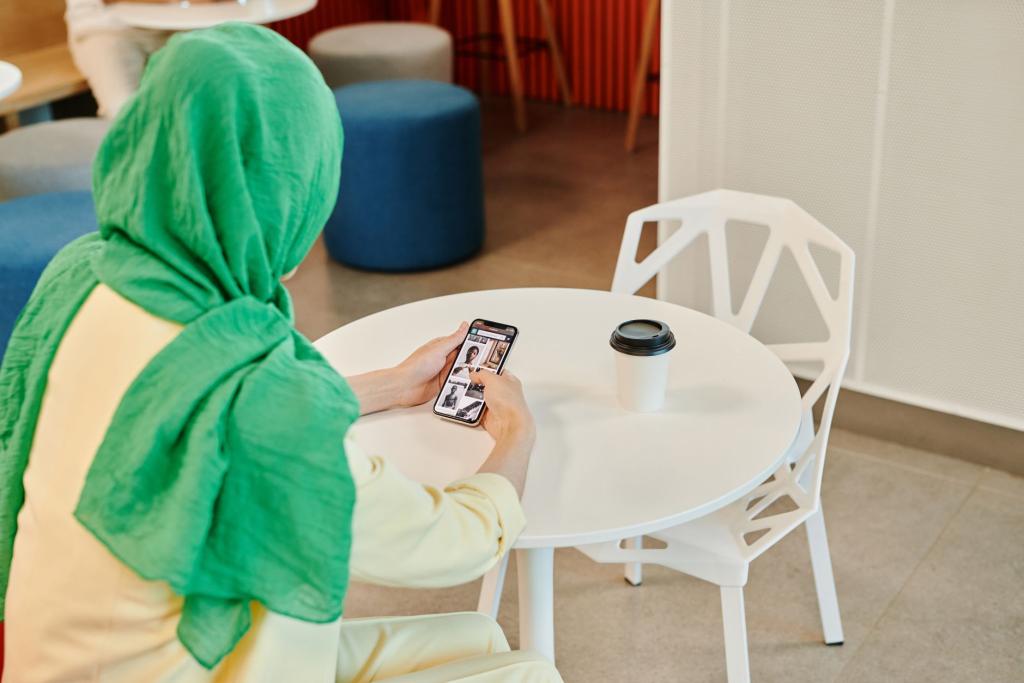
Another dating app launched this week, and its pitch is simple: stop swiping and actually read. Bondz, an interest-based dating app founded by Jacob Abraham, is rolling out across Southern California after an Android release in August 2026 and an iOS release the following month, according to the company's launch announcement. The app is currently live in four Southern California counties — Santa Barbara, Ventura, Los Angeles and Orange — while anyone outside the region can join a waitlist on the company's website.
The core mechanic is what Bondz calls an anti-swipe system. Instead of flicking through photos, users must scroll through an entire profile before they can pass or match. The “Matchez” page presents four profiles at a time, each pairing a main photo with what the app labels a “Main Interest,” according to the announcement. Abraham said the design lets people, in his words, view profiles and “not feel the pressure of having to decide right away” — a direct shot at the split-second judgment of swipe culture.
Why a New Dating App Wants You to Slow Down
The tired-swipe thesis is crowded. Nearly every new dating app claims to be the antidote to endless swiping, and Gen Z's dating-app fatigue is well documented — a trend GenZ NewZ explored earlier this month through the rise of hobby-first dating. Bondz tries to make its version enforceable: you cannot skip the profile. The forced scroll is a small design constraint, but it changes the interaction from a reflex into a read.
Abraham argues the deeper problem is not just speed but shallow intent. Many young daters, he said, want connections that move beyond texting over apps — and Bondz is designed to keep nudging them toward a shared activity as the real first conversation. In other words, the shared hobby is not just the filter; it is supposed to become the first date. That is a stronger claim than “no swiping,” and it is the part that would have to prove itself once the novelty wears off.
A Dating App That Profits When You Log Off
Most dating apps make money by keeping you single and scrolling. Bondz claims the opposite: its business model is built around getting people off the app. Through a feature called “Date Ideaz,” local businesses offer exclusive promotions to matches, steering first dates toward restaurants, venues and other neighborhood spots, according to the launch announcement. Abraham put it plainly: turning a match into a real date felt “daunting,” and the app is designed to bridge that gap.
The partner side of that strategy is still early. Bondz's business partner program is in open beta and is signing up local businesses in Santa Barbara and Los Angeles, the company says, and it has joined the Santa Barbara Chamber of Commerce as part of its commitment to supporting small and local businesses. The pitch to merchants is straightforward: dating apps already drive foot traffic on date nights, and Bondz wants to route that spending to its partners. If it works, the app wins by shrinking its own screen time — a bet most of its competitors would never make.
The Bondz Code and Other Details
Every account also comes with a personal “Bondz Code,” according to the company's announcement. Enter someone's code and their profile lands in your match queue even if you share no interests — a workaround that lets a friend-of-a-friend or someone you met in person skip the algorithm entirely. The code can be shared anywhere, online or in person. It is an interesting pressure valve: the app's matching philosophy is hobbies-first, but the code admits that chemistry does not always follow a shared-interest spreadsheet.
On access, the app is free to download with optional premium features, as reported by Market Forecast Reports, and users outside Southern California can join the waitlist for now. The company has not announced a timeline for expansion beyond the initial four-county footprint.
Who Can Use It — and the Catch
For now, Bondz is a regional experiment: live in four Southern California counties, waitlisted everywhere else. That is the honest trade of a soft launch — a community-first model is testable where the user density exists, but anyone outside Southern California is just a waitlist email. The company's next real test is whether the model can scale beyond that initial four-county market into places where neither the user base nor the local business partnerships are established.
There is also a design question worth asking. Matching on a “Main Interest” is still matching on a label — two people who both list surfing are not automatically compatible, and hobbies are a thin proxy for values, timing and chemistry. Bondz's implicit answer is the forced scroll plus the push toward a real date: read the whole profile, then meet the person. Whether that fixes swiping or merely slows it down is a question only a wider rollout can answer. For now, in Southern California, the experiment is live.
For GenZ NewZ readers tracking where dating is headed, Bondz is worth watching — not as another swipe clone, but as a test of whether a dating app can succeed by trying to get you to close it. More coverage of dating and relationships lives on the Sexual Wellness topic page.
Comments 0
No comments yet. Be the first to share your thoughts!
Leave a comment
Share your thoughts. Your email will not be published.