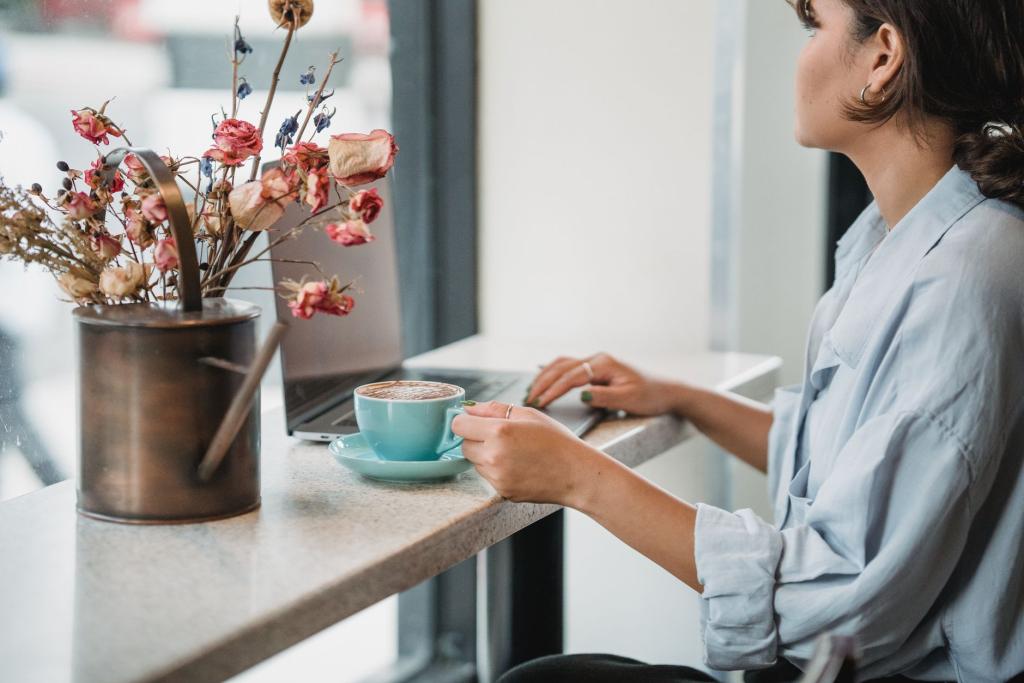
The Laptop Ban era has quietly begun, and it started with a sign on a cash register. Beyond Café in Orléans, on the eastern edge of Ottawa, has introduced a firm no-laptop policy to take its room back from remote workers. Hasti Meschi, the café's manager, told the Ottawa news outlet Capital Current that customers should imagine laptops do not exist when they walk in. In Austin, Texas, a beloved bakery banned laptops from its patio more than a year ago, according to local reporting. From London to Ottawa, the café that doubles as an office is getting an eviction notice.
The shift is not really about technology. It is about what a café is for, who gets to sit at a table, and how long a single coffee entitles a customer to stay. For a decade, coffee shops courted the laptop crowd with outlets, fast Wi-Fi and long opening hours. Now a growing number of owners have decided the trade was a bad one, and they are rewriting the rules of the room. The Laptop Ban is less a single policy than a mood spreading from city to city.
The maths that broke the café office
Meschi describes the moment the policy became necessary in plain terms. The café had no policy at first, she said, until staff noticed customers nursing a single drink for four or five hours. She added that the room they had decorated with care was being ignored because customers were stuck in screens, and that traditional café culture had been badly damaged.
Research suggests she is not imagining the economics. A 2022 study by Menghan Liu found that post-pandemic remote workers and students working from cafés tend to have low spending power as customers: they spend less and stay longer, the worst combination for a business that runs on table turnover. One major European coffee roaster has started capping laptop use at an hour or banning it outright on busy days, because a single long-stay, low-spend customer can quietly cost more in lost covers than they ever paid for in coffee.
The social cost bothers owners as much as the financial one. A YouGov survey found that only eight percent of Britons think video calls are acceptable in a café, yet the sea of laptops has normalized exactly that. Even Starbucks, the chain that more or less invented the coffee-shop-as-office concept, has scrapped its open-door, buy-nothing-and-stay policy, according to trade coverage of the shift. If the company that built its empire on lingering is rationing the dream, the era is genuinely changing.
The new rules, city by city
In London, the restrictions are getting creative, according to a UK guide to the new rules of working from a café. Lumberjack in Camberwell has put wooden signs on around half its tables, mostly the smaller ones, marking them laptop-free so that people who came in to talk can usually find a seat. At IRENE Bakery, also in Camberwell, laptops are allowed for an hour, stretched to two or three when the room is quiet. Christos Johnson, a barista there, has little patience for laptop users who demand to know why the Wi-Fi is down or why there are not more sockets, telling them it is not their office space.
Austin has been fighting this battle longer. The bakery Swedish Hill banned laptops from its South First Street location in August 2025, posting signs that the café and garden tables are for dining and chatting only. The downtown bar Better Half Coffee and Cocktails has prohibited laptops at its five indoor booths for at least five years, while the East Austin café Community Garden allows laptops only on weekday mornings and goes entirely laptop-free on weekends. Another spot hands out Wi-Fi codes to paying customers alongside a strict three-hour time limit.
Where bans feel too blunt, owners are publishing etiquette instead. The freelance writer Emily Watkins has proposed a code of conduct for café laptop users: cap sessions at four hours, spend about five pounds every two hours, take no video or phone calls, grab the smallest table available, and keep music off speaker. The message underneath every version of these rules is the same. The café is a shared room, and the laptop was not meant to own it.
Not every café is joining in
There is a genuine counterpoint, and it comes from café owners who see laptops as customers rather than squatters. Kyle Ratchford, who runs Ahh!!! Coffee in Ottawa, has embraced the remote-working crowd from the start. Ratchford said the room was built from day one as a creative hub and workspace, adding that the café is beyond open to laptops and functions as a third space where working is simply the norm.
Others are choosing the middle path. Equator Coffee in Barrhaven allows laptops anywhere but displays small signs on the tables reading "Please be considerate of other customers who may be waiting for a table." The manager, Ryan King, told Capital Current the approach is just little things that subtly encourage a more conversational feel. And Sofi Al Halawani, who owns Café Cristal in Barrhaven, asks single laptop users not to monopolize four-tops but sees the upside clearly. "It's good to have people filling the room because it gives the impression that the place is busy," she said. "People will come and they will actually almost rent a table, and they will stay as if it's their office."
The laptop crowd has its own case, and the students make it best. Salma El-Hajj, a law student in Ottawa, discovered Parliament Café on TikTok, sat down to study with a friend, and was told laptops were not allowed. El-Hajj said she had to find a new place to study and change plans with her friend, describing the experience as surprising and awkward. She said no downtown space she knew of asked customers to keep technology out of sight, and that finding the policy only after sitting down made it worse.
There is also older evidence that the café office was meeting a real need. A 2012 study by Benjamin Garner found people use cafés as workspaces to limit distractions, get into a productive mindset, switch up their environment and be around others, describing a kind of collective solidarity in working side by side. With more than a quarter of working adults in Britain now hybrid working, and Ottawa counting over one hundred thirty thousand students across its universities and colleges, that demand is not going away. The statistics agency found seventy-six percent of Ottawa-Gatineau workers were commuters in May 2025, but the students and the hybrid workers still need somewhere to go.
So the practical advice, from owners on both sides, is simple: check the café's own rules before unpacking. Where there is no sign, asking at the counter before spreading notes and chargers across a table for four takes a few seconds, and it spares the awkwardness of being asked to move an hour later. The Laptop Ban is not really about laptops. It is about a generation of café owners renegotiating the oldest deal in the business: how much of the room one coffee buys.
This is part of a broader rewrite of how young people socialize offline. Morning coffee raves are turning cafés into dance floors, and hobby-first meetups are replacing the apps for meeting people. The café is becoming a place to be present again, screens down, which is exactly what the laptop bans are trying to protect.
Comments 0
No comments yet. Be the first to share your thoughts!
Leave a comment
Share your thoughts. Your email will not be published.