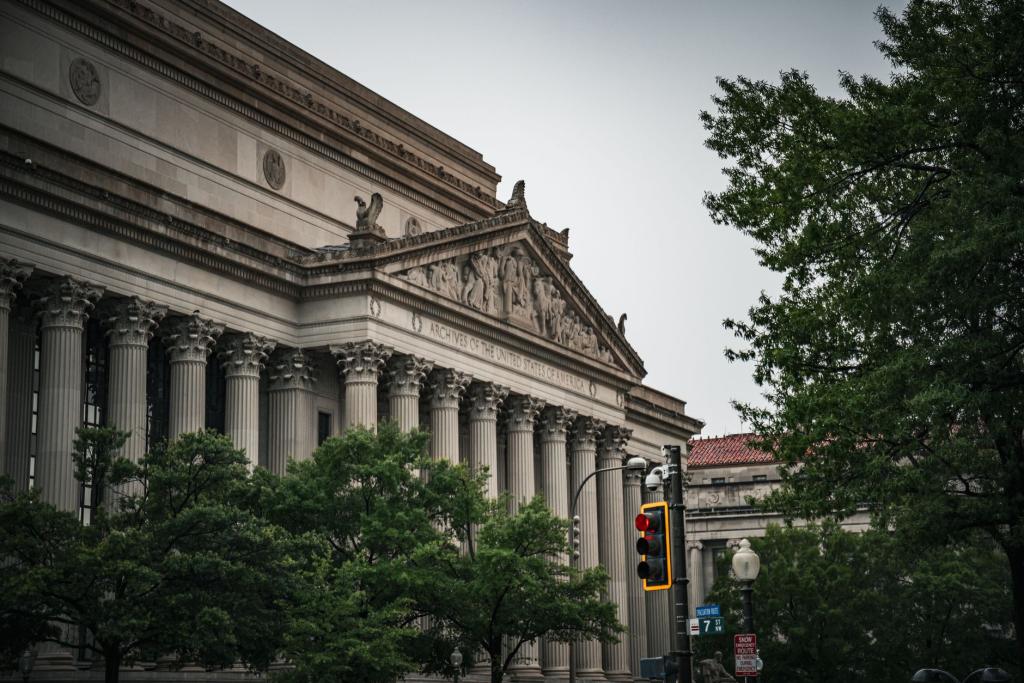
On Wednesday, the Federal Reserve's inspector general closed the book on the Fed renovation probe, and the ending was always the most likely one. The watchdog said it found no reasonable grounds to believe a federal criminal law had been broken and no administrative misconduct tied to the renovation, according to Reuters' reporting on the report. So after a year of scrutiny, the investigation produced exactly what its critics predicted it would: a clean bill of health wrapped around a badly managed construction project.
The report itself, which runs one hundred twenty pages, does not let the Fed off easily on the management side. It describes extensive oversight problems that contributed to roughly one billion dollars in cost overruns on the renovation of the central bank's two historic buildings on the National Mall, with the total price tag now near two point four billion dollars. The inspector general recommended corrective actions and described the board's handling of the project as deficient. Jerome Powell, who led the Fed through most of the construction, declined to comment. His successor, Kevin Warsh, who took over the chairmanship in May, said he would follow the recommendations and hire an independent auditor to verify the accuracy of the awarded costs, Reuters reported.
Here is the part nobody should pretend was ever about drywall. President Donald Trump latched onto the cost overruns as leverage in his long campaign to pressure Powell out and gain influence over the direction of monetary policy, as Reuters documented. He is separately trying to remove Fed Governor Lisa Cook over an unrelated matter, and he has spent years publicly demanding lower interest rates. When the report dropped, Trump did not accept the finding. He renewed his call for Powell's resignation and wrote on Truth Social that Powell should be sued by the government "for either corruption or incompetence," according to CNN's reporting, adding that he had asked Attorney General Todd Blanche to review the report and determine "what to do" about the Fed headquarters.
The building was not the story
This is how a pressure campaign dresses up as accountability. You take something real, a genuinely sloppy construction project, and you aim it at a person instead of a process. Some of Trump's allies went further, suggesting Powell had misled the Senate when he testified about the project in June of last year. The Fed renovation probe also covered materials related to that testimony, and the watchdog made no misconduct findings. It is the same pattern of turning public institutions into props that showed up when reporters were pushed out of the White House briefing room, and it worked the same way then: the pressure is the message.
Then there is the detail that collapses the whole performance. Trump's own White House ballroom renovation, currently underway, has doubled from its initial budget to at least four hundred million dollars, as Reuters noted in the same coverage. Government construction projects go over budget. That is a cliché, not a crime. The Fed renovation probe only looked like a scandal while it was useful, and it stopped looking like one the instant the watchdog confirmed there was nothing criminal underneath. Warsh's promised independent audit is the correct ending, a boring one, the spreadsheet answer to a spreadsheet problem.
What this actually costs you
Central bank independence sounds abstract until you convert it into rent. The Fed sets the cost of borrowing for the entire economy, mortgages, auto loans, credit card rates. Rate decisions already hit Gen Z wallets first, because young borrowers carry the most expensive debt and the least cushion. When a president can threaten the people who set those rates with criminal investigations over office renovations, every rate cut starts to look like a political favor and every hike looks like punishment. That is bad for your money no matter who you voted for.
The Fed renovation probe did not uncover corruption at the central bank. It showed how easy it is to dress up a power grab as a construction audit. The next time an investigation arrives with perfect headlines and suspiciously convenient timing, remember the marble on the National Mall. The building was a billion-dollar eyesore. The threat it carried was aimed at something far more expensive: the idea that interest rates should be set by economics instead of by loyalty.
Comments 0
No comments yet. Be the first to share your thoughts!
Leave a comment
Share your thoughts. Your email will not be published.