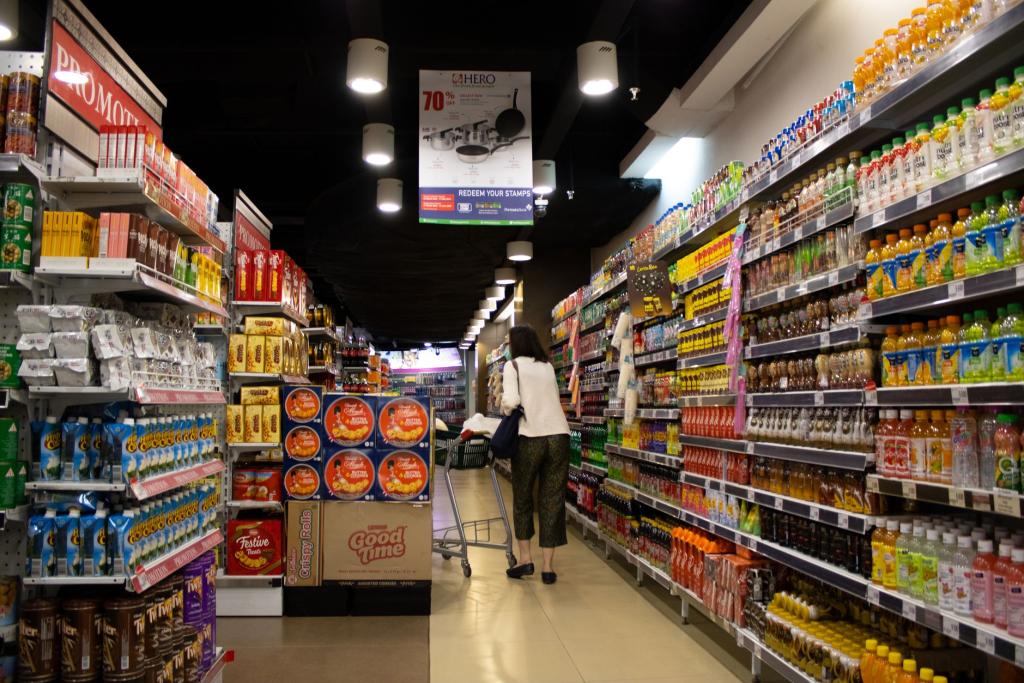
If a product told you it was "eco-friendly" this month in Europe, that claim is now either backed by proof — or breaking the law. On September 27, 2026, the European Union's Empowering Consumers for the Green Transition Directive (EmpCo, Directive 2024/825) took effect across all 27 member states, banning vague environmental claims, self-made sustainability labels, and carbon-offset-based "climate neutral" claims unless companies can independently verify them. For shoppers, the new rules double as a built-in greenwashing cheat sheet. Here is how to read labels — and spot greenwashing — like a pro.
What brands can no longer say
Generic terms like "eco-friendly," "green," "clean," "climate friendly" and "sustainable" are now prohibited without verifiable proof of excellent environmental performance, according to Design Week's summary of the directive. The directive gives a concrete example, reported by industry outlet The Recycler: a broad claim such as "climate-friendly packaging" is a classic piece of greenwashing now classified as a banned generic claim, while a precise statement — say, that 100 percent of the energy used to produce the packaging comes from renewable sources — is perfectly fine. The same precision rule covers durability claims, so companies cannot mask early obsolescence or planned product failure behind green marketing language. Offsets are out too. Companies can no longer call a product "neutral" or "climate neutral" purely because they bought carbon offsets to paper over their emissions — the oldest greenwashing trick in the book. Future pledges like "climate-neutral by 2030" are only allowed with a detailed, publicly available implementation plan with measurable targets and independent verification, as law firm Sorainen explains. And those little "eco choice" badges brands invent for themselves are banned outright: a sustainability label now counts as an unfair commercial practice unless it comes from a public authority or a recognized independent certification scheme.
Hack 1: demand the number
Under the new rules, every legitimate environmental claim got specific. Instead of "100% eco," expect to see "contains 84.5 percent post-consumer recycled material." If a product in the EU still says "green" with no data behind it, that is now a legal red flag rather than a selling point — and a textbook sign of greenwashing — and a sign the packaging was printed before the company took the directive seriously. The banned words list is long: "eco-friendly," "carbon neutral," "natural" and "biodegradable" are all restricted without certified proof, according to compliance analysts tracking the rollout.
Hack 2: check who made the badge
Only badges backed by public authorities or approved independent certification schemes survive the new regime. Booking.com already dropped its own "Travel Sustainable" badge in 2024 after the Dutch regulator called it misleading, according to recent travel-industry analysis — a preview of what happens when self-made labels meet real enforcement. When you see a leaf icon or a "sustainable choice" stamp, look for the certifier's name and an independent scheme behind it; a logo a brand designed in-house no longer counts.
Hack 3: watch for the whole-versus-part trick
The directive specifically targets one of greenwashing's oldest moves: presenting an environmental benefit that applies to only one part of a product as though it covers the whole thing. Describing a product as "made with recycled material" is misleading where only its packaging contains recycled content, as The Recycler reports. Even colours, imagery and presentation can count as an implied environmental claim under the new rules, so a green leaf on the box is not a substitute for facts about what is inside it.
Hack 4: look for the EU legal guarantee notice
Every trader selling goods to consumers in the EU — online and in physical shops — must now prominently display a standardized notice reminding you of your legal guarantee rights, which run at least two years, alongside the new GARAN durability label, Sorainen notes. That poster by the checkout is the law working directly for you: a reminder that durability is a right, not a premium feature — and another tool against everyday greenwashing.
Why the stakes are suddenly real
Enforcement is not symbolic. For widespread cross-border infringements, regulators must be able to fine at least 4 percent of annual turnover in the member states concerned — or at least €2 million where turnover data is unavailable — and companies can be forced to pull products, redesign websites and run advertisements admitting to greenwashing. Belgium has already set a transitional sell-through period running to March 27, 2027 for goods placed on the market before September 27, which shows transition rules vary country by country. The upshot for shoppers: in the post-greenwashing era, the greenest claim is now the most boring one — a number, a certificate, a plan you can actually read. Use that as your filter, and the marketing noise finally has to match reality. (Karmactive; Design Week)
Comments 0
No comments yet. Be the first to share your thoughts!
Leave a comment
Share your thoughts. Your email will not be published.