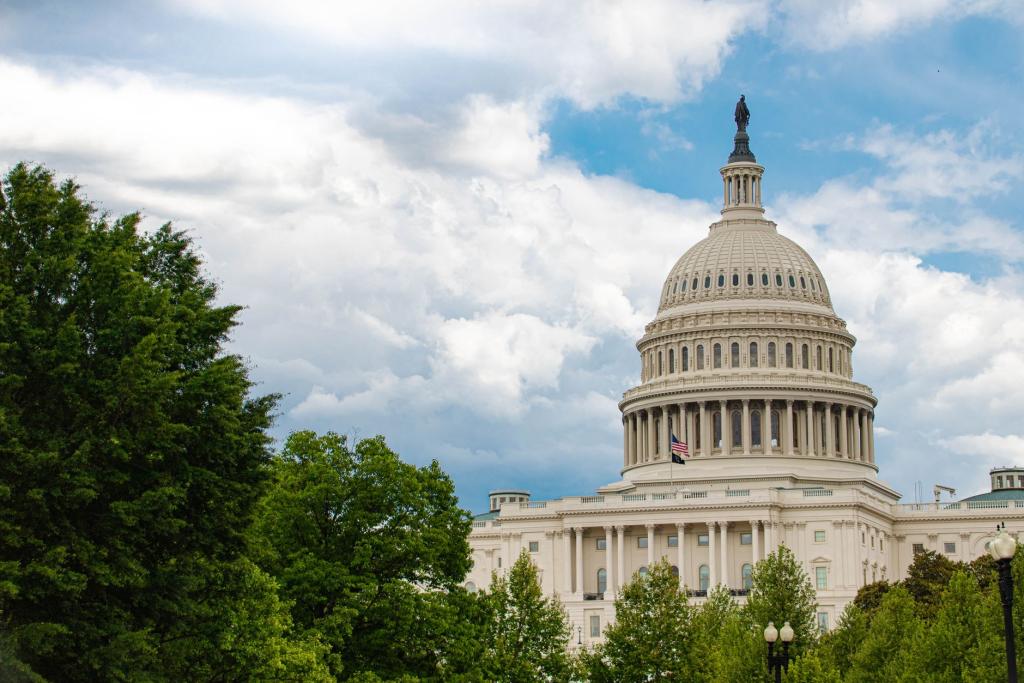
The Anthropic safety bill now circulating on Capitol Hill did not originate in a lawmaker's office. According to reporting from Politico, Anthropic representatives have pitched members of Congress on draft legislation to regulate frontier AI, a draft written by the lab itself. An Anthropic spokesperson confirmed the effort to Reuters, saying the bill reflects the company's Advanced AI Framework, which the lab has been promoting with federal and state lawmakers since June. The uncomfortable reading is that a company marketing itself as safety-first has decided to write its own rulebook, and the rules it wrote restrain the government far more than they restrain Anthropic.
Start with the trigger. Under the draft, Washington could block a model's release or use only when it poses a foreseeable, imminent risk of more than $1 billion in damages, or of killing or seriously injuring 50 people, and only when the risk involves biological weapons, a cyberattack, or a model escaping its developer's controls. These are genuine catastrophe categories. They are also categories where no AI lab has reported an incident at anything close to that scale; as Politico's reporting notes, no lab's agents have caused deaths or a billion dollars in damages. A ceiling placed above anything that has ever happened reads less like a tripwire and more like a permission slip.
What the draft gives, and what it takes away
The Anthropic safety bill does include provisions that read like real oversight. Frontier labs would have to test their most powerful models, publish transparency reports, and submit to periodic checks by independent evaluators registered with the Commerce Department. Any evaluator finding an imminent enumerated risk would have to alert Commerce within 72 hours of finishing its assessment. Whistleblower protections and mandatory disclosure of critical incidents round out the package. Taken individually, these are defensible reforms, the kind safety advocates have requested since the generative AI boom began.
The machinery around them tells a different story. The Commerce Department would become the sole enforcement channel: after an evaluator flags a model, Commerce could ask a federal judge in Washington to halt its release. Every other federal department, agency, or officer would be explicitly barred from independently suspending a model's development, deployment, or internal use. The labs could pay their own evaluators, as long as the payment is not tied to the assessment's outcome. And the federal standard would preempt some state rules on risk disclosures, outside evaluations, and incident reporting, a sharp turn for a company that once backed state safety bills such as California's stalled SB 1047. One gate, one judge, and a preemption clause clearing away the strictest state experiments: that is the shape of the proposal.
A ceiling set above anything real
The thresholds in the Anthropic safety bill deserve a second look. A billion dollars in damages and fifty deaths or serious injuries sound serious, until you notice what they leave out. Models that distort elections, flood markets with synthetic fraud, quietly poison training data, or hollow out job categories would pass under a billion-dollar tripwire built around body counts and property damage. The named categories aim at catastrophe, and catastrophe is not where AI's actual harms have shown up. The industry's real damage arrives gradually, spread across millions of people, too dispersed to cross a single line. A safety law that activates only at the apocalypse will mostly stay silent.
Then there is the authorship. Industries routinely lobby on bills that affect them, but commenting on legislation and writing it are different things. The lab wrote the Anthropic safety bill itself, then circulated the text to lawmakers. The draft sets the exact conditions under which the government may restrain the company, caps the agencies allowed to act, and clears away competing state regimes. The evaluators grading the labs would be paid by those same labs. Regulatory capture has a familiar definition, and this arrangement fits uncomfortably well inside it. The contrarian take: the lab drafted a settlement with the public, and called it a safety bill.
None of that means the draft is worthless. Its whistleblower protections and transparency requirements deserve to survive, and Congress does need a federal standard before a patchwork of state regimes fragments the field. But the starting offer should not come from the party being regulated. If lawmakers want real AI safety law, the revision process has to begin with skepticism toward the Anthropic safety bill the lab handed them, because a bill designed by its own beneficiary will, in the end, benefit its designer.
Comments 0
No comments yet. Be the first to share your thoughts!
Leave a comment
Share your thoughts. Your email will not be published.