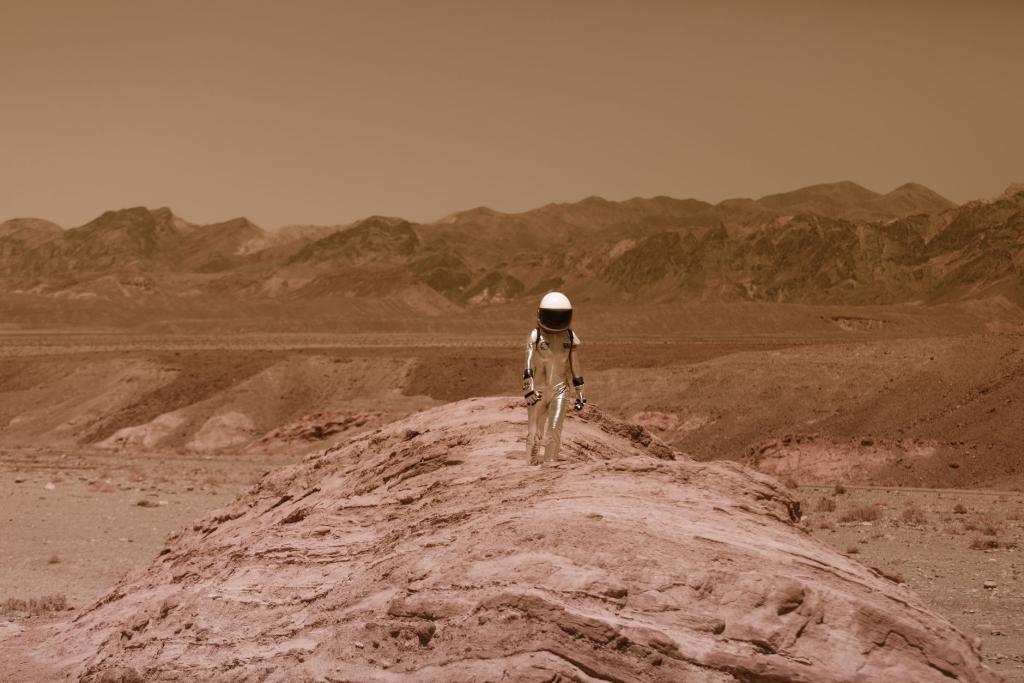
This 2026 space quiz rounds up a crowded year in space, where the highlights piled up fast. NASA sent astronauts around the Moon for the first time in more than five decades. SpaceX finally got Starship into orbit. A brand-new flagship telescope began its long trip to deep space, and the James Webb Space Telescope kept adding pages to the record books. Eight of those stories became the questions in this 2026 space quiz. Pick an answer for each, then scroll down to check how you did.
Every question in this 2026 space quiz has four options and exactly one right answer. The answers sit in a separate section below, with a short explanation of the science behind each one, so you can test yourself honestly before peeking. There is no time limit on this 2026 space quiz, so take it slow.
The questions
Work through all eight before checking the answers to this 2026 space quiz further down the page.
1. NASA's Artemis II mission made history in April. What did its crew actually do?
A) Land on the Moon for the first time since 1972
B) Loop around the Moon and return to Earth without landing
C) Dock with the International Space Station
D) Deploy a rover on the lunar far side
2. SpaceX's Starship made its fourteenth test flight on September 28. What happened?
A) It exploded seconds after liftoff
B) It reached orbit for the first time and released 26 Starlink satellites
C) It ferried four astronauts to the space station
D) It touched down on the Moon
3. NASA's Nancy Grace Roman Space Telescope launched on August 30. Which rocket carried it?
A) A SpaceX Falcon Heavy lifting off from Florida
B) A European Ariane 6 launching from French Guiana
C) NASA's own SLS moon rocket
D) A Chinese Long March rocket
4. In September, Webb released one of its largest panoramas yet, of the star-forming region IC 348. What did astronomers find inside it?
A) The first direct photo of a black hole's shadow
B) Some of the smallest brown dwarfs ever found, just twice the mass of Jupiter
C) A ninth planet orbiting our Sun
D) The most distant galaxy ever observed
5. Astronomers announced the youngest exoplanet ever found this month. How old is Elias 2-24 b?
A) Roughly 4.5 billion years, about the same age as Earth
B) Around five million years
C) Less than one million years
D) About 13.8 billion years, as old as the universe
6. What did a team of astrophysicists detect coming from the exoplanet Beta Pictoris b?
A) A deliberate message from an alien civilization
B) The first radio signal ever picked up from an exoplanet, driven by auroras
C) Laser pulses fired from its surface
D) Nothing at all; the detection was retracted
7. What did NASA's Perseverance rover discover in the Margin Unit of Mars' Jezero Crater?
A) Fossilized bones
B) Signs that the same rocks encountered liquid water on at least three separate occasions
C) A still-functioning piece of alien technology
D) A deposit of diamonds
8. NASA named the Artemis III crew in June. What will their mission actually involve?
A) Landing on the Moon in 2027
B) An Earth-orbit flight to practice docking with commercial lunar landers
C) A crewed flyby of Mars
D) Building the first Moon base
The answers
Here are the answers to the 2026 space quiz, with the story behind each one.
1. Correct: B. Artemis II lifted off at the start of April and splashed down off San Diego nine days later, ending a ten-day loop around the Moon. According to NASA, the crew of Reid Wiseman, Victor Glover, Christina Koch and Jeremy Hansen flew the first crewed lunar flyby since 1972 and broke the Apollo 13 record for the farthest humans have traveled from Earth.
2. Correct: B. Ship 41 reached orbital velocity for the first time in the program's history, and all twenty-six Starlink V3 satellites deployed normally. As USA Today reported, one engine shut down early on the climb, so flight controllers cut the planned ten-hour, six-orbit flight to about three hours. The ship splashed down in the Pacific north of Hawaii, tipped over, and caught fire.
3. Correct: A. A Falcon Heavy lifted the telescope from Kennedy Space Center's Launch Complex 39A at 7:26 a.m. EDT on August 30, and the observatory separated from the rocket about half an hour later. It is now cruising to a gravitationally stable point about 1.6 million kilometers from Earth. Reuters reported that the mission's pinpoint launch and extra fuel loaded before liftoff could stretch its working life to 22 years, more than double the 10 years NASA originally budgeted.
4. Correct: B. The panorama, shared on September 15, peers into a stellar nursery about a thousand light-years away in the constellation Perseus. Phys.org reported that Webb spotted brown dwarfs just twice the mass of Jupiter, the lowest-mass such objects ever found, giving astronomers a new window into how stars and planets form.
5. Correct: C. The planet is still gathering material from the disk of gas and dust around its young star, and researchers announced it on September 16 in The Astrophysical Journal Letters. According to EarthSky, Elias 2-24 b sits about 450 light-years away and is roughly twice as massive as Jupiter, yet it is under a million years old, far younger than the previous record holders at more than five million years.
6. Correct: B. Using South Africa's MeerKAT radio telescope array, the team traced bursts of radio emission to auroras on the giant planet, which sits about 64 light-years away. The New York Post reported the signal points to a magnetic field of around 1250 gauss, roughly 291 times stronger than Jupiter's. One caution: the paper is a preprint and has not been peer-reviewed yet.
7. Correct: B. Scientists had expected layered lake sediment in the Margin Unit, but Perseverance found volcanic rock instead, and its SuperCam instrument showed the rock had been altered by water at least three separate times. Phys.org reported the three episodes left different mineral fingerprints: carbonate-filled fractures from groundwater, silica from a later lake-linked event, and veins of calcium sulfate and fluorite from heated underground water.
8. Correct: B. The crew announced on June 9, NASA astronauts Randy Bresnik, Frank Rubio and Andrew Douglas plus ESA astronaut Luca Parmitano, will fly Orion into Earth orbit in mid-2027 and rendezvous with the SpaceX Starship and Blue Origin Blue Moon landers NASA contracted for the program. The actual Moon landing moved to a later mission, Artemis IV, now targeted for early 2028.
How did you score on this 2026 space quiz? If most of these stories were new to you, 2026 has been an unusually busy year above our heads, and there is plenty more to come. This 2026 space quiz drew on the site's earlier quizzes too: try the September science quiz and the September AI week quiz next. Sources: NASA on the Roman launch, Reuters on Roman's extended fuel, USA Today on Starship Flight 14, phys.org on Webb's IC 348 panorama, EarthSky on Elias 2-24 b, the New York Post on the Beta Pictoris b signal, phys.org on Perseverance's Mars findings.
Comments 0
No comments yet. Be the first to share your thoughts!
Leave a comment
Share your thoughts. Your email will not be published.