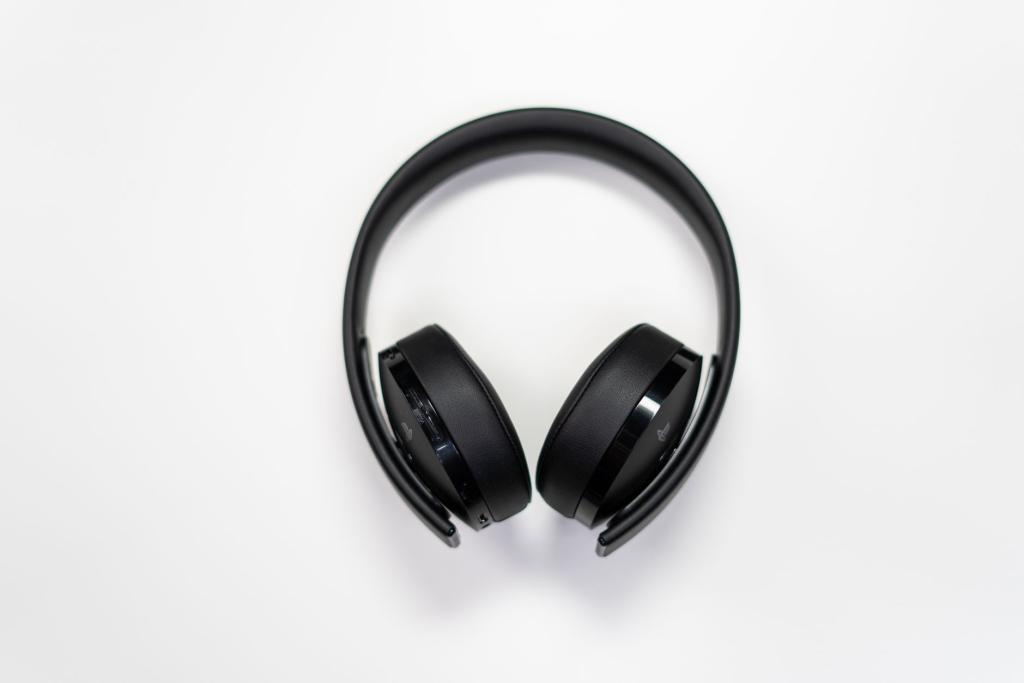
Technics, the Panasonic-owned audio brand best known for the turntables that shaped DJ culture, has unveiled a new flagship pair of wireless over-ear headphones built around liquid drivers, a technology the company says keeps distortion in check by steadying the driver's movement. The new model, known as the EAH-A1000, pairs its fluid-filled drivers with adaptive noise cancelling and a battery rated for up to forty-five hours of continuous playback. It went on sale in the United States at the start of October 2026 for just under four hundred fifty dollars, according to the company's announcement, which positions it squarely against the premium noise-cancelling leaders.
The headline trick is what sits inside the driver. Between the voice coil and the magnet, Technics has placed a small amount of magnetic fluid, a liquid with magnetic properties that keeps the coil moving in a vertical path instead of tilting sideways. The payoff is in the details: the liquid drivers are meant to erase the tiny distortions that conventional designs smear across quiet passages. As reported by StereoNET, the fluid supports "more precise movement while suppressing the vibration and distortion that can trouble larger drivers." The brand previously used the same principle in its wired in-ear models, but this is the first time the liquid drivers have been scaled up to a full-size over-ear headphone, according to the company's launch announcement. The new pair succeeds the company's previous flagship over-ear.
The fluid is not the only acoustic idea in the build. The diaphragm is made mostly of carbon fiber, and the ring that joins it to the frame borrows Symmetrical Surround Technology from the company's flagship loudspeaker. A flat baffle is designed to cut reflections on the way to the ear, while an acoustic control chamber behind the driver manages airflow to balance the low and midrange frequencies. The goal, as the company describes it, is a spacious presentation with clear imaging, and the combination makes the liquid drivers part of a wider system rather than a one-off gimmick.
A Battery That Outlasts Your Week
Forty-five hours of playback with noise cancelling switched on is the headline number for commuters, and it is genuinely competitive. Many flagship rivals tap out around thirty to forty hours, so the extra headroom means a student or a frequent flyer can go more than a full week of daily listening without reaching for a charger. The headphones also stretch further with noise cancelling off, according to independent coverage of the launch specs. When the battery does run low, playback continues over a wired USB connection that also carries lossless audio.
Sound options run deep. High-resolution wireless listening arrives through LDAC, the Bluetooth codec that carries roughly three times the data of the standard SBC stream, while lossless playback is available over USB audio for listeners who want the file exactly as mastered. Dolby Atmos support comes with head tracking, so the soundstage stays anchored in space when the listener moves. Three-device multipoint pairing means the headphones can stay connected to a phone, a laptop, and a tablet at once, switching between them without a manual reconnect. Calls get AI beamforming to isolate the voice from background noise, and the Technics Audio Connect app adds a Sound Share feature. Under all of that connectivity sits the pair's real differentiator: the liquid drivers, which Technics says deliver lower distortion than conventional designs.
Buttons Instead of Touches
In a deliberate break from the category's recent habits, Technics skipped touch controls entirely. Two physical buttons and a sliding control on the right earcup handle playback, calls, and volume, as reported by StereoNET in its launch coverage. None of it would matter without the sound itself, and the liquid drivers are pitched as the reason this pair sounds different from the touch-controlled competition. For anyone who has accidentally paused a podcast while adjusting a cup in the rain, the return of a real button is a small but meaningful usability win.
Comfort was clearly treated as a spec in its own right. The ear pads use high-density memory foam, the sliders spread pressure evenly, and the cups fold flat for travel with a dedicated carrying case in the box. The new Flow Arm, the structure where the headband meets the earcups, curves from a square shape at the slider to a triangular one at the hinge, and the headband and upper panels use metal with the brand's signature circular machining. Two finishes are offered: Black and a grey-beige blend the company calls Platinum Greige.
The Crowded Fight It Walks Into
Technics is arriving at a crowded flagship tier. The segment already holds Sony's current flagship noise cancellers, Bose's latest premium pair, and the Sennheiser's repairable flagship, covered here on Latest Gadgets, all of them competing within a few dozen dollars of the new model's price. A sub-four-hundred-fifty-dollar tag with forty-five-hour battery life and liquid drivers gives the newcomer a distinctive spec sheet, and early independent commentary has put the liquid drivers' sound on par with the established leaders. See more gadget launches on the Latest Gadgets topic page.
The timeline has been fast. Technics announced the headphones in late September 2026 through a company press release, and retail availability in the United States began at the start of October, with shipments of the two finishes continuing through late October 2026. Popular Science, in a first-look feature on the Tokyo engineering behind the pair, named the headphones to its Home of the Future Awards list, according to PopSci. Whether liquid drivers become the next must-have spec or remain a Technics signature, the flagship wars just got a genuinely new idea.
Comments 0
No comments yet. Be the first to share your thoughts!
Leave a comment
Share your thoughts. Your email will not be published.