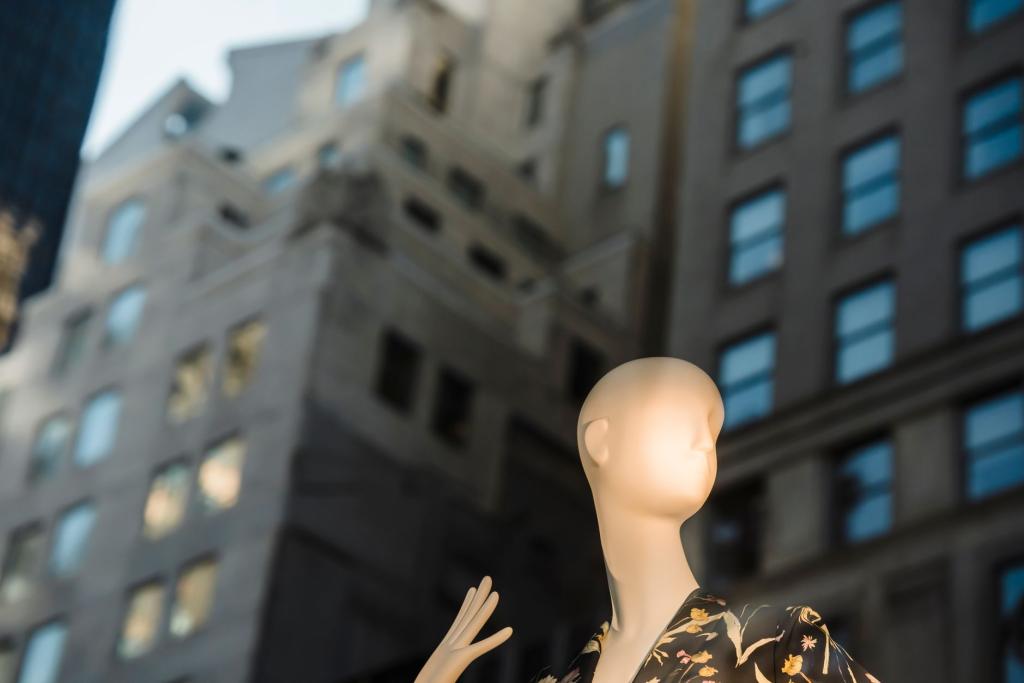
Look closely at the best-dressed lists this year and you'll notice something strange: dresses that look melted, shoes worn as hats, body parts printed where they don't belong. Fashion is having a Dalí moment — and this time the world's biggest museums are saying so out loud. Three of the most-visited cultural institutions on the planet have built their 2026 blockbuster programming around one claim: surrealist fashion is not a trend, it's art — and this wave of surrealist fashion has the receipts to prove it.
The latest proof opened six days ago. "Dalí and Fashion," which opened September 24, 2026 at Milan's Palazzo Reale — timed to Milan Fashion Week — gathers more than two hundred works spanning paintings, drawings, photographs, garments, films, jewelry, and archival objects. The show, organized with the Fundació Gala-Salvador Dalí, borrows from the Dalí Museum in St. Petersburg, Florida, Madrid's Reina Sofía, and the archives of Schiaparelli, Chanel, Dior, and Rabanne, according to exhibition coverage.
The original weird-girl blueprint
The heart of the Milan show is a collaboration from nearly a century ago. In the late 1930s, Salvador Dalí teamed up with couturier Elsa Schiaparelli to turn Surrealist obsessions — displacement, trompe l'oeil, anatomical distortion — into wearable clothes. The results became some of the most famous garments ever made: the Lobster Dress, the Tears Dress, the Skeleton Dress, and the Shoe Hat, as reported by W Magazine's survey of this year's fashion exhibitions.
The Shoe Hat has the best origin story. It began with a photograph of Dalí balancing a woman's shoe on his head; the artist sketched the idea, and Schiaparelli transformed it into an actual high-heeled shoe-shaped hat. Exhibition curator Laura Bartolomé has said that fashion drew inspiration from Dalí then and still does today, while co-curator Judith Clark notes that once you start looking for the artist's influence in fashion, you start seeing it everywhere.
That influence never really left, but 2026 is when the establishment finally made it official. The exhibition timeline reads like a coronation: a major UK retrospective of Schiaparelli, a landmark Met opening, a record-breaking gala — all in one year.
A year of institutional coronations
The coronation started in the spring, and every stop confirmed that surrealist fashion now counts as institutional art. London's V&A opened "Schiaparelli: Fashion Becomes Art" on March 28, 2026 — the first major British retrospective of Elsa Schiaparelli — with over two hundred objects including the museum's own Skeleton and Tears dresses, the upside-down shoe hat, and works by Picasso, Cocteau, and Man Ray. The show closes November 8, giving visitors about five weeks left to catch it.
Then came New York. The Met's "Costume Art" opened May 10, 2026, inaugurating the museum's new twelve-thousand-square-foot Condé M. Nast Galleries just off the Great Hall. The installation pairs roughly two hundred garments with two hundred artworks spanning five millennia across the museum's seventeen curatorial departments. Days earlier, the 2026 Met Gala had taken "Fashion Is Art" as its dress code, co-chaired by Beyoncé, Nicole Kidman, Venus Williams, and Anna Wintour. The evening raised a record forty-two million dollars — up from thirty-one million the year before — and generated nearly 1.7 billion video views across Vogue channels, a fifty-seven percent year-on-year jump, according to gala coverage.
Meanwhile, on the runways, the surrealist revival is being worn rather than just exhibited. Daniel Roseberry's Schiaparelli Fall/Winter 2026 collection, "The Sphynx," expanded the house's dreamlike vocabulary with resin dog-and-cat accessories, bronze egret-feet hardware, the signature keyhole motif, and "impossible knitwear" pairing heavy Aran cables with illusion tulle, as reported by Hypebeast. The house's Fall 2026 Couture pushed further into hyper-realism: latex, silicone, and anatomical bustiers sculpted and cast in silicone. One pearl-fringed white version was worn by Zendaya at the London premiere of The Odyssey — styled by Law Roach — just hours after the runway show, according to Fashion Week Daily.
The counterpoint: is any of this reaching the red carpet?
Not everyone is convinced the revolution is real. No Manners Magazine reviewed this year's Met Gala as "a master class in artistic disappointment," arguing that on the one night the "Fashion Is Art" theme gave explicit permission for maximal creativity, most attendees played it safe in nude illusion gowns and monochrome looks — failing, in the critic's view, to celebrate the body, costume art, or the relationship between the two. The same review charged that the industry's body-diversity talk rings hollow while Hollywood keeps pushing what it called an emaciated beauty standard.
There's a fair challenge inside the criticism. So far, the surrealist wave has been a museum-and-runway phenomenon more than a street one: exhibitions draw crowds, couture clients buy the drama, but the celebrity circuit mostly borrows the aesthetic in safe doses. And the gala's lead sponsorship — a reported ten-million-dollar donation from Jeff Bezos and Lauren Sánchez Bezos — drew its own questions about whether the "fashion is art" moment is an aesthetic revolution or a well-funded branding exercise.
But here's why the young reader should care anyway: the argument about whether fashion counts as art has been raging since the 1980s, and in 2026 the institutions answered it. When the V&A, the Met, and Palazzo Reale all bet their biggest programming on surrealist dress, the dreamlike, distorted, weird-girl looks flooding your feed stop being a fringe trend and become the defining aesthetic that cultural gatekeepers are investing real money in. That legitimizes more than outfits — it validates archive collecting, resale hunting, and vintage pieces as cultural capital rather than mere consumption.
The Dalí show runs through the end of January 2027, and the Met's galleries close a few weeks earlier — a deadline for anyone who wants to stand in front of a Shoe Hat and see the strange century of fashion that made it possible. For more, browse Aesthetics — and see how Donatella Versace is rewriting her own fashion legacy for another 2026 fashion story.
Sources: exhibition coverage at irishdentist.ie; W Magazine's 2026 fashion exhibition survey (wmagazine.com); Hypebeast on Schiaparelli FW26 (hypebeast.com); Fashion Week Daily on Fall 2026 Couture (fashionweekdaily.com); counterpoint from No Manners Magazine.
Comments 0
No comments yet. Be the first to share your thoughts!
Leave a comment
Share your thoughts. Your email will not be published.