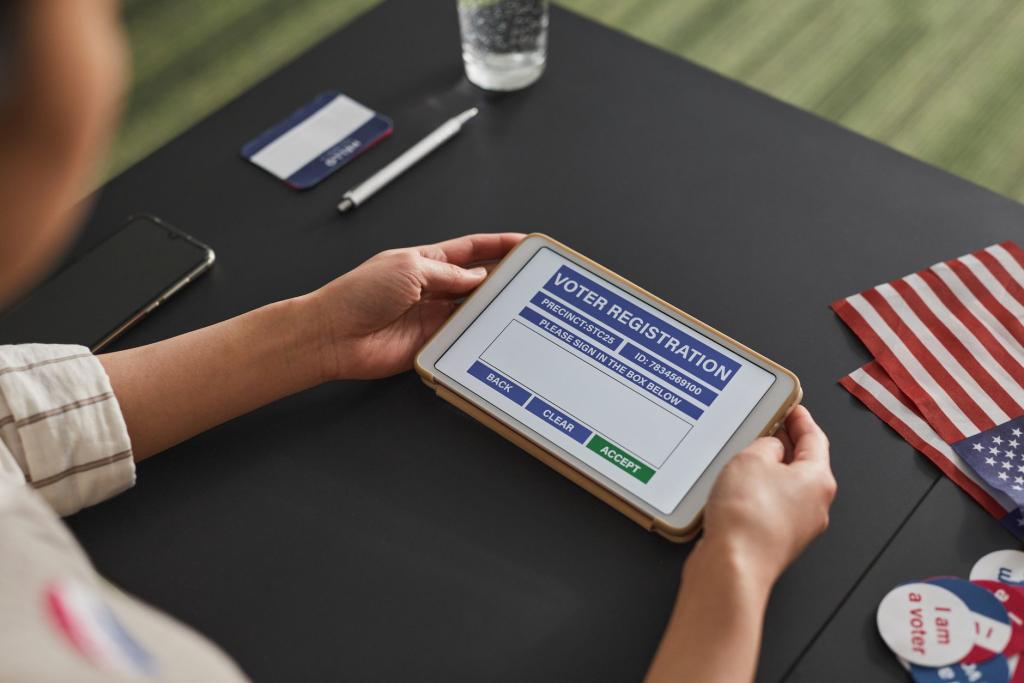
The Supreme Court ruled 6-3 on Friday, September 25, that the Trump administration can keep using an expanded federal database to check whether registered voters are U.S. citizens. The unsigned order paused a June ruling from a federal judge in Washington that had blocked the revamped SAVE database, the Systematic Alien Verification for Entitlements program.
The decision hands the White House a temporary victory ahead of the November midterm elections. It is the latest in a busy week for federal politics, which also saw Trump reject an Iranian ceasefire proposal and the Ratepayer Protection Act pass 417-3. The justices acted on the administration's emergency request and left the underlying lawsuit against the expanded database to continue in a lower court. SAVE was built in 1986 to help agencies verify immigration status for public benefits, and states have used it for voter checks for years.
The Trump administration overhauled the system last year, following a March executive order directing officials to ensure that only American citizens vote in federal elections. The changes connected the SAVE database to Social Security Administration records, which cover most U.S. residents, and let officials run bulk searches using names, dates of birth, and Social Security numbers instead of individual agency identification numbers. States were encouraged to upload their entire voter rolls for screening.
In its order, the court's conservative majority wrote that the federal government has an obligation to answer requests from state and local election officials who want to verify voter citizenship. It said the lower court's order stopped the government from using the program it considered best suited for the job. The majority also suggested the challengers' arguments "likely lack merit," a signal the justices may side with the administration when the full case is decided, according to the Associated Press.
The dissent warns of purged voters
Justice Ketanji Brown Jackson dissented, joined by Justices Sonia Sotomayor and Elena Kagan. In her dissent, Jackson argued that the harm of burdening or disenfranchising even a small number of lawful voters outweighs the government's claimed need for the tool. She warned that the expanded system could sweep up recently naturalized citizens, whose Social Security records sometimes do not cleanly confirm their citizenship.
The lower court's original ruling went further. U.S. District Judge Sparkle L. Sooknanan found in June that the administration had combined and repurposed the private information of millions of Americans, including citizenship data officials knew was unreliable. She wrote that Congress had put protections in place to prevent exactly this kind of centralized data bank, and she concluded the overhaul violated federal privacy and administrative law, as Internewscast reported.
A coalition including the League of Women Voters and the Electronic Privacy Information Center brought the challenge. The groups argue that Congress did not authorize a master database of U.S. citizens and that the government has not disclosed the system's error rate. They called Friday's ruling profoundly disappointing and said eligible voters now face the risk of being flagged before the midterms.
What the order does not change
In practice, the order changes little before November. Use of the SAVE database by states is voluntary, and a federal law generally bars systematic voter-roll removals within 90 days of a federal election. The vote is roughly five weeks away, inside that blackout window, which limits how states could act on any new flags. Election law expert David Becker, who leads the Center for Election Innovation and Research, noted that the Department of Homeland Security itself has acknowledged the data is imperfect.
Maine's secretary of state, Shenna Bellows, who has refused to join the program, said the ruling changes nothing in her state because it does not force states to change how they run elections. In federal court filings, the government said the updated SAVE database had verified more than 65 million voters across 26 states since May 2025 and flagged 28,635 as potential noncitizens.
The Supreme Court's order emphasized that the database may be used for what the justices called "individualized" inquiries, a signal that sweeping purges are not what the ruling covers. Whether states try to push that boundary before November is likely to become the next fight, with the plaintiffs' lawyers saying the litigation continues in the district court. The Justice Department had asked the court for emergency relief, and its lawyers argued that immigration law requires federal cooperation when election officials ask for help.
DHS general counsel James Percival celebrated the decision on X, saying the department had needed an emergency Supreme Court petition simply to use government data to help states stop noncitizens from voting. The plaintiffs counter that the system wrongly flags eligible voters as noncitizens and puts sensitive personal data at risk. The case now returns to the lower court, where the administration's broader overhaul faces a full hearing.
Comments 0
No comments yet. Be the first to share your thoughts!
Leave a comment
Share your thoughts. Your email will not be published.