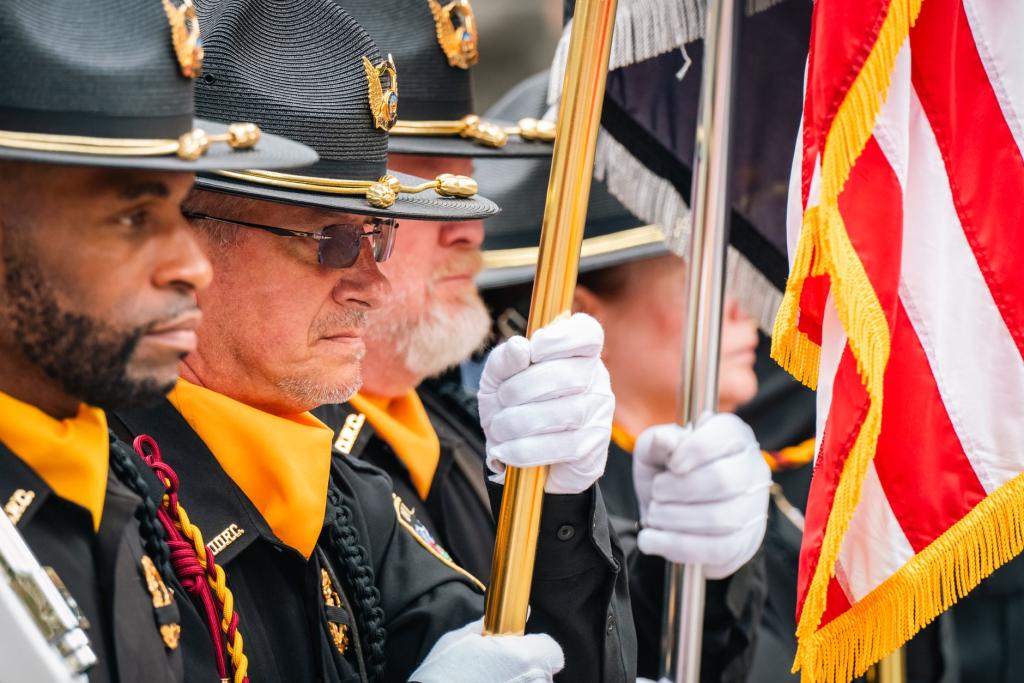
President Donald Trump and first lady Melania Trump welcomed Chinese President Xi Jinping and Peng Liyuan to the White House on Thursday for a state arrival ceremony, marking Xi's first White House visit in more than a decade. The South Lawn ceremony included 479 military personnel representing every branch of the United States Armed Forces, according to the White House.
Xi landed in the Washington area the day before, when Trump and the first lady met him and Peng on the tarmac at Joint Base Andrews. Trump personally greeted Xi there, the first time a sitting American president has welcomed a visiting leader at the base since John F. Kennedy met Britain's Harold Macmillan in 1962. A battery salute was fired, color teams carried the American and Chinese flags, and platoons from each service stood at attention while the Air Force Band played both national anthems, according to a detailed account of the visit.
The personal diplomacy on display
The next morning, the ceremony moved to the White House. After the arrival ceremony, the delegations entered the building while the Marine Band played the national anthems of China and the United States, and Trump delivered opening remarks. He spoke of "a truly great friendship" with Xi, built on mutual respect and the interests of both peoples, and said Washington and Beijing had made "tremendous strides" on the issues between them.
On trade, Trump said Washington and Beijing were working toward a "more balanced trading relationship", including "new market access for American farmers and ranches". He added that the talks would cover "security, technology and super intelligence". Trump also reached back to the Second World War, recalling the American pilots who fought alongside China and noting that the Marine Corps borrowed the term "gung ho" from Chinese, meaning working together.
The trade truce is extended
Hours before the White House ceremony, Treasury Secretary Scott Bessent used a Fox News appearance to announce that the tariff truce between Washington and Beijing would continue. The deal, known in Washington as the Busan Agreement after the October 2025 meeting in South Korea where the one-year truce was struck, was set to lapse in November. Bessent described the arrangement as an economic "detente" that "is going to be extended until January 10", as reported by PTI. He said Beijing still needed to deliver more on its commitments, and that a larger economic package could follow by January, though officials could also "just roll the current deal" forward.
Chinese officials had not publicly confirmed the extension at the time, PTI reported. Analysts read the short, two-month horizon as a sign Washington wants to keep pressure on Beijing. Scott Kennedy of the Center for Strategic and International Studies said it suggested the United States "wants to keep the heat on" Chinese negotiators, according to LA Times Now.
The agenda for the summit ran well beyond tariffs. Xi Jinping was expected to discuss technology controls, rare earths and critical minerals, American military support for Taiwan, Beijing's ties with Iran, the Russia-Ukraine war, fentanyl precursors and the risks of artificial intelligence, according to a Reuters analysis. Washington is also seeking new contracts for Boeing aircraft and American farm goods, while Beijing wants access to advanced American technology and lighter trade restrictions. The original truce, struck at the leaders' meeting in South Korea, cooled a tit-for-tat tariff war that had rattled global supply chains; the extension buys time for a potentially bigger deal.
A guest list that mixed power and tech
The evening's state dinner in the East Room drew a crowd that combined cabinet officials with some of the biggest names in American business and technology, The Wrap reported. OpenAI chief Sam Altman, Apple executive chairman Tim Cook, SpaceX and Tesla chief Elon Musk, Meta chief Mark Zuckerberg, Amazon executive chairman Jeff Bezos, Google chief Sundar Pichai and Microsoft chairman Satya Nadella were on the guest list, alongside vice president JD Vance, secretary of state Marco Rubio and Paramount Skydance chief David Ellison.
Fox News hosts Bret Baier, Jesse Watters and Laura Ingraham also attended, according to the guest list published by the White House communications team and shared by CNN chief White House correspondent Kaitlan Collins. CNN itself was barred from covering the event, The Wrap reported. The dinner capped a day of unusually direct contact between the world's largest economies, and the visit was scheduled to continue with a stop at the National Archives before the Chinese delegation departed on Friday.
Comments 0
No comments yet. Be the first to share your thoughts!
Leave a comment
Share your thoughts. Your email will not be published.