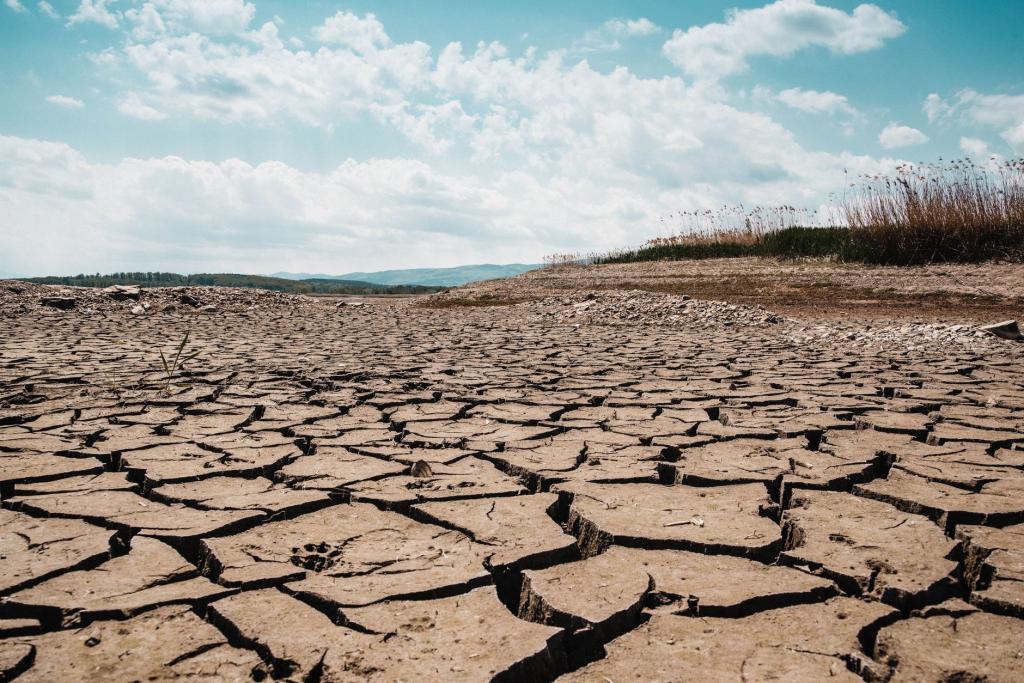
The hottest summer on record has officially ended, and autumn has not gotten the memo. Global figures for June through August 2026 — the warmest such three-month stretch since records began in 1850 — were confirmed by climate scientist Zack Labe using NOAA's global temperature dataset, while Germany, Switzerland and France are closing out September with temperatures near or above 30 degrees Celsius. And the summer's toll is already concrete: the United Kingdom has just logged its worst harvest on record after a drought that parched fields from spring onward.
According to NOAA's National Centers for Environmental Information, August was the warmest August ever recorded for the globe, beating the previous tied records of 2023 and 2024, while the world's oceans hit their highest sea-surface temperature on record. In the United States alone, the summer averaged 74.4°F, eclipsing the joint records of the 1936 Dust Bowl and 2021. A near-"super" El Niño helped turbocharge the heat — the Niño 3.4 region ran 1.8°C above normal — and climate scientist Zeke Hausfather estimates a 75 percent chance that 2026 finishes as the warmest year ever recorded.
The hottest summer on record, by the numbers
Europe took the brunt of it. France suffered its hottest summer since records began in 1900, according to Météo-France: the average maximum-temperature anomaly reached +4.8°C, dwarfing the +3.3°C of the deadly 2003 canicule, and the 40°C threshold was crossed 178 times — a national record — with Strasbourg, Metz and Noirmoutier exceeding 40°C for the first time ever. In Germany, September alone is averaging 15.9°C, 2.6°C above the 1961–90 norm, ranking among the ten warmest Septembers since 1881, while the state of Baden-Württemberg recorded its warmest summer since 1881. Swiss data tells the same story: Locarno-Monti endured a 24-day streak above 30°C and 50 tropical nights.
September refuses to let go
The heat did not stop at the calendar's edge. Forecasts and observations for September 29 put temperatures near 32°C along Germany's Upper Rhine, above 30°C in Switzerland and around 33°C in France — remarkable figures for the final days of September. France has already set a new national September record of 40.8°C, with Marseille beating a record that had stood since 1868 by 6.5°F. Switzerland, meanwhile, is missing roughly three months' worth of rainfall, leaving soils and rivers deeply stressed. As meteorologist Peter Wick put it, "Summer isn't really coming back — it's still here."
The damage stretches beyond the thermometer. Low river levels across central Europe have disrupted barge traffic and hydropower output, while prolonged heat keeps air-conditioning demand high deep into what should be sweater weather. In the United States, four southwestern states tied their individual summer heat records as the country endured its warmest June-August since 1895. The throughline is the same on both sides of the Atlantic: heat records that once fell once a generation are now falling every couple of years — a pattern visible everywhere from heat-stressed coast redwoods to the scorched wheat fields below.
The UK's worst harvest on record
The heat and the missing rain broke British farming. In its final harvest report of the season, released September 25, the Agriculture and Horticulture Development Board put winter wheat at 6.9 tonnes per hectare — 11% below the five-year average — spring barley at 4.8 tonnes per hectare, 17% down, and oats at 4.6 tonnes per hectare, 14% down. The board described the harvest as "rapid and straightforward but with very disappointing yields." The cause: very little rain from spring onward, record heat in May and June, and England and Wales' driest July on record, which left grain filling on stunted plants.
The Energy and Climate Intelligence Unit says the country has just suffered its worst combined cereal and oilseed harvest since records began in 1984 — roughly 19.4 million tonnes, as much as 2.6 million tonnes below forecasts, worth £414–546 million at ex-farm prices. Four of the five worst harvests on record have now occurred this decade, and all followed extreme weather. The National Farmers' Union is calling for government-backed interest-free loans tied to drought losses, with the union's crops board chair Jamie Burrows arguing arable businesses need working capital to produce next year's food.
What it means for your grocery bill
This is where the records land on everyday life. Bakeries are already warning that tight milling-wheat supplies could push bread prices up, and grain is being trucked from Scotland down to England to cover the shortfall in the worst-hit regions. The same heat that scorched fields also lands on household budgets through cooling costs, while Switzerland's three-month rainfall deficit and low river levels are disrupting transport and hydropower. Farming analyst Tom Lancaster summed it up: "The hottest summer on record has delivered us the worst harvest on record."
There is no quick reset in sight. The National Drought Group puts the chance of the UK still being in drought next year at 25%, and with a super El Niño still in play, 2027 could break 2026's record. The NFU wants drought-resilient crops and smarter water storage — an investment question that will shape what farmers can grow, what shoppers pay, and how food-secure the country is for a generation. Follow our climate emergency coverage as the toll unfolds. NOAA's August 2026 climate report has the global figures; The Grocer's reporting on the AHDB figures and the ECIU's analysis lay out the harvest toll in full.
Comments 0
No comments yet. Be the first to share your thoughts!
Leave a comment
Share your thoughts. Your email will not be published.