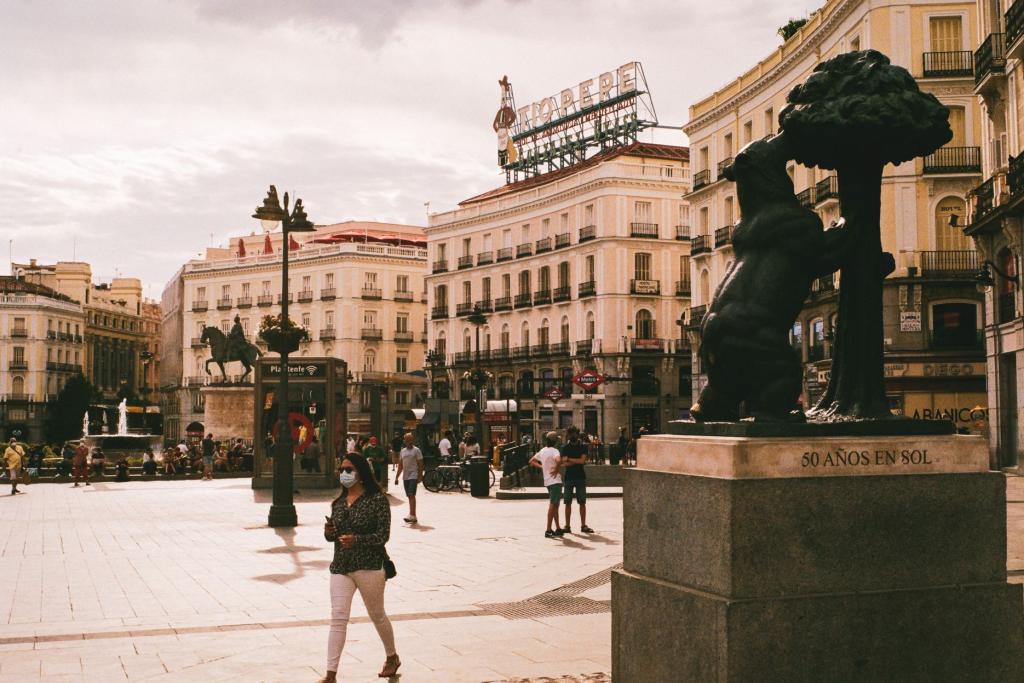
Police carried Maricarmen Abascal out of her Madrid apartment on a stretcher on September 23. She was 87 and had lived in the same home for seven decades, but the building had been bought by an investment fund that secured an eviction order against her. Within days, hundreds of young Spaniards were sleeping in tents in Puerta del Sol, the central Madrid square that became the emblem of the 2011 indignados movement. The Spain housing protests that grew out of that eviction have now pushed the national government into unveiling an emergency reform package aimed at rents, evictions and speculation.
On Saturday, September 26, roughly thirty thousand people marched through the capital to protest Abascal's treatment and the housing crisis behind it, shaking keys and carrying banners that read "Speculators go home" and "Housing is for living," according to Reuters. By Monday, the demonstrators had spent a third day camped outside the Madrid regional administration, and tents filled Puerta del Sol just as the square filled when protesters occupied it for a month during the austerity years. The Spain housing protests are not a one-city affair either: further demonstrations were planned across the country, coordinated by the Tenants' Union. Film director Pedro Almodovar visited the camp and told Spanish broadcaster RTVE that the eviction was "the final straw" and that Spain's housing situation is "absolutely intolerable." Abascal herself was hospitalized after the eviction and, through the Tenants' Union, sent a message saying: "I hope what happened to me serves as a catalyst so that it doesn't happen to others."
A generation that cannot leave home
What drives the Spain housing protests is a rental market that has locked young people out. Blanca, a student who joined the camp, told Reuters that young Spaniards are struggling to move out of their parents' homes. "Politicians not only do nothing but make it worse," she said. "We've decided to put our foot down, so let's hope they hear us." Spain's Youth Council has reported that young workers must spend 98.7 percent of their wages on housing costs. Rents have nearly doubled over the past ten years, according to Madrid estate agency Idealista, far outpacing salary growth. For many of the campers, the protest is the first time they have seen their frustration turn into a national headline.
The emergency package
On September 29, the government answered with an emergency package of housing measures, reported by Bloomberg. Companies would be barred from buying homes purely to speculate. Current rental contracts would be extended for the next two years. Evictions of vulnerable people would face tighter limits. Tourist apartments would be hit with a 10 percent VAT rate, and tax relief would go to people earning less than thirty-three thousand euros a year, a measure Housing Minister Isabel Rodriguez said would reach 1.6 million households. The Spain housing protests forced this response within a single week, but the package still has to pass parliament on Friday, where Prime Minister Pedro Sanchez does not hold a majority. He asked lawmakers for "that final effort" to get it through, calling the push "not an ideological issue, but a matter of humanity." The Bank of Spain has estimated the country's accumulated housing shortfall at three-quarters of a million homes, and Eurostat figures show home purchase prices rose 12.8 percent over the past year against 5.1 percent across the European Union. Housing is the biggest concern for Spaniards, according to the country's official pollster.
Friday's vote and what comes after
Friday's vote will show whether the Spain housing protests managed to turn street pressure into law in a matter of days. Rodriguez, presenting the fiscal measures, said: "I regret that we had to witness a collective failure for the world, the country and political positions to shift." Organizers from the Tenants' Union told supporters: "We can take no more. Either the rental system collapses, or the government does." The camp in Puerta del Sol stayed put as the announcement landed. Whatever parliament decides, the Spain housing protests have put a generation of renters on the national agenda.
Sources: Reuters; Bloomberg via The Hindu BusinessLine.
Comments 0
No comments yet. Be the first to share your thoughts!
Leave a comment
Share your thoughts. Your email will not be published.