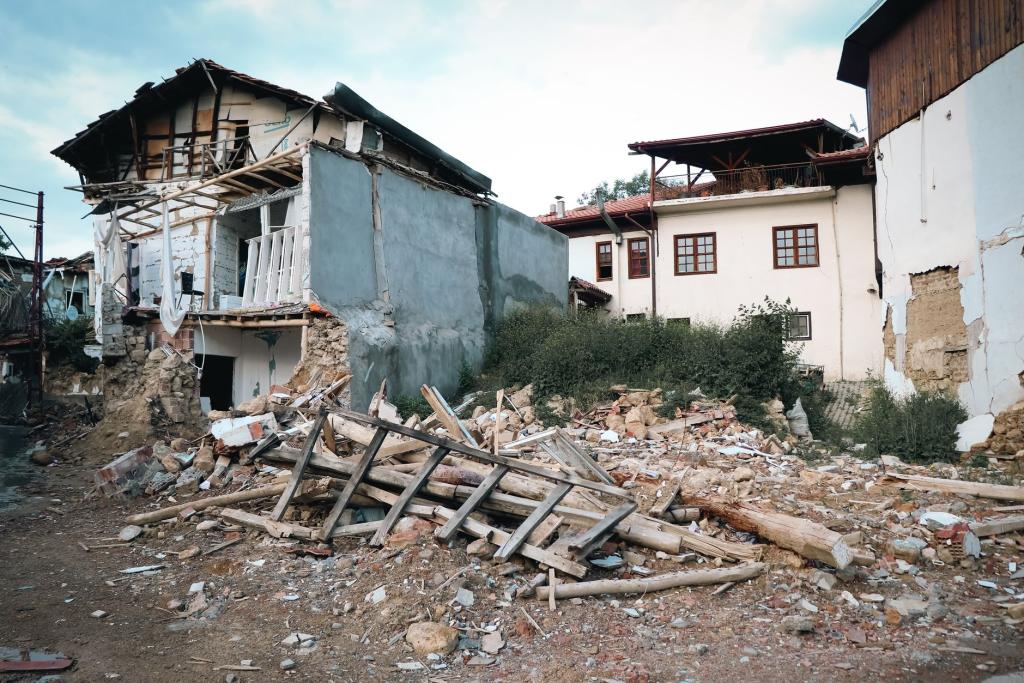
Satellite images are telling a brutal story about southern Lebanon villages: forty-eight of the roughly sixty towns Israel occupies have been largely flattened, and most of the damage came after a ceasefire was supposed to calm things down. That is the finding of a New York Times investigation published Monday, and it landed this week as a gut punch for anyone following the war.
What the investigation found
According to the New York Times investigation, as summarized by Democracy Now, Israeli forces demolished homes, schools, mosques and roads across the border zone. The reporting leaned on hundreds of satellite images, video clips and local testimony to show how whole neighbourhoods disappeared.
The timing is the shocking part. Israel and Hezbollah agreed to a ceasefire in April, yet the bulldozing and controlled blasts kept going. In places like Beit Yahoun, only about ten buildings were gone at the start of the truce, and three months later almost the whole town centre was rubble, as Croatian outlet Index.hr described the Times analysis.
Who got hit and who was spared
The pattern is hard to ignore. Nearly all of the forty-eight devastated places have a majority Shia population, the community Hezbollah draws its support from. The seven that were not seriously damaged are mostly Christian, Sunni Muslim or Druze, according to Democracy Now's summary of the Times work.
Common Dreams, which also covered the investigation, reports that the Times found about sixteen thousand five hundred acres of land burned since the April ceasefire, including farmland and olive groves. Satellite images also show at least three new Israeli military outposts, plus fresh roads linking them to Israeli territory.
Israel's response and the "Yellow Line"
Israel's military told the Times it received no directive to carry out widespread damage or demolish villages. It says its troops operate in a security zone to remove threats from Hezbollah to Israeli residents and soldiers. Defence Minister Israel Katz struck a different tone in July, saying twenty-four historic villages had been destroyed and that it was not one house at a time but the entirety of those villages.
A fresh feature from Al Jazeera explains the geography. Israel holds a zone up to ten kilometres deep behind a boundary it calls the Yellow Line, a term it also uses in Gaza. Lebanese architect Ahmad Baydoun told the outlet the line is treated as a hard boundary, adding that it is as if the ceasefire applies to the rest of Lebanon but not to this territory.
A generation locked out of home
Human costs are enormous. Common Dreams reports that Israel's campaign has displaced at least one point one million Lebanese civilians since March, and roughly two hundred seventy thousand people still cannot go back. The United Nations says three hundred twenty-nine thousand people were driven from their homes, and a third of them are children.
Ali, a man from Khiam now renting a house in Hasbaiyya, told Al Jazeera that his hometown is uninhabitable for the next ten, fifteen, twenty years. Analyst Mohamad Bazzi, originally from Bint Jbeil, went further, saying he does not think return is possible in the short or medium term for around fifty frontline villages.
The legal fight over the razing
Legal experts are not buying the military necessity argument. Oxford professor Janina Dill told the Financial Times it is deeply implausible that imperative military necessity applies to every house in a village. UN human rights chief Volker Turk warned in July of wholesale destruction of civilian homes, and Amnesty International has said blocking return amounts to unlawful transfer.
Israel's leaders signal no rush to leave. Katz said last month that Israel will not withdraw from the security zone until Hezbollah disarms, and talk of a new "Grey Line" buffer about four kilometres deep would keep even more land empty, according to Al Jazeera. Meanwhile a June framework deal meant to start a phased pullback has barely moved.
Why it matters beyond the border
For Gen Z readers who track this war mostly through clips and feeds, the satellite evidence is the receipt. It shows how a ceasefire on paper can sit beside a very different reality on the ground, and why displaced families are asking whether they will ever see their streets again. The UN's Stephane Dujarric said the situation will not magically get better on January first and urged the world to come up with a plan for people in the south.
Expect pressure on Washington, which brokered the truce, to grow as the findings spread. For more on the conflict, check our war coverage, and watch whether any of the pilot zones in the June deal actually hand land back to the Lebanese army. The fate of these southern Lebanon villages is now a test of whether the ceasefire means anything at all.
Comments 0
No comments yet. Be the first to share your thoughts!
Leave a comment
Share your thoughts. Your email will not be published.