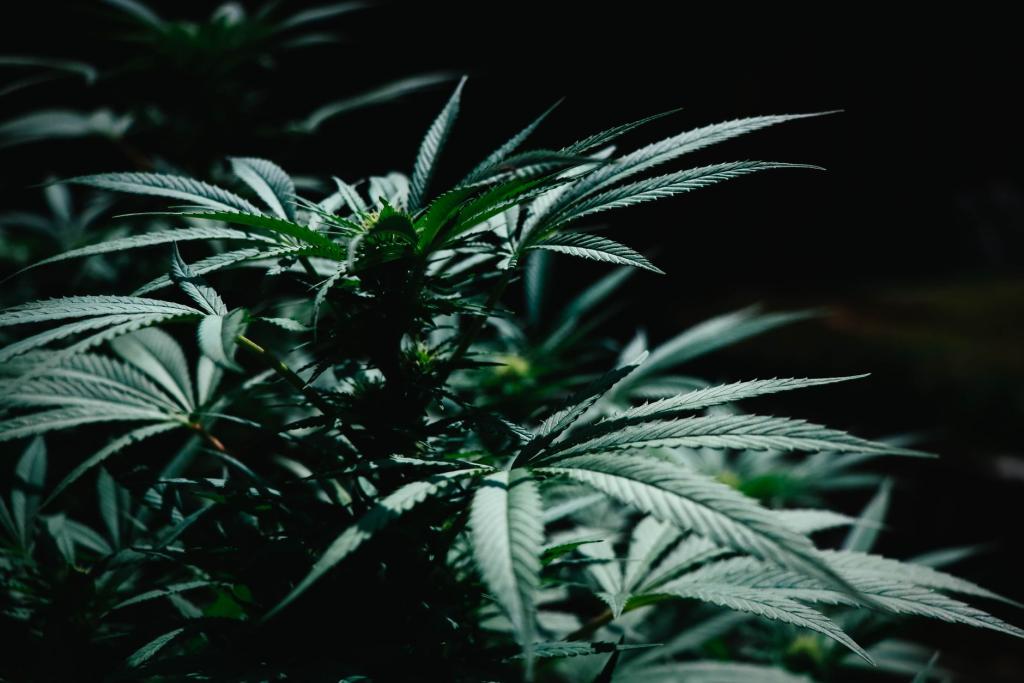
A sweeping Cannabis Violence Review has found that cannabis use is linked to a higher risk of violence in both directions: people who use cannabis are more likely to commit violent acts, and they are also more likely to be victims of violence themselves. The systematic review and meta-analysis, led by researchers at King's College London and published in the journal Psychological Medicine in late September 2026, pooled 63 studies covering more than 265,000 people, making it one of the largest examinations of the question to date.
The headline numbers concern perpetration. Across the general population, cannabis users were around twice as likely to have committed a violent act as non-users, according to a King's College London research summary republished by Technology Networks. Among people receiving psychiatric care, cannabis users were roughly two and a half times as likely to be violent as patients who did not use cannabis. For violence that led to a criminal conviction, the gap widened further, with cannabis users three to four times as likely to have been convicted. The researchers used the World Health Organization's broad definition of violence, covering physical, sexual, and psychological harm inside and outside relationships.
The half of the finding nobody led with
Most coverage of the review led on the perpetration figures. The quieter result may be the more consequential one: cannabis users were also about one and a half times as likely to experience violence, and that link was stronger among women than men. It is an under-reported angle in a public conversation that usually frames cannabis risk around a young man making choices about his own body. This finding describes harm arriving from outside, and arriving more often for women.
That matters for prevention work aimed at women and girls, which rarely covers cannabis at all. "As a clinician, I've seen how heavy cannabis use can be a factor in violence," said study author Marta Di Forti, a professor at King's College London, in the university's statement. Sir Robin Murray, the study's senior author, put the wider point directly: the conversation about cannabis risks has focused mostly on the person using it, and violence, both committing it and experiencing it, needs to be part of that conversation too.
What the numbers cannot prove
A review of this size establishes association, not causation, and the authors are careful to say so. Cannabis use often travels alongside other factors that can raise the risk of violence or victimization, including alcohol use, other substance use, and difficult social circumstances. Untangling how much of the link belongs to cannabis itself, and how much belongs to the company it keeps, is beyond what the pooled data can settle.
The review also has practical blind spots. Few of the 63 studies measured how much cannabis people used or how often, so the analysis cannot say whether occasional use carries the same profile as daily use. Most of the studies were also conducted before high-potency cannabis became widespread, which leaves open the possibility that today's stronger products show different effects. The authors themselves flag that daily use of modern, more potent cannabis may be linked to intensified outcomes, a question the current data cannot answer.
What the researchers want to happen next
The team draws two concrete recommendations from the findings, according to their published summary. First, mental health services should routinely ask about cannabis use when assessing someone's risk of violence, in either direction. Second, public health messaging about cannabis should include the risk of violence alongside the better-known discussions of memory, mental health, and dependence. Those asks arrive as legalization and commercialization keep expanding worldwide, which is exactly why the timing of the Cannabis Violence Review matters: policy is moving faster than the evidence base, and this analysis fills one of the gaps.
For readers, the takeaway is neither panic nor dismissal. The review does not suggest that cannabis turns an average user violent, and the researchers explicitly warn against stigmatizing people who use it. What it does suggest is that a drug now sold in dispensaries and discussed as casually as alcohol carries a risk profile that deserves the same serious, two-sided accounting, including the part where the user is the one who gets hurt. More health research coverage lives on our Health page.
Comments 0
No comments yet. Be the first to share your thoughts!
Leave a comment
Share your thoughts. Your email will not be published.