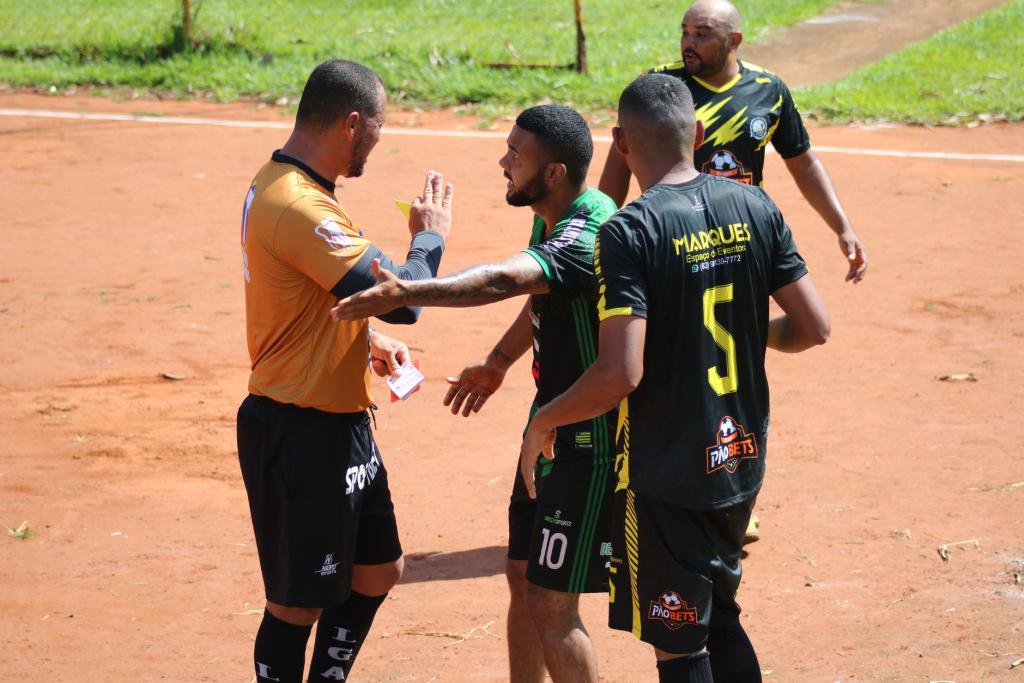
Soccer stoppage time is the referee’s allowance for playing time lost during a half. It is often called added time, and it is not a separate clock that starts after the game stops. In most matches, the match clock keeps advancing during ordinary interruptions. At the end of each half, the referee lets play continue long enough to account for lost time, then signals the end. The number shown on a board is a minimum, not a promise that the whistle will blow at that exact second.
What time does the referee count?
According to IFAB Law 7.3, the referee allows for all playing time lost in each half. The list includes substitutions; assessing or removing injured players; time-wasting; disciplinary sanctions; permitted medical stoppages such as drinks or cooling breaks; delays for VAR checks and reviews; goal celebrations; and other significant delays to a restart. It is not a fixed formula that adds the same number of seconds for every type of stoppage. The referee judges how much playing time was actually lost across the half.
That means a substitution matters because the game is paused while the change is made, not because every substitution automatically earns a set number of seconds. Injury time depends on the interruption, including any assessment or treatment and the player’s removal where needed. A long wait for a free kick, goal kick or throw-in can also count when it significantly delays the restart. The point is to restore playing time that disappeared, not to punish a team simply for making a legal substitution or celebrating a goal.
VAR can add to the calculation when a check or on-field review holds up play. Celebrations count too, so a goal can create a stoppage even though the goal itself does not pause the match for a fixed amount. The same goes for time-wasting or disciplinary interruptions: the referee considers the lost playing time, rather than treating each event as an automatic penalty measured by a universal timer.
The 2022 FIFA World Cup brought this issue into sharper focus. FIFA Referees Committee chairman Pierluigi Collina said referees had been asked to calculate stoppages more accurately, particularly the time spent on injuries, and specifically named substitutions, VAR checks and goal celebrations as other losses to account for. According to FIFA’s 2022 explanation, the approach was a more precise application of time already lost. The IFAB later said the Qatar 2022 approach had been received positively and discussed stricter, more accurate calculation. It was a push for consistency, not a new rule that stopped the match clock.
Why the announced number is only a minimum
The fourth official displays the minimum additional time chosen by the referee near the end of each half. The board’s figure is a minimum, not a fixed whistle time. Any further time lost during the added period can lead the referee to extend it; under Law 7 the announced minimum may be increased but not reduced. The displayed figure is therefore a floor for the remaining play, not a countdown to an automatic final whistle.
There is one useful edge case: a penalty kick that has to be taken or retaken at the end of a half extends that half until the kick is completed. More generally, the referee remains responsible for deciding when play ends. Broadcast graphics and stadium clocks help viewers follow elapsed time, but the referee’s signal—not the screen reaching a particular number—ends the half.
Added time is not extra time
Added time belongs to the regular match. It is the allowance at the end of each 45-minute half for time lost within that half, so a tied score after the second half’s added time is still a draw at the end of regulation. Extra time is different: in a knockout competition whose rules require it, it is a separate playing period used to try to break a tie after regulation ends level. The competition’s rules determine whether extra time is played or a shoot-out follows.
For a concrete official example, FIFA’s 2023 Women’s World Cup rules said a knockout match still level after regulation would go to 30 minutes of extra time, split into two 15-minute periods, and then to penalties if the score remained tied. Those 30 minutes are not “stoppage time”; they are an additional phase of the match. Time lost can still be allowed for at the end of a half or period, including during extra time. So a game can have added time in regulation, extra time because the tie remains level, and further allowances for stoppages during extra time—three ideas that sound similar but describe different parts of the match.
The quick way to read the board: the referee is accounting for lost playing time, the announced added-time figure is the minimum, and extra time is a separate knockout-stage phase set by competition rules. That is the key distinction to remember when reading soccer stoppage time. Keeping those distinctions straight explains why a match can continue beyond the number displayed without the referee having changed the rules.
Sources: IFAB Law 7: The Duration of the Match; IFAB on the Qatar 2022 approach; FIFA on Collina’s 2022 referee guidance; FIFA on extra time at the 2023 Women’s World Cup.
Comments 0
No comments yet. Be the first to share your thoughts!
Leave a comment
Share your thoughts. Your email will not be published.