Sabi, a San Francisco startup building a non-invasive brain-AI interface for AI agents and assistants, announced on October 9 that it has raised a $50 million seed round led by Khosla Ventures, according to the company's announcement distributed through GlobeNewswire. The financing, one of the largest seed rounds of the year for a hardware AI startup, drew participation from Accel, Initialized Capital, former OpenAI chief product officer Kevin Weil, DST Global, Collaborative Fund and Ascend.
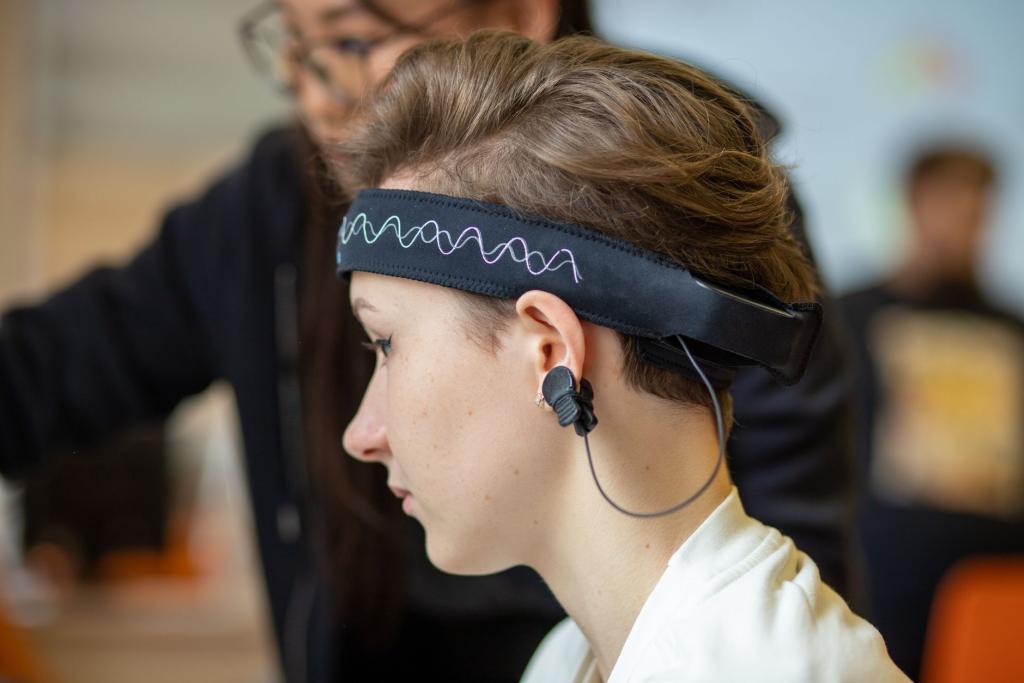
The company's first product looks like an ordinary baseball cap. Hidden inside are custom EEG sensors that read neural signals through hair without gel, surgery or direct contact with the scalp, and Sabi is developing the cap so its brain-AI interface can translate imagined speech and intent into commands for AI. The goal, as CEO Rahul Chhabra described it in the announcement, is a device people can wear in ordinary life and use when they intentionally want to communicate with AI — no laboratory or operating table required.
Brain-computer interfaces have largely been built for clinical settings and cursor control. Sabi is pursuing a different use case entirely: giving people a faster, private way to talk to AI agents and assistants without typing or speaking. The company argues that AI systems can now write, research and take action, yet people still direct them through keyboards, touchscreens and voice commands — an input bottleneck that becomes more costly as agents grow more capable.
A Cap Lined With Custom Silicon
The hardware behind the brain-AI interface centers on a custom EEG chip and tiny sensors measuring between one and five millimeters, according to Sabi. The sensors are designed to capture signals through hair across a gap of up to five millimeters. In internal benchmarks, the chip was more than 50 times as power-efficient as the Texas Instruments ADS1299, a widely used EEG analog front end. That efficiency is what allows the electronics to fit inside ordinary headwear while limiting heat and electrical noise.
Coverage of the round added fresh technical detail not in the announcement. AI Weekly, summarizing original reporting by Forbes, reported that the prototype is lined with up to 100,000 non-contact chip-scale EEG sensors, each one to five millimeters across, and that Sabi aims to ship a brain-reading beanie by the end of 2026 with a baseball-cap form factor to follow. The initial typing-speed target is about 30 words per minute.
The neural signals are processed by Sabi's Brain Foundation Model, which was trained on more than 100,000 hours of labeled, non-invasive recordings collected while participants imagined words and performed specific mental tasks. The company describes this as the largest disclosed dataset of its kind. The cap connects to a phone or computer wirelessly, much like a pair of earbuds, and Sabi plans to demonstrate early versions of these interactions at CES 2027 in Las Vegas.
Three Ways the Brain-AI Interface Talks to AI
Sabi is developing three primary forms of interaction. The first is imagined speech to text: words a user intentionally imagines appear on a connected screen without being spoken or typed. The second is thought to prompt, where a trained mental command becomes an instruction for an AI assistant, such as asking it to draft a message or retrieve information. The third is intent prediction, in which the system anticipates likely keystrokes or on-screen actions and presents them for the user to complete or confirm.
That second interaction — thought to prompt — is the one most relevant to the AI agent economy. As agents take on multi-step work like booking travel, triaging messages and managing schedules, the cost of spelling out every instruction in a text box keeps rising. A brain-AI interface that converts a trained mental command into a prompt would shorten the loop between intent and execution, turning the human from a typist into a director of agent workflows. The same logic is drawing investment to other agent-input devices: AI Weekly's coverage noted Natura's $99 interface ring for routing finger-presses to AI agents as another entry in the category this week.
Sabi's founding team brings deep credentials to the problem. The company was co-founded by CEO Rahul Chhabra and CTO Atmadeep Banerjee, who is co-first author of the MindEye paper from NeurIPS 2023 that advanced decoding of viewed images from non-invasive brain recordings. The broader team includes hardware, machine-learning and design leaders from Kernel, Apple, Microsoft, Meta, Adobe and Nike, alongside neuroscientists from Stanford, according to the company.
Privacy by Design, Khosla's Interface Bet
Neural data is the obvious trust question, and Sabi is addressing it at the architecture level. According to the company's announcement, neural signals are encrypted beginning at the sensor, and the system is designed to run inference while that data remains encrypted — meaning servers never receive a user's unencrypted neural signals. The company is also building user controls around when the cap records, which applications may receive commands, and which actions require confirmation before an agent acts on them.
Vinod Khosla's backing is both capital and thesis. The Khosla Ventures founder has argued that since no one will perform brain surgery on a billion people to replace a billion keyboards, non-invasive wearables are the only path to mainstream brain-computer interfaces — and that every computing era is defined by its interface. AI Weekly, citing Forbes, reported that the investment values Sabi at $600 million, a steep seed valuation that reflects how much investors believe the interface layer for AI is worth owning.
Healthy skepticism remains warranted. The specifics in the announcement are the company's claims, not independent benchmarks: the published coverage does not include a measured decoding accuracy, a per-user calibration time, or a price. The $600 million valuation, reported by Forbes via AI Weekly, has not been confirmed by the company. Sabi will use the funding to expand its neural dataset, finish the custom chip, manufacture early devices and grow its teams, while preparing units for its early-access waitlist. For the agentic era, though, the direction is clear — the race to make AI agents useful is becoming a race to make the brain-AI interface feel effortless.
For context on how the agent economy is evolving, see the company's October 9 announcement and AI Weekly's summary of the round and its Forbes reporting. More agent-ecosystem coverage appears on genznewz.com.
Comments 0
No comments yet. Be the first to share your thoughts!
Leave a comment
Share your thoughts. Your email will not be published.