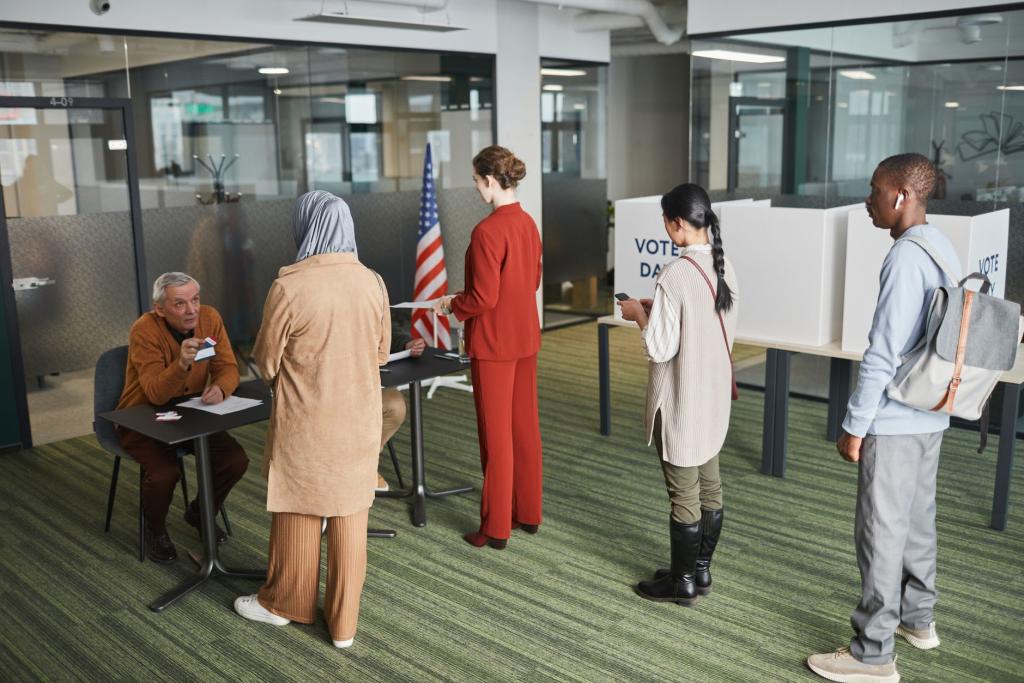
Voters across Russia are casting ballots on the second day of a three-day parliamentary contest, the first national legislative election since Moscow launched its full-scale invasion of Ukraine in February 2022. Polling stations opened on Friday, September 18, and will remain open through Sunday, September 20, with all 450 seats in the State Duma, the lower house of Russia's federal parliament, on the ballot for a five-year term.
President Vladimir Putin addressed the public before voting began, urging participation and tying the ballot to national unity and support for Russian soldiers, according to Reuters reporting on the contest. His framing puts the vote squarely inside the wartime political narrative that has defined the country since 2022, even as observers note that Russian citizens head to the polls for many reasons, from local representation and economic concerns to party loyalty and dissatisfaction with specific policies.
The Russia Duma election 2026 is widely expected to confirm United Russia, the party associated with Putin, as the dominant force in the chamber, though the vote also matters for how policy will be turned into law over the next five years. During the conflict, the Duma has approved legislation covering military service, information controls, sanctions responses, and economic mobilization, making the composition of the ninth convocation more than a formality.
How the voting system works
Russia uses a mixed electoral system for the State Duma. Voters effectively take part in two contests at once: 225 deputies are chosen in single-member constituencies, while the remaining 225 seats are allocated through proportional representation based on nationwide party lists, as Dainik Jagran English reports on the electoral structure. The proportional component uses a representation threshold, and constituency races are decided individually, so the final makeup of the chamber depends on both nationwide party support and hundreds of local battles.
The election is being held across Russia's multiple time zones, and in some regions voters can use remote electronic voting. Alongside the federal contest, voters in eight regions are choosing governors or regional heads, and local council elections are scheduled in the administrative centers of ten regions. Multi-day voting, which Russia adopted more broadly in recent years, allows citizens to cast ballots over three days rather than a single Sunday.
Why this election is different from the last one
The previous State Duma election took place in September 2021, five months before the full-scale invasion transformed Russia's domestic and international environment. Since then, the government has sharply increased military spending, Western countries have imposed extensive sanctions, and large numbers of Russians have experienced mobilization, military service, emigration, or economic upheaval tied to the conflict. The political rules governing public discussion of the war have also tightened considerably.
Reuters reporting on the campaign found that most candidates openly opposing the war were excluded from the contest, though some anti-war figures attempted to compete where permitted. The result is that voters are not choosing among parties offering unrestricted competing positions on the central foreign-policy question facing the country. Russian authorities have defended the electoral process and encouraged participation, while international observers have raised concerns about restrictions affecting opposition figures and about the conditions under which the campaign was conducted.
Several established parties are contesting the ballot, including United Russia, the Communist Party, the Liberal Democratic Party (LDPR), A Just Russia, and New People. These parties can and do criticize aspects of domestic policy, even though the range of permissible positions on the war and on the political system itself is constrained. Other registered parties and individual constituency candidates are also involved, with candidate access shaped by registration requirements and legal restrictions.
The contested vote in occupied Ukrainian territory
Moscow is also conducting voting in Ukrainian territories it controls and claims to have annexed, treating them as part of the Russian Federation within its electoral structures. Ukraine rejects those annexations and regards the territories as sovereign Ukrainian land under Russian occupation, and the United Nations and most governments internationally have not recognized Russia's claims. Parliamentary voting conducted there is inseparable from the broader sovereignty dispute created by the war.
Kyiv and its supporters regard steps like these as lacking legal validity because they reject the underlying annexations. For Moscow, electing representatives from those territories is one mechanism for institutional integration of the claimed regions. Reporting on the vote therefore requires holding both framings in view rather than adopting either one without context.
What to watch through Sunday
Attention through the close of voting on September 20 will focus on turnout, regional participation, constituency results, and the handling of electronic and multi-day ballots. Independent reporting is also likely to examine candidate restrictions, allegations of irregularities, and conditions in the contested territories. Any claims about misconduct will need to be assessed against evidence rather than taken at face value, and turnout figures should not be read as a simple measure of public support for the military campaign, since participating voters can hold very different motivations.
The broader European political picture continues to shift around this vote, from Slovakia's prime minister warning of a West-Russia clash to France's concerns over hybrid warfare. But the immediate question is arithmetic and administrative: all 450 seats of the ninth convocation will be decided, producing a new parliamentary mandate under wartime conditions while leaving debates over political competition, the war, and the status of occupied Ukrainian territories unresolved.
Comments 0
No comments yet. Be the first to share your thoughts!
Leave a comment
Share your thoughts. Your email will not be published.