Astronomers have just discovered one of the rarest cosmic objects in the universe, and it is absolutely mind-blowing. Using South Africa's powerful MeerKAT telescope, researchers spotted a triple-double radio galaxy located 7.5 billion light-years away that has three distinct pairs of radio lobes. According to research published in Monthly Notices of the Royal Astronomical Society, this discovery could completely change how we understand supermassive black holes and galaxy evolution.
Named J0222-0609, this radio galaxy is basically the cosmic equivalent of finding a unicorn. Radio galaxies typically have one or two pairs of lobes created by jets of particles shooting from a central black hole. But this one? It has six lobes total, arranged in three separate pairs, making it one of only a handful of such systems ever detected. Scientists say studying these rare radio galaxies helps reveal how supermassive black holes grow and literally reshape their host galaxies over billions of years.
What Makes This Radio Galaxy So Special
Radio galaxies are already some of the most spectacular objects in the cosmos. They form when supermassive black holes at the centers of galaxies go absolutely wild, shooting out jets of particles traveling at nearly the speed of light. These jets create massive radio-emitting lobes that can stretch for millions of light-years across space, making them some of the largest structures in the universe.
Most radio galaxies have a single pair of lobes extending in opposite directions from the central black hole. A double-double radio galaxy, which has two pairs of lobes, is already incredibly rare. But a triple-double radio galaxy with three separate pairs? That is almost unheard of. The discovery of J0222-0609 gives astronomers a unique laboratory to study how black hole activity changes over cosmic time.
The research team conducted detailed spectral aging analysis to estimate when each part of this radio galaxy formed. What they found was fascinating, the outer lobes contain much older particles, while the inner regions show evidence of more recent black hole activity. This suggests the central black hole has gone through multiple active phases, turning on and off over millions of years like some kind of cosmic lighthouse.
"Rare systems like these, influenced by the activity of central black holes, are useful for understanding how supermassive black holes grow and shape their host galaxies," said lead researcher Tombo Rarivoarinoro from the University of the Western Cape in South Africa.
How MeerKAT Found This Cosmic Beast
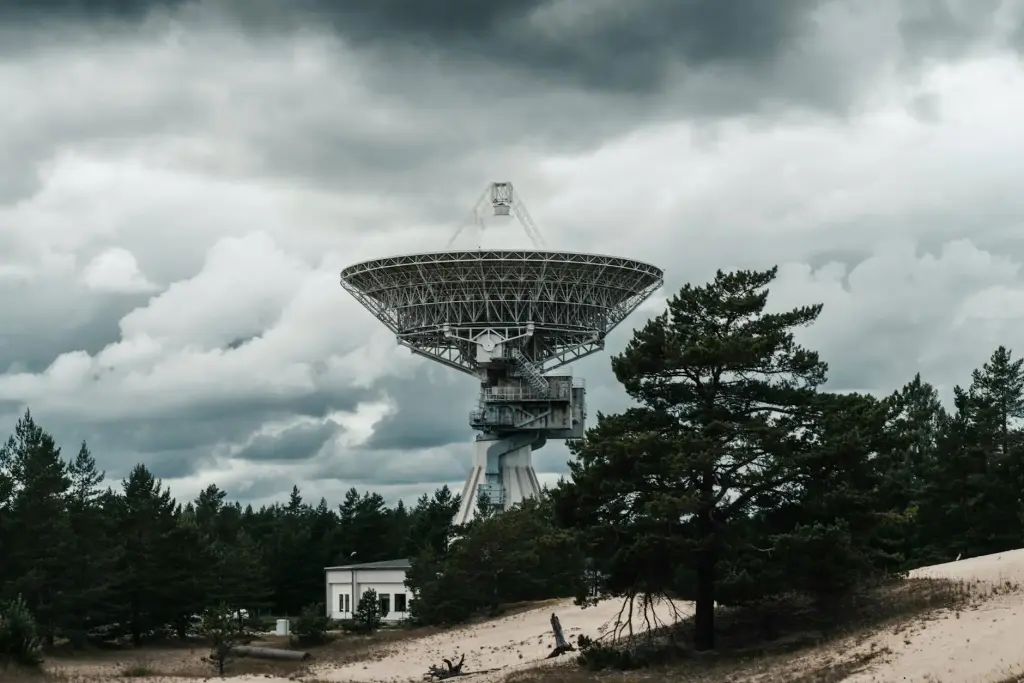
The discovery was made possible by the MeerKAT radio telescope, one of the most advanced radio astronomy instruments on the planet. Located in South Africa's Karoo desert, MeerKAT consists of 64 radio dishes that work together to create incredibly detailed images of the radio universe. The telescope was observing the sky as part of the MIGHTEE survey, which is mapping radio sources across massive portions of the sky.
What makes this detection even more impressive is the sheer distance involved. This radio galaxy is located 7.5 billion light-years from Earth, meaning we are seeing it as it existed when the universe was less than half its current age. The light from this cosmic monster started traveling toward us long before our solar system even formed, before the Earth existed, and when the universe was a completely different place.
The team used sophisticated techniques to analyze the radio emissions from each set of lobes, determining their ages and energy properties. The outermost lobes are ancient remnants from an earlier burst of black hole activity, while the middle and inner lobes represent more recent eruptions. This layered structure tells a story of a supermassive black hole that has repeatedly awakened from dormancy to blast material across space.
Understanding these duty cycles of black hole activity is crucial for explaining how galaxies evolve over cosmic time. The energy released by radio galaxies can heat up surrounding gas, preventing it from cooling and forming new stars. This feedback mechanism plays a major role in determining the ultimate fate of galaxies, including how massive they become and how many stars they can create.
Studying rare triple-double systems like J0222-0609 gives astronomers crucial insights into the extreme physics of black hole jets and how they interact with the surrounding environment. Each pair of lobes represents a different chapter in this galaxy's violent history, frozen in time and broadcast across the cosmos for us to detect billions of years later.
The MeerKAT telescope will continue surveying the southern skies, hunting for more of these rare cosmic beasts. With each discovery, scientists get closer to understanding the full story of how supermassive black holes and galaxies have co-evolved over the history of the universe.
Comments 0
No comments yet. Be the first to share your thoughts!
Leave a comment
Share your thoughts. Your email will not be published.