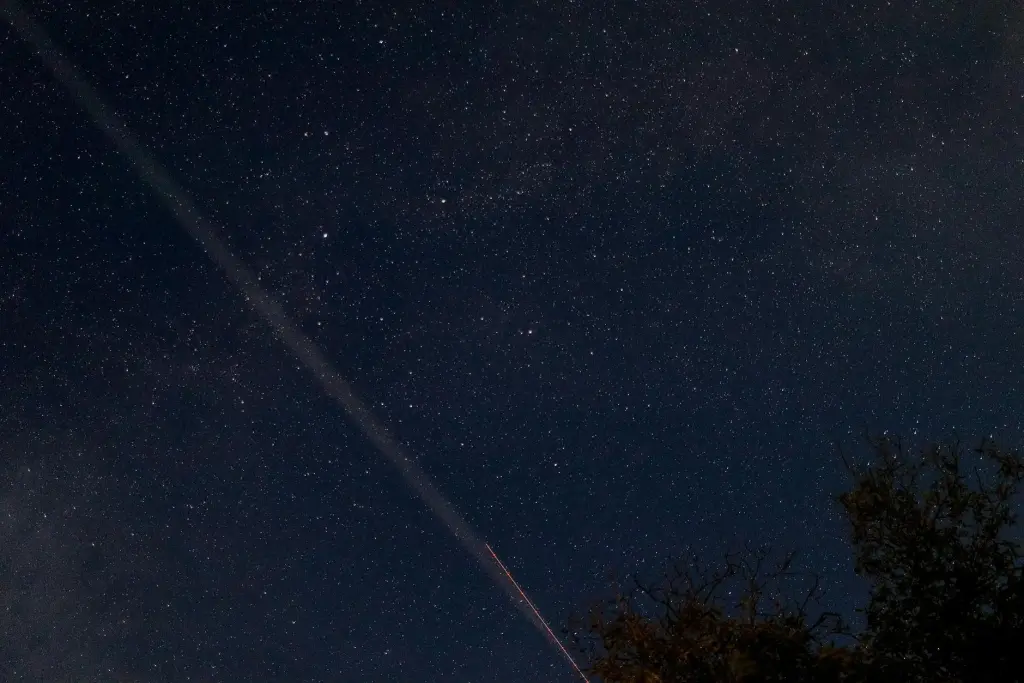
What's Behind the Surge of Massive Fireballs in Our Skies?
An unusual pattern has emerged in Earth's atmosphere that has professional sky-watchers taking notice. Throughout the opening months of 2026, observers documented a dramatic increase in brilliant meteor fireballs—celestial events bright enough to illuminate entire regions and generate thousands of witness reports from stunned onlookers.
The American Meteor Society, which tracks these phenomena globally, published findings on March 30, 2026 that confirm what casual observers had already suspected. Their analysis, spanning data from 2011 through early 2026, identifies a genuine anomaly in large fireball activity. March 2026 proved especially remarkable, with a sustained wave of major sightings that experts describe as historically significant.
The month began with an extraordinary event over Western Europe on March 8, generating more than 3,200 witness submissions to the AMS database. Rather than subsiding, activity intensified through March 24. During this period, significant meteor fireballs appeared over France and Spain on March 11, Ohio on March 17, Houston in Texas on March 21, multiple locations across California on March 23, plus Michigan and Georgia on March 24. Several of these incidents produced confirmed meteorite falls—physical evidence that actually reached the ground.
Scientists Analyze the Data Pattern
What makes this surge scientifically intriguing isn't merely the frequency of events, but their specific characteristics. Analysis reveals that smaller fireball detections have maintained normal levels throughout this period. The anomaly centers exclusively on large-scale events capable of producing widespread visual impact and sonic phenomena that capture public attention.
Nearly 80 percent of these high-visibility meteor fireballs generated audible sonic booms according to AMS documentation. This acoustic signature indicates substantial mass and velocity—objects penetrating deep enough into atmospheric layers to create pressure waves detectable at ground level. The March 8 European event alone established records for modern civilian observation, with witnesses reporting brilliant illumination lasting several seconds.
Geographic clustering also raises interesting questions for researchers. The enhanced activity originates consistently from a specific celestial sector—the anti-solar direction, opposite where the Sun appears in our sky. Mike Hankey, lead analyst for the AMS report, explained to Newsweek that observations show "roughly double the normal density" coming from this particular sky region. This directional consistency suggests a coherent source rather than random distribution.
The AMS systematically eliminated conventional explanations through their investigation. Seasonal variations don't account for the pattern, since timing doesn't align with known meteor showers. Equipment and reporting biases fall short as explanations too—smartphone ownership and app usage have increased reporting across all categories, yet only large-object detections show this dramatic spike. If improved reporting alone drove the increase, smaller fireball numbers would rise proportionally, which is not what the data shows.
Researchers also ruled out observational location bias and time-of-day effects through careful statistical analysis. The distribution pattern persists regardless of these variables, suggesting a real physical phenomenon rather than mere detection artifacts or population clustering effects.
Regarding potential explanations, the AMS maintains appropriate scientific caution. Their official statement acknowledges the limits of current understanding: "The most honest answer to 'why is this happening?' is that we don't fully know." The data indicates genuine enhancement specifically at the large-object end of the meteoroid size spectrum. Whether this represents statistical tail variance, an undocumented debris stream from a cometary or asteroidal source, or another mechanism entirely remains under active investigation by the scientific community.
Speculation about artificial or exotic origins has circulated across social media platforms, but the AMS definitively addresses these theories with evidence. Laboratory examination of recovered meteorites confirms natural composition consistent with known asteroid materials. Trajectory analysis shows no anomalous flight characteristics suggesting controlled movement or non-ballistic paths. These objects follow predictable orbital mechanics consistent with natural solar system material moving under gravitational influence. As the report emphasizes, "These are rocks from the inner solar system. There is no evidence of anomalous trajectory behavior, controlled flight, or non-natural composition."
Importantly, this enhanced activity level does not indicate elevated impact threat to populated areas or infrastructure. While the visual spectacle intensifies and more people witness these dramatic events, the actual risk profile remains consistent with historical baselines. Earth regularly encounters meteoroid material as part of its orbital journey; current rates simply feature more dramatic individual events within that normal range, sized to burn up completely or produce small meteorites rather than dangerous impacts.
Moving forward, the AMS has outlined specific research priorities to advance understanding. Expanding automated camera networks would improve detection coverage and enable more precise orbital calculations. Additional laboratory analysis of fresh meteorite samples could reveal compositional and isotopic clues about their original source regions in the solar system. Cross-referencing visual observations with independent detection methods—radar tracking, infrasound sensors, and satellite instruments—would build comprehensive datasets for robust analysis.
For amateur astronomers and casual observers interested in contributing to scientific understanding, the AMS encourages prompt documentation of any significant sightings through their official reporting channels. Even casual observations help establish geographic coverage and timing correlations that professional equipment might miss. Photographs, videos, and detailed descriptions of brightness, duration, color, and sound all provide valuable data points.
The current surge offers a compelling reminder that our planet exists within an active and dynamic cosmic environment. While scientists work to understand the specific mechanisms driving 2026's exceptional meteor fireballs activity, sky-watchers across the globe can anticipate continued opportunities for memorable observations. The phenomenon represents exactly the kind of accessible astronomical event that connects everyday observers with larger questions about solar system dynamics, near-Earth space environments, and humanity's place within the broader universe.
Comments 0
No comments yet. Be the first to share your thoughts!
Leave a comment
Share your thoughts. Your email will not be published.